Egypt, Maersk’s C2X sign $3bn deal to produce green fuel

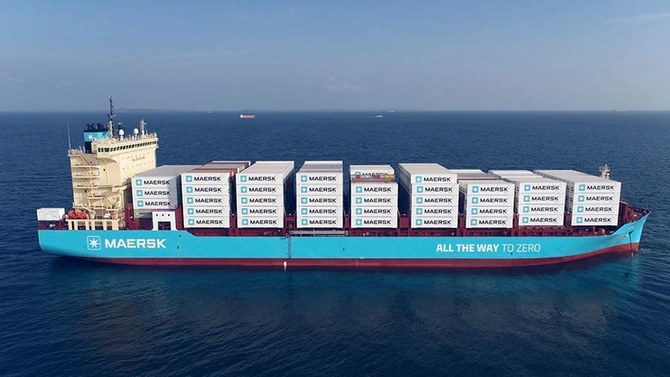
The deal, signed during a meeting between Egyptian Prime Minister Mostafa Madbouly and C2X CEO Brian Davis, is aimed at producing green fuel for ship supplies and achieving zero carbon emissions. Photo/Supplied
Short Url
Updated 04 October 2023
Follow

Egypt, Maersk’s C2X sign $3bn deal to produce green fuel

RIYADH: Egypt is poised to produce green fuel through its recent agreement with Maersk’s C2X worth up to $3 billion signed on Wednesday, according to its Prime Minister’s Office.   

The deal, signed during a meeting between Egyptian Prime Minister Mostafa Madbouly and C2X CEO Brian Davis, is aimed at producing green fuel for ship supplies and achieving zero carbon emissions. 

The agreement was formalized during a signing ceremony involving the General Authority for the Suez Canal Economic Zone, the Sovereign Fund of Egypt, the New and Renewable Energy Authority, the Egyptian Electricity Transmission Co., and the C2X company. 

Following the deal, Madbouly affirmed that Egypt remains committed to advancing clean energy initiatives, focusing on generating green hydrogen and its derivatives. 

The state is actively engaged in projects to develop and utilize green methanol and green ammonia, with an emphasis on benefiting the shipping sector. Egypt’s favorable location and distinctive resources position it as a leader in this industry. 

“This agreement represents a significant milestone in our global transition toward green fuels. Egypt possesses many natural advantages that support a world-class green methanol project, including access to high-quality renewable energy sources and the Suez Canal as a major global trade route,” Davis said. 

According to Walid Gamal El-Din, chairman of the General Authority for the Suez Canal Economic Zone, the pact is the 10th framework deal among the various memorandum of understanding signed by the authority. 

He also emphasized a commitment to transitioning toward a sustainable economy and diverse industrial applications, including producing green fuel, a globally significant eco-friendly energy source. 

Additionally, Gamal El-Din added that the project aims to produce 300,000 tons of green methanol annually in its first phase and reach one million tons per year upon completing its final stages. 


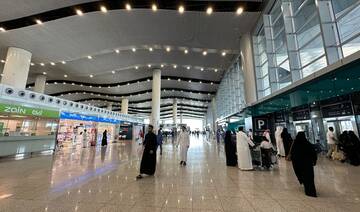
KAIA records busiest week with new operational records

Updated 7 sec ago
Follow

KAIA records busiest week with new operational records

JEDDAH: King Abdulaziz International Airport started 2026 on a strong note, handling 5.45 million passengers in January, a 7.3 percent increase over the same month last year.

Flight movements reached 29,200, up 11 percent, while total baggage throughput rose 8 percent to 6.6 million items.

The airport recorded its busiest operational week from Jan. 11 to 17, serving 1.28 million travelers.

Passenger numbers peaked on Jan. 17, marking the airport’s busiest day ever with 195,300 travelers and 1,089 flights, underscoring the efficiency of its operations and the capacity of its infrastructure to accommodate growing travel demand.

These results reflect Jeddah Airports Co.’s ongoing efforts to enhance the passenger experience, expand travel options, and manage rising air traffic in line with the National Aviation Program and Saudi Vision 2030.

Since its establishment in 2022, the company, known as JEDCO, has overseen the management and operations of KAIA, driving the implementation of the Aviation Program under the National Transport and Logistics Strategy.

In 2025, the airport reached a historic milestone, welcoming 53.4 million passengers, the highest annual total ever recorded at a Saudi airport, placing it among the world’s mega airports in terms of traffic.

The airport handled a total of 310,000 flights and 60.4 million bags, representing a 12 percent increase compared to 2024. It also handled 9.57 million Zamzam water containers and 2,968 cargo flights.

This achievement reflects the airport’s qualitative transformation and its position as a regional hub and national gateway connecting the Kingdom to the world. It also highlights its role in facilitating the movement of visitors and pilgrims, promoting tourism in line with the goals of Vision 2030, diversifying the economy, and providing a distinguished travel experience.

The January milestone at KAIA is part of a broader success story for Saudi airports, with 2025 statistics showing unprecedented growth in the Kingdom’s air traffic, surpassing regional averages and cementing Saudi Arabia’s status as one of the world’s fastest-growing and most advanced aviation markets.

Passenger numbers rose 9.6 percent, fueled by tourism, international events, and expanding global connectivity.

This growth reflected both increased capacity and enhanced connectivity, with Saudi airports handling approximately 140.9 million passengers, 76 million international and 65 million domestic passengers. Flight movements rose 8.3 percent to around 980,400, highlighting the sector’s sustained recovery.

KAIA accounted for 38 percent of total passenger traffic, averaging 146,000 passengers daily and operating at 107 percent of capacity. King Khalid International Airport handled 29 percent of passengers, with a daily average of 112,000. Madinah and Dammam airports also recorded historic surges, operating at 137 percent and 112 percent of capacity, respectively.