OIC plans cooperation framework on contract farming among members   

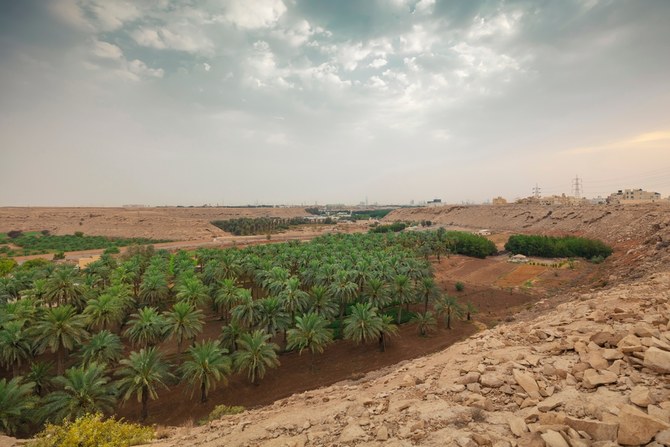
Food security across the Muslim world is a matter of concern. Shutterstock.
Short Url
Updated 03 October 2023
Follow

OIC plans cooperation framework on contract farming among members   

RIYADH: A new framework to help boost food security across the Muslim world will be unveiled at the next meeting of the Organization of Islamic Cooperation, set to be held in 2025, it has been announced.

The OIC confirmed the move at its latest gathering in Doha on Tuesday, as it called for a new business model centered on contract farming for its member nations.    

This initiative is expected to be in the spotlight at the next OIC ministerial conference due to be held in the capital of Chad in 2025, with the exact date yet to be announced.  

Central to these talks was the establishment of a resilient system infrastructure, the importance of bilateral cooperation within the OIC sectors, and the promotion of knowledge exchange to enhance food security and productivity.

The conference’s final statement revealed an array of strategic objectives. Among them was a call for designating essential monetary structures and legal frameworks to boost the financial inclusion of farmers.  

This encompasses facilitating more access to products and services, particularly emphasizing Islamic financing models known for potential economic flexibility and growth.

Further attention was placed on the need to work closely with relevant OIC institutions to evaluate the requirements and potential of member states in contract farming.

Climate change challenges were also discussed, with the conference underscoring the importance of strategies that mitigate its effects while fostering agricultural resilience and sustainability.

The event concluded by acknowledging Qatar’s role in hosting the gathering and its enduring commitment to enhancing food security efforts across OIC member nations.

Furthermore, Hissein Taha, secretary-general of OIC, emphasized the organization’s role in enhancing local food production and reducing waste amongst member states by supporting farmers.

He pointed out that small farmers constitute 76 percent of the total land specialists in OIC countries, and they often rely on traditional labor-intensive methods, which leads to low productivity.

Taha further stressed the need to enhance cooperation and synergy among member states, especially in the field of research programs, management of resources, and technological innovation.


GLOBAL MARKETS-Shares skid as oil blasts past $100 after Iran strikes Gulf shipping

Updated 7 sec ago
Follow

GLOBAL MARKETS-Shares skid as oil blasts past $100 after Iran strikes Gulf shipping

SYDNEY: Shares in Asia fell broadly on Thursday as oil prices roared 9 percent past $100 a barrel on reports of more ships struck in Gulf waters and terminal shutdowns — a jump that could rapidly stoke inflation and push global borrowing costs higher.

Investors took little comfort from the International Energy Agency’s plan to release 400 million barrels of oil from its reserves, the largest such move in its history. As part of that, the US said it would release 172 million barrels of oil from next week.

Brent crude futures jumped 9.2 percent to $100.37 a barrel, extending a rise of more than 4 percent overnight. US crude futures surged 8.1 percent to $94.26 a barrel.

Shares slid, with MSCI’s broadest index of Asia-Pacific shares outside Japan falling 1.5 percent, while the Nikkei dropped 1.4 percent.

Chinese blue-chips lost 0.6 percent and Hong Kong’s Hang Seng index skidded 1.2 percent.

Both S&P 500 futures and Nasdaq futures fell 0.9 percent. EUROSTOXX 50 futures were down 0.8 percent and DAX futures lost 1 percent.

Two fuel tankers in Iraqi waters had been struck by explosive-laden Iranian boats, Iraqi security officials said early on Thursday, while an Iraqi official told state media that its oil ports “have completely stopped operations.”

Bloomberg reported that Oman has evacuated all vessels from its key oil export terminal at Mina Al Fahal as a precautionary measure.

“The market remains very concerned in terms of what’s going on in the Strait of Hormuz, and basically, information that we are getting over the last 24 hours is not a good reading,” said Rodrigo Catril, a senior FX strategist at NAB.

“It sort of reemphasizes the view that we should be worried about this and the risk is oil prices are going to get higher from here rather than coming down.”

Iran had earlier stepped up attacks on merchant ships in the Strait of Hormuz, raising the number of ships struck in the region since fighting began to at least 16. Tehran has warned the world to get ready for oil at $200 a barrel.

Throwing more uncertainty into the air, US President Donald Trump on Wednesday declared the war on Iran has been won but he will stay in the fight to finish the job.

INFLATION RISKS

US data showed the consumer price index rose 0.3 percent in February, in line with forecasts and above January’s 0.2 percent increase. The report, however, was not regarded as particularly relevant given that the Iran war has started to fuel inflation.

In bond markets, the risk of rising inflation outweighed safe-haven considerations to shove yields higher globally. Yields on 10-year Treasury notes rose 3 basis points to 4.2374 percent on Thursday, having jumped 7 bps overnight.

Fed funds futures extended their slide as investors feared higher inflation would make it harder for the Federal Reserve to ease policy. Markets are just wagering one more rate cut from the Fed this year. 

The danger of energy-driven inflation has led markets to wager the next move in rates from the European Central Bank could be up, possibly as early as June. 

Nervous investors sought the liquidity of dollars while shunning currencies from countries that are net energy importers, including Japan and much of Europe.

The euro slipped 0.2 percent to $1.1539, after closing at the weakest level since November last year. The dollar inched up 0.1 percent to 159.12 yen, the strongest level since January when reported rate checks from the US Fed spooked yen bears.

The risk-sensitive Australian dollar lost 0.4 percent to $0.7122, having hit a more than three-year high of $0.7188 on Wednesday as bets for an imminent rate hike from its central bank grew.