

In Pakistan’s Gilgit city, new women’s market is ‘one-stop shop’ for gems and handicrafts

Razia Asif, an entrepreneur, poses for a picture at her shop at the Gems and Handicraft Market on September 30, 2023, in Gilgit, Pakistan. (AN Photo)
Short Url
Updated 01 October 2023
Follow

In Pakistan’s Gilgit city, new women’s market is ‘one-stop shop’ for gems and handicrafts

  • Riverside market in Gilgit was inaugurated in August to develop tourism and economically empower local women
  • With 24 shops, market has a wide variety of handmade products that showcase the rich cultural heritage of the region

GILGIT: Every day at the break of dawn, 28-year-old Haseena Farman unlocks her riverside shop of handcrafted shawls, sweaters, gemstones and decorative items and waits for customers.

Business has been going well since she opened the store in a recently inaugurated, eco-friendly women’s market that has become a godsend for women entrepreneurs in the mountainous northern city of Gilgit.

The market, which was inaugurated in August and has 24 shops so far, is a joint project of the Gilgit Development Authority and the Women Chamber of Commerce and Industry and has, in the words of businesswomen like Farman, given them a “special place” of trade in a region where, like many other parts of Pakistan, cultural and religious norms and social expectations act as barriers to prevent women’s entry into the business sector.

According to Gilgit-Baltistan’s Education Department, the female literacy rate in the area has been recorded at 41 percent while the male literacy rate has been recorded at 66 percent. Despite high literacy rates, women form only 15.5 percent of the labor force in Gilgit-Baltistan, according to data by the Agha Khan Rural Support Network, a non-profit company. 

“Earlier, we [women] didn’t have a special space [to sell our products],” Farman told Arab News. “I used to make these items for my cousins, relatives and sisters … After the opening of this market, we have got a proper setup.”
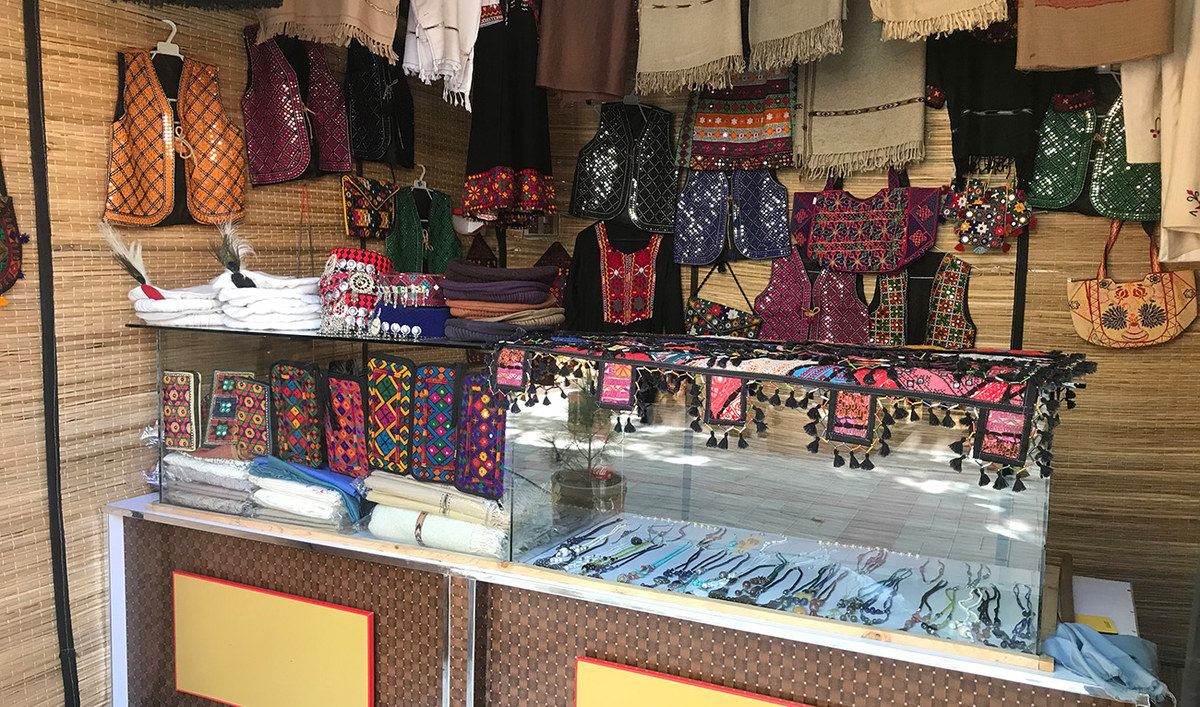


The photo taken on September 30, 2023 shows a shop at the Gems and Handicraft Market in Gilgit, Pakistan. (AN Photo)

“So far, it’s going well and I hope it will also continue to be like this in the future.”

Razia Asif, another female entrepreneur at the market who sells gems, jackets and decorative items, said she used to sell her goods from home until the market launched. 

“We opened this shop a month ago,” she said. “We have been given the opportunity by the government to bring our products to market.”

Speaking to Arab News, GDA director Sajid Wali described the market as a “one-stop shop” to buy local handicrafts, gemstones, dried fruits and traditional cuisines at affordable rates while enjoying a beautiful riverside view.

Wali also hoped, he said, that the market would serve both as a bustling tourist spot in the near future while empowering women of the region at the same time.

“We know the women of Gilgit-Baltistan have the skills,” he said.
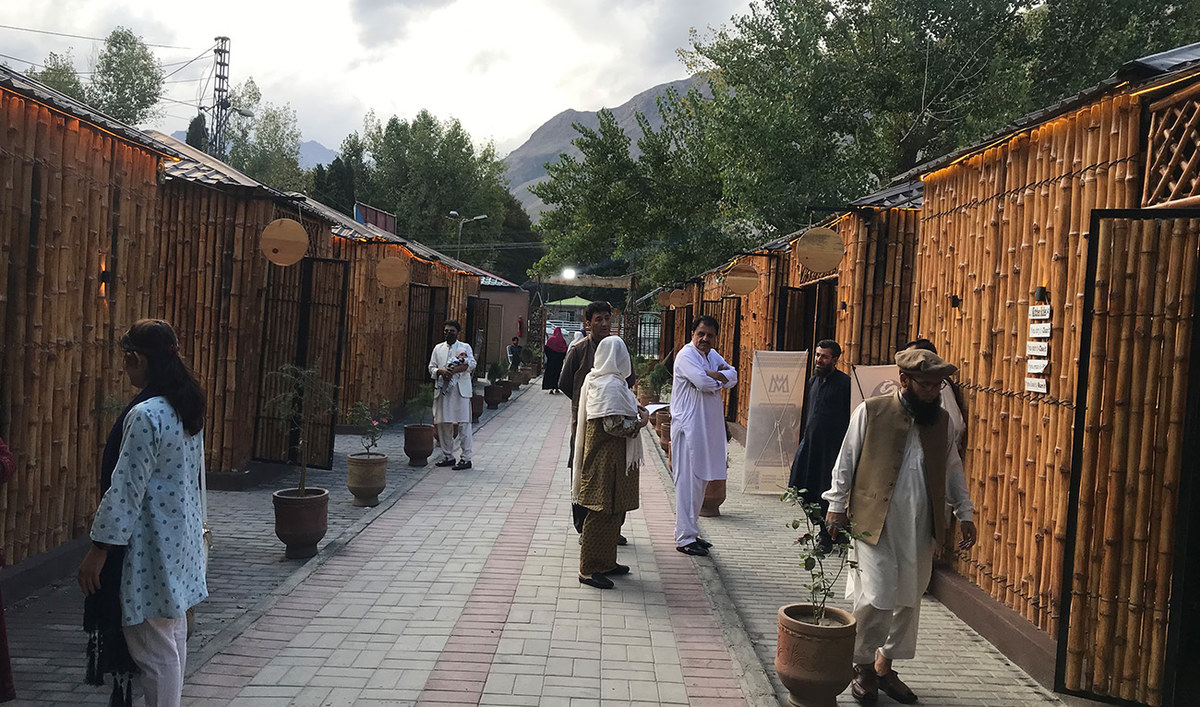


The photo taken on September 30, 2023 shows a videw of the Gems and Handicraft Market in Gilgit, Pakistan. (AN Photo)

“However, only a limited number of products prepared by them reach our markets due to lack of opportunities. Their [home-based] businesses don’t run very smoothly all the time. We know these things and have tried to bring these women into a proper retail market.”

Mubareka Gul, an executive member of the Women Chamber of Commerce and Industry in Gilgit division, said women of the area previously found it difficult to market and sell their goods.

“For the first time in history [in Gilgit], women can run these businesses in a friendly environment under tight security,” she said. “This is a family market and families come and visit this place.”

“The women trained by us, who did not have direct market access, have become successful due to the government of Gilgit-Baltistan and the Women Chamber of Commerce,” Gul added. “We hope that this market will become a business hub.”

Gul urged the public to visit the newly inaugurated trade center with family members and explore the products being sold.

“I have visited this market two, three times,” Sultana Karim, a visitor, told Arab News as she bought cushions for her drawing room. 

“Each time it is a pleasure to come here because a variety of products are available.”


Pakistan plans broader privatization push, eyes power utilities this year

Updated 5 sec ago
Follow

Pakistan plans broader privatization push, eyes power utilities this year

  • Considerably high losses, inefficiencies and mounting subsidies in power sector have dented Pakistan’s public finances
  • Finance Minister Muhammad Aurangzeb says 26 state-owned entities have been handed over to Privatization Commission

ISLAMABAD: Pakistan is widening a sweeping privatization program following the sale of its national airline last year, with power distributors next in line and more state companies to be handed to the Privatization Commission, the finance minister said on Monday.

Pakistan’s government successfully divested a 75 percent stake in the Pakistan International Airlines (PIA) in December last year. The move was part of Islamabad’s broader privatization program, which aims to reduce fiscal losses inflicted by loss-making state-owned enterprises (SOEs) by either privatizing or restructuring them.

Pakistani officials have said the Privatization Commission plans to divest the country’s electricity distribution companies in two batches. The first phase will include the Islamabad Electric Supply Company, Gujranwala Electric Power Company and Faisalabad Electric Supply Company, followed by Hyderabad Electric Supply Company and Sukkur Electric Power Company in the second batch. Considerably high losses, inefficiencies and mounting subsidies in the power sector have dented Pakistan’s public finances over the years, making it a central focus of Islamabad’s reform agenda.

Speaking at a news conference about Pakistan’s privatization program, Finance Minister Muhammad Aurangzeb said there are five power distribution companies to be privatized this year, out of which the sell-side advisers for three are Alvarez & Marsel. He said the Turkish Investment Bank has been entrusted with the task of being the sell-side advisers for the other two companies. 

“Overall, 26 SOEs have been handed over to the Privatization Commission,” Aurangzeb told reporters. “This decision is first made in the Cabinet Committee on SOEs, it then goes to the Cabinet Committee on Privatization, and then its overall approval is given by the prime minister and the cabinet.”

Aurangzeb vowed the government will take the privatization process forward with the same level of transparency as it had exhibited during the PIA sale last year. 

“And this will be taken forward with a lot of speed because we will not stop at 26 SOEs,” the finance minister said. “We will also gradually hand over other state institutions to the Privatization Commission,” he added. 

Speaking further about SOEs and their performances over the years, the minister said losses from the state entities decreased by about Rs74 billion [$264.6 million] over the last three years.

He said SOEs had reported losses of Rs905 billion [$3.24 billion] in 2023, Rs851 billion [$3.04 billion] in 2024 and Rs832 billion [$2.98 billion] in 2025.

Pakistan’s privatization push comes at the back of its efforts to ensure sustainable economic progress after a prolonged macroeconomic crisis that drained its foreign exchange reserves and triggered a balance of payments crisis.