

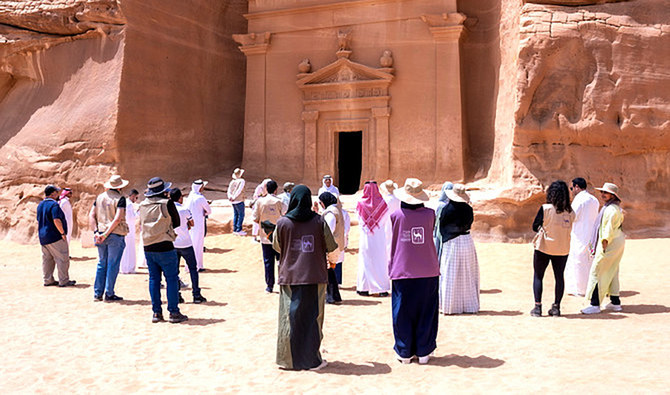

MAKKAH: The preservation of cultural heritage is of the utmost importance in the Kingdom, and the Saudi Heritage Commission is taking significant steps to protect and promote the country’s architectural treasures.
With the recent nomination of 50,000 urban heritage assets for registration, these sites will be added to the Architectural Heritage Register, joining the already registered 3,400 sites.
This collaborative effort, in accordance with the antiquities and urban heritage system, aims to utilize modern technologies to register, categorize, and encode these assets. This initiative not only preserves architectural heritage but also fosters community involvement and paves the way for future development plans.
Salma Hawsawi, a professor of ancient history at King Saud University, said that the Saudi Heritage Commission is currently implementing projects aimed at preserving architectural heritage.
One of these projects is focused on registering urban sites found in all 13 administrative regions of the Kingdom in the Architectural Heritage Register.
Hawsawi said: “This endeavor involves active participation from local communities and encompasses a wide range of structures, including villages, neighborhoods, towers, fortresses, ancient temples, castles, walls, and mosques. These sites possess a rich historical and cultural significance, reflecting the unique aesthetic value created by humanity since ancient times.

Salma Hawsawi, a professor of ancient history at King Saud University. (Supplied)
“Each region of the Kingdom possesses its own distinct architectural heritage, setting it apart from others. This diversity can be attributed to the varied terrains found throughout the country, which influenced the choice of construction materials. The embellishments adorning the facades, doors, and windows of buildings were inspired by the local environment.
“The coastal communities, for instance, incorporated gypsum and wood into their architecture and decorations. Mountain communities, known for their physical strength, utilized their abilities to carve houses and graves into the mountains. Numerous pieces of evidence support this notion, as caves scattered across the Kingdom are adorned with drawings and inscriptions that depict the rich history of these communities.”
He added: “Due to the significance of architectural heritage and its close connection to culture, heritage, and identity, the Saudi Heritage Commission initiated a project with the objective of gradually registering 50,000 sites into the Architectural Heritage Register.
“The process consists of several stages. First, an extensive search and discovery of sites takes place. This is followed by the nomination phase, where all relevant information about the sites is collected.
"The third stage involves the registration of the sites, during which the data is carefully examined and validated. Subsequently, the fourth stage focuses on classifying the sites according to the standards set by the commission. Finally, in the fifth and final stage, a code is assigned to each site and plaques are installed to validate their authenticity and historical significance.”
Hawsawi highlighted the project’s aim of preserving cultural heritage and having it listed in the national register as a step toward potential inclusion in UNESCO's World Heritage List.
He added: “This registration holds political, economic, and social dimensions, as it strengthens international relations, diversifies the national economy, reduces unemployment, and enhances the overall standard of living.”


