



KARACHI: As a young boy in a family of seven cricket-mad brothers, Pakistan pace bowler Shaheen Shah Afridi immersed himself in the sport — even when sleeping.
“I used to come home after training and he would take my pads and somehow wear them to bed,” said elder brother Riaz, a decent player himself with one Test cap to his name.
“He would place the stumps next to his pillow and dream of playing,” he told AFP.
Pakistan’s hopes of winning the World Cup in India will rely heavily on the lanky 23-year-old Shaheen turning those dreams into reality.
The team were recently deposed as the world’s top-ranked ODI side by India, and a less-than-stellar performance in the recent rain-hit Asia Cup won by their bitter cross-border rivals has some fans questioning the side’s commitment and ability.
Nobody can doubt Shaheen’s devotion to the sport, however.
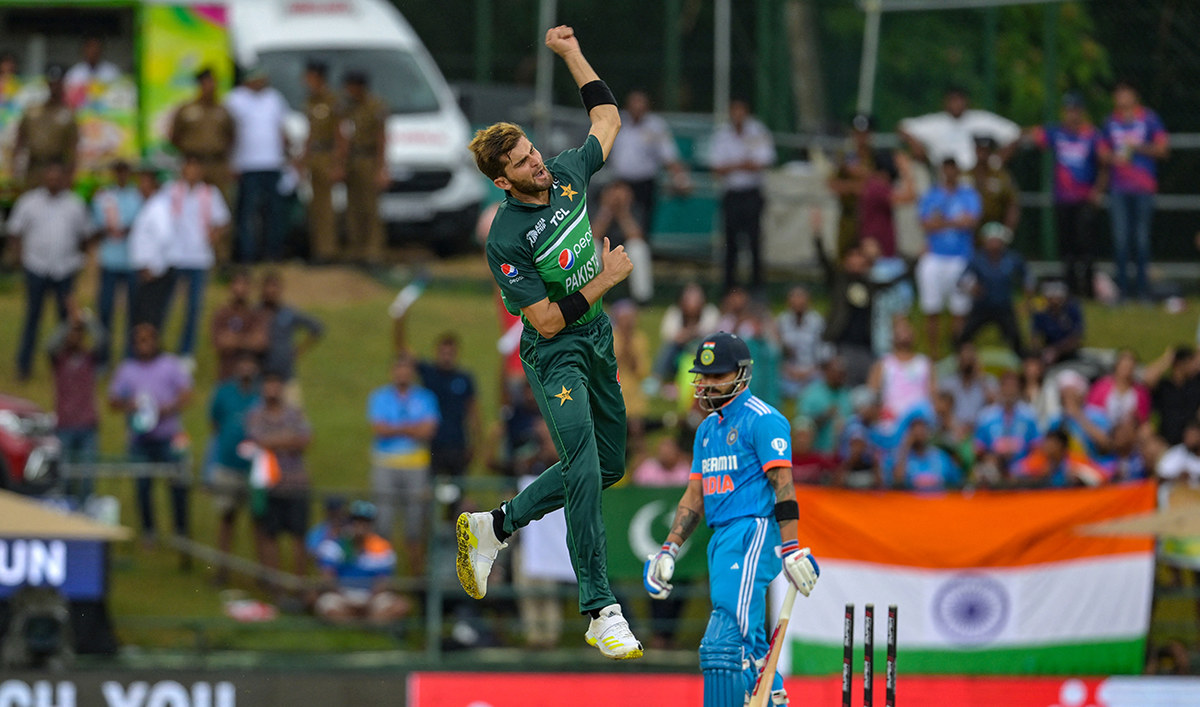
Pakistan's Shaheen Shah Afridi (L) celebrates after taking the wicket of India's Virat Kohli (R) during the Asia Cup 2023 one-day international (ODI) cricket match between India and Pakistan at the Pallekele International Cricket Stadium in Kandy on September 2, 2023. (AFP/File)
Hailing from Landi Kotal — a town near the Afghan border with a notorious reputation for smugglers and drug traffickers in Pakistan’s rugged Khyber Pakhtunkhwa province — Shaheen dedicated himself to cricket as soon as he could hold a bat.
“His commitment to playing was matched only by his dedication to watching matches,” Riaz said.
“His mood would sour if Pakistan lost a match, and things would only return to normal when Pakistan won, or if he performed well himself on the field.”
He is now one of the most feared opening bowlers in any form of the game.
“In my early days, I used to throw the ball in school games instead of bowling it,” Shaheen recalled.
“Riaz bhai taught me to bowl properly, and encouraged me to bowl fast.”
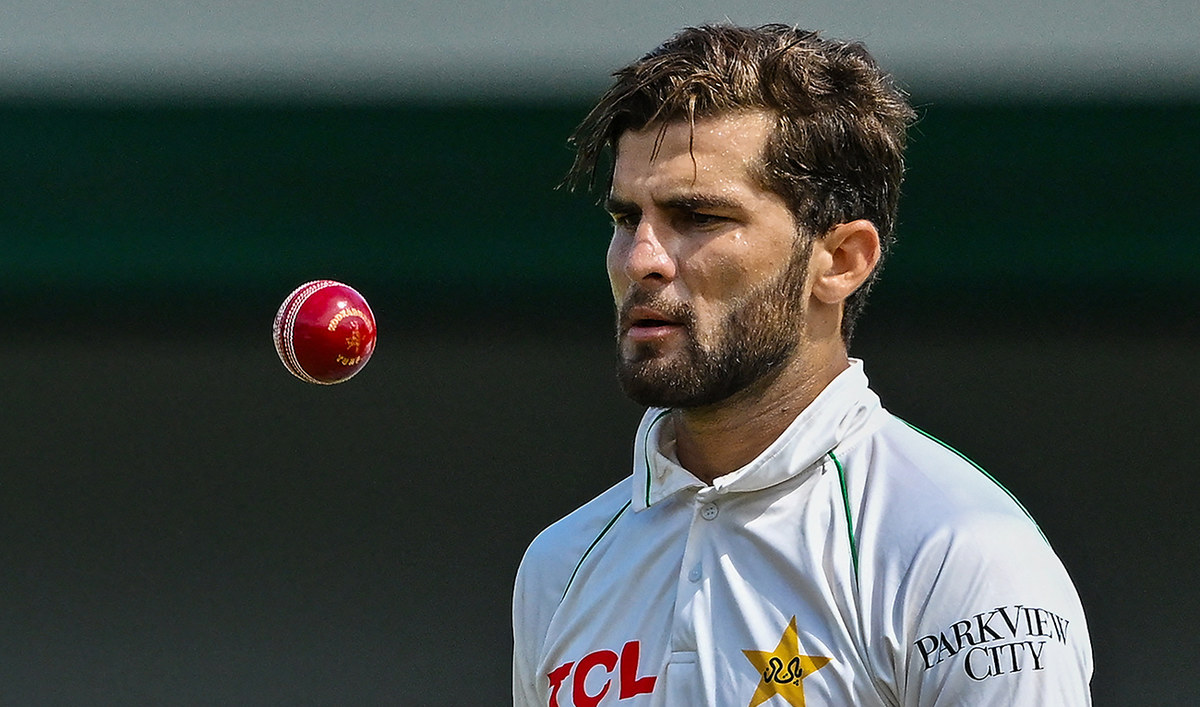
Pakistan's Shaheen Afridi prepares to ball during the fourth day of the second and final cricket Test match between Pakistan and Sri Lanka at the Sinhalese Sports Club (SSC) Ground in Colombo on July 27, 2023. (AFP/File)
An early breakthrough came in 2015 when he attended a trial to join a regional Under-15 team.
His towering height and rapid action caught the selectors’ attention, and it took just two deliveries for them to recognize his talent.
“I bowled two deliveries right on target, they gave their approval,” Shaheen recalls.
He went on to be the most successful bowler in the championship, claiming 12 wickets, and earned a spot on the Pakistan Under-16 team for a tour to Australia in 2016.
During one of these matches, former Australian captain Steve Waugh — there to watch his son in action — predicted Shaheen would be a future star.
Shaheen joined Khan Research Laboratories — the entity which runs Pakistan’s nuclear program and also fields a First Class cricket side — making an immediate impact.
On his debut in 2017 he took eight wickets for 39 runs against a formidable Rawalpindi team — still the best First Class debut performance by a bowler in Pakistan.
“I was thrilled to witness his natural talent,” said Aqib Javed who played 22 Tests and 163 ODIs for Pakistan and became one of Shaheen’s mentors.
“His flawless action, unwavering commitment, and innate ability to swing the ball were truly exceptional.”
Shaheen, standing an impressive 1.98 meters (six feet, six inches) continued to improve every year, culminating in his inclusion in Pakistan’s Twenty20 side in 2018.
He impressed with his pace in the 2019 World Cup in England, taking 16 wickets in five matches — including tournament-best figures of 6-35 against Bangladesh at Lord’s.
Now established as the country’s most dominant bowler, in the 2021 Twenty20 World Cup in Dubai he destroyed India’s top order of Rohit Sharma, KL Rahul and Virat Kohli with figures of 3-31 as Pakistan recorded their first and only win to date in a World Cup match against their arch-rivals.


