After 4 months, Pakistan resumes issuing ID cards to transgender people, officials say

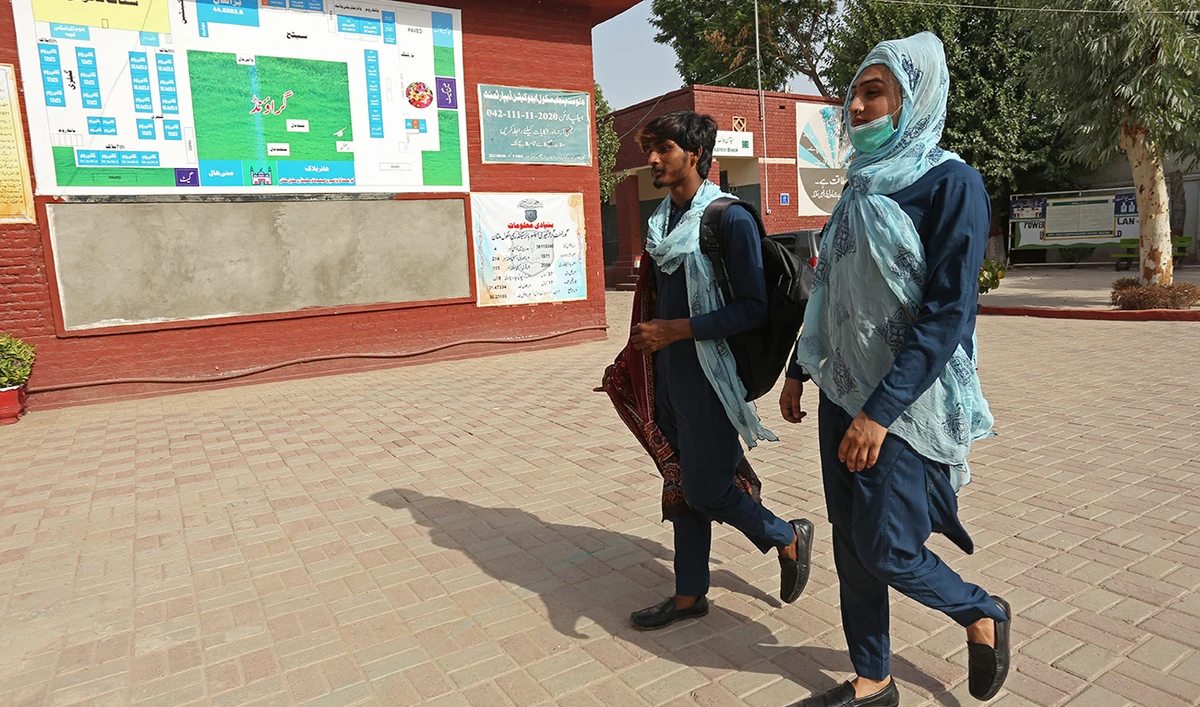
In this picture taken on July 8, 2021, transgender students arrive at the first government-funded school for transgender women, in Multan. (AFP/File)
Short Url
Updated 26 September 2023
Follow

After 4 months, Pakistan resumes issuing ID cards to transgender people, officials say

  • Pakistan halted issuing ID cards after an Islamic court ruled in May transgender people cannot change their gender 
  • In 2018, Pakistani parliament passed legislation to protect the fundamental rights of transgender individual

ISLAMABAD: Pakistani authorities resumed issuing ID cards to transgender people, officials and activists said Tuesday, after a four-month pause and following an Islamic court’s ruling that gutted a law aimed at protecting trans rights.

The national database and Registry, or NADRA, halted the cards after an Islamic court ruled in May that trans people cannot change their gender at will and that giving them equal rights goes against Islam.

The court said authorities should stop issuing cards with the X designation signifying a third gender that is neither male nor female. An ID card is needed to open a bank account, get a driver’s license, access medical care and other everyday services in Pakistan.

The Islamic court has the constitutional mandate of examining and determining whether laws passed by Pakistan’s parliament comply with Islamic doctrine.

Activist Farhatullah Babar told The Associated Press that human rights activists have appealed the court’s ruling to get it reversed on the grounds that it denied trans people basic rights.
NADRA officials confirmed they resumed giving out ID cards to trans people and explained their legal team had concluded they can do so since the Islamic court’s ruling has now been challenged. Under Pakistani laws, a court ruling cannot go into effect until an appeal or review petition is decided.

Parliament in 2018 adopted the Transgender Persons (Protection of Rights) Act to secure the fundamental rights of transgender Pakistanis, including their access to legal gender recognition.

But many in the Muslim-majority country have entrenched beliefs on gender and sexuality and trans people are often considered outcasts. Some are forced into begging, dancing and even prostitution to earn money. They also live in fear of attacks.

NADRA’s decision was welcomed by Nayyab Ali, a trans activist.

“Congratulations to the entire community of transgender activists in Pakistan for your relentless struggle,” she posted on Monday on X, formerly known as Twitter. “A heartfelt thank you to all the institutions.”
Pakistan says Indian minister initiated handshake in Dhaka, first contact since May conflict

Updated 58 min 5 sec ago
Follow

Pakistan says Indian minister initiated handshake in Dhaka, first contact since May conflict

  • Pakistan’s Ayaz Sadiq and India’s Subrahmanyam Jaishankar met on the sidelines of Khaleda Zia’s funeral
  • The National Assembly of Pakistan says Islamabad has consistently emphasized dialogue with New Delhi

ISLAMABAD: Pakistan said on Wednesday Indian External Affairs Minister Subrahmanyam Jaishankar initiated a brief handshake with Speaker of the National Assembly Sardar Ayaz Sadiq in Dhaka, marking the first high-level contact between the two nuclear-armed rivals since their military conflict in May.

The encounter took place on the sidelines of the funeral of former Bangladeshi prime minister Khaleda Zia, attended by senior officials and diplomats from multiple countries.

Ties between India and Pakistan have remained frozen since a four-day military confrontation in May, during which both sides exchanged missile, drone and air strikes before a ceasefire brokered by Washington.

“During Speaker NA Sardar Ayaz Sadiq’s visit to the Parliament of Bangladesh ... the Indian External Minister Dr. S. Jaishankar approached the Speaker National Assembly and [shook] hands,” Pakistan’s National Assembly said in a post on social media platform X.

It added that Jaishankar introduced himself to Sadiq during the brief interaction. India has not commented publicly on the exchange.

“It is noteworthy that Pakistan has consistently emphasized dialogue, restraint, and cooperative measures, including proposals for peace talks,” the post continued.

Tensions between the two neighbors escalated in April after a militant attack in Indian-administered Kashmir killed more than 20 tourists. New Delhi blamed Pakistan for supporting the attack, an allegation Islamabad denied, calling instead for an independent and transparent investigation.

Officials from both countries have largely avoided public interactions since the conflict, with senior figures refraining from handshakes or exchanges at international gatherings.

Sadiq was in Dhaka to attend Zia’s funeral and to convey condolences from Pakistan’s leadership and people. He also met Zia’s son Tarique Rahman, the acting chairman of the Bangladesh Nationalist Party, according to Pakistan’s high commission in Bangladesh.

Speaking to Pakistan’s Geo TV, Sadiq confirmed that Jaishankar approached him in full media glare and exchanged pleasantries.

Responding to a question about being photographed with the Indian minister, he said: “Cameras arrived with them. Our people took the photographs later.”