

Pakistani leaders, Saudi envoy laud Kingdom’s efforts to ‘shape’ the future

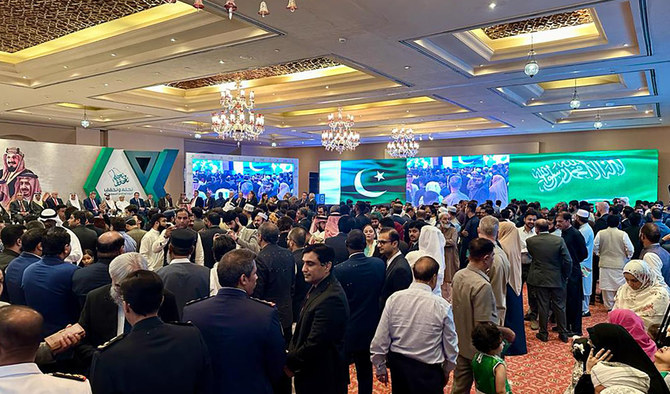
Pakistani officials, diplomats and dignitaries attend the Saudi National Day event in Islamabad, Pakistan on September 25, 2023. (AN photo)
Short Url
Updated 26 September 2023
Follow

Pakistani leaders, Saudi envoy laud Kingdom’s efforts to ‘shape’ the future

  • Glittering ceremony held in Islamabad to celebrate Saudi Arabia’s 93rd National Day
  • Senate chairman praises Saudi efforts to promote peace, stability in Middle East and beyond

ISLAMABAD: At celebrations to commemorate Saudi Arabia’s 93rd National Day in Islamabad on Monday, Pakistani leaders as well as the Kingdom’s envoy to Pakistan praised the leadership in Riyadh for its efforts to realign Middle East dynamics and open up the Saudi economy and society.

The Saudi government, in an effort led by Crown Prince Mohammed Bin Salman, has made remarkable changes in recent years under a vast economic transformation plan, the Vision 2030, to diversify away from oil and open the Kingdom to business and tourism amid rising regional competition. The Kingdom has also gone into diplomatic overdrive, restoring relations with Iran and agreeing to a rapprochement with Syria in its quest to rebuild regional alliances, instead of leaning entirely on the United States, its long-time big power ally. It has also recently joined the Shanghai Cooperation Organization as parts of Riyadh’s attempts to build a long-term partnership with China.

“Under the ideal leadership, Saudi Arabia is not just addressing the future, it is actively shaping it,” Chairman Senate Muhammad Sadiq Sanjrani said at a ceremony to celebrate Saudi National Day, which the Kingdom is marking this year with the slogan, “We dream and we achieve.”

The Senate chairman lauded steps taken by Saudi Arabia to promote peace and stability in the region.

“Dialogue and mutual respect are the bedrock on which lasting peace is made,” he said. “We are confident that Saudi efforts will open doors to various opportunities, including trade, the sharing of initiatives, and collaboration between leaders and their followers, not only for the region but for the entire world.”

Pakistan and Saudi Arabia are close allies and share strong economic, security and cultural ties. Saudi Arabia is also home to more than two million Pakistani expatriates, making it the largest contributor to remittance inflows.

This year, Pakistan received $2 billion in financial support from Saudi Arabia in July, a day before the International Monetary Fund’s board gave the final approval for a $3 billion bailout deal. Saudi Arabia’s continued economic and investment support is key for Pakistan, as economic stabilization is a major challenge, with the $350 billion economy on a narrow recovery path after the IMF bailout averted a sovereign debt default. Economic reforms have already fueled historic inflation and interest rates.

“Pakistan is grateful for all the support extended by the Kingdom in the difficult times,” Sanjrani said, adding that Pakistan had also provided “unwavering and never-ending” support to the Kingdom on the diplomatic and security fronts.

Speaking at the ceremony, which was organized by the Saudi embassy, Ambassador Nawaf bin Said Al-Malki called on Pakistan and the world to “support all development plans and initiatives taken for the progress and prosperity of the Kingdom.”

“At the forefront of these successful initiatives is the Kingdom’s Vision 2030,” the ambassador said, “which represents a new stage leading the country to a bright future.”


No casualties as blast derails Jaffar Express train in Pakistan’s south

Updated 26 January 2026
Follow

No casualties as blast derails Jaffar Express train in Pakistan’s south

  • Passengers were stranded and railway staffers were clearing the track after blast, official says
  • In March 2025, separatist militants hijacked the same train with hundreds of passengers aboard

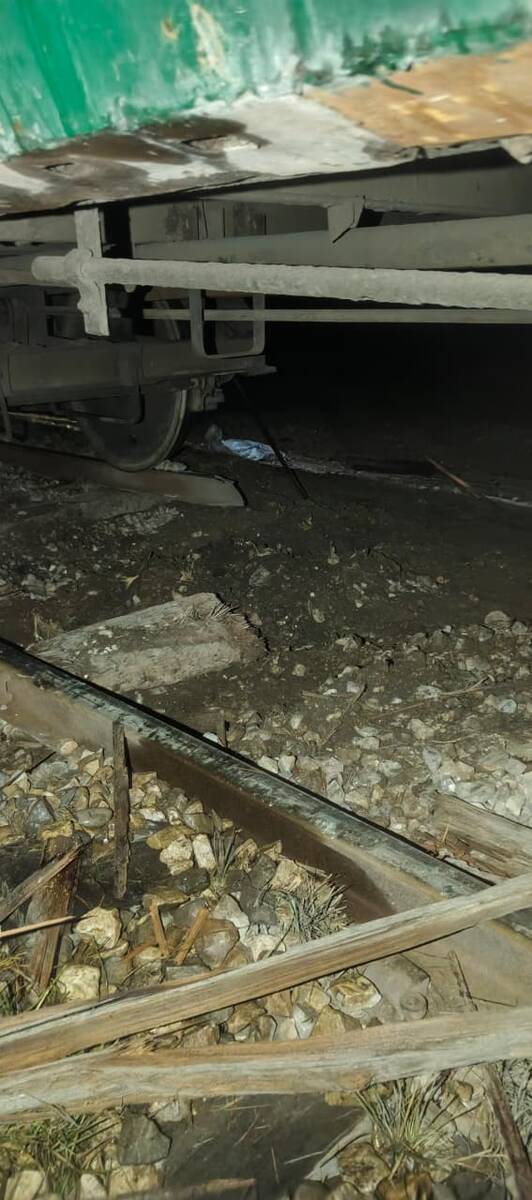
QUETTA: A blast hit Jaffar Express and derailed four carriages of the passenger train in Pakistan’s southern Sindh province on Monday, officials said, with no casualties reported.

The blast occurred at the Abad railway station when the Peshawar-bound train was on its way to Sindh’s Sukkur city from Quetta, according to Pakistan Railways’ Quetta Division controller Muhammad Kashif.

No group immediately claimed responsibility for the bomb attack, but passenger trains have often been targeted by Baloch separatist outfits in the restive Balochistan province that borders Sindh.

“Four bogies of the train were derailed due to the intensity of the explosion,” Kashif told Arab News. “No casualty was reported in the latest attack on passenger train.”

The Jaffar Express stands derailed near Abad Railway Station in Jacobabad following a blast on January 26, 2026. (AN Photo/Saadullah Akhtar)

Another railway employee, who was aboard the train and requested anonymity, said the train was heading toward Sukkur from Jacobabad when they heard the powerful explosion, which derailed power van among four bogies.

“A small piece of the railway track has been destroyed,” he said, adding that passengers were now standing outside the train and railway staffers were busy clearing the track.

In March last year, fighters belonging to the Balochistan Liberation Army (BLA) separatist group had stormed Jaffar Express with hundreds of passengers on board and took them hostage. The military had rescued them after an hours-long operation that left 33 militants, 23 soldiers, three railway staff and five passengers dead.

The passenger train, which runs between Balochistan’s provincial capital of Quetta and Peshawar in the country’s northwest, had been targeted in at least four bomb attacks last year since the March hijacking, according to an Arab News tally.

The Jaffar Express stands derailed near Abad Railway Station in Jacobabad following a blast on January 26, 2026. (AN Photo/Saadullah Akhtar)

Pakistan Railways says it has beefed up security arrangements for passenger trains in the province and increased the number of paramilitary troops on Jaffar Express since the hijacking in March, but militants have continued to target them in the restive region.

Balochistan, Pakistan’s southwestern province that borders Iran and Afghanistan, is the site of a decades-long insurgency waged by Baloch separatist groups who often attack security forces and foreigners, and kidnap government officials.

The separatists accuse the central government of stealing the region’s resources to fund development elsewhere in the country. The Pakistani government denies the allegations and says it is working for the uplift of local communities in Balochistan.