

Saudi traditional arts institute enhances cultural heritage

1 / 5
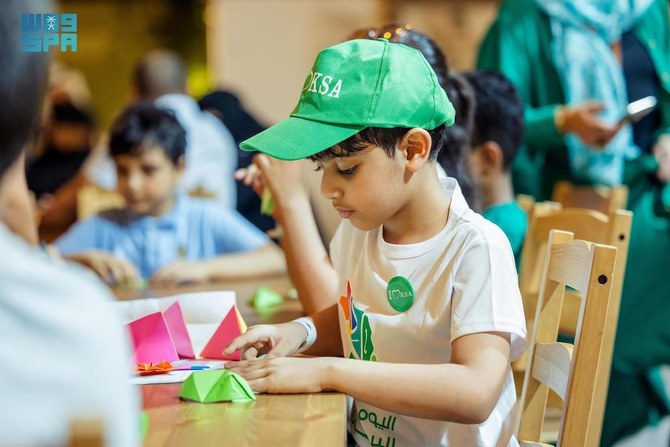
Saudi Arabia’s Royal Institute of Traditional Arts organized programs that align with its core responsibilities of preserving living treasures, offering training and education, and promoting traditional arts. (SPA)
2 / 5
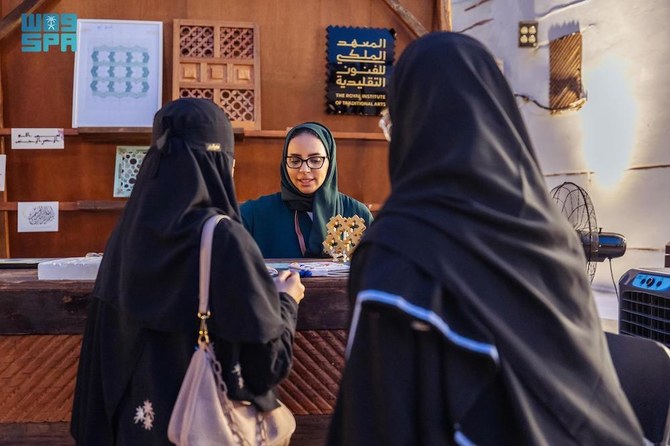
Saudi Arabia’s Royal Institute of Traditional Arts organized programs that align with its core responsibilities of preserving living treasures, offering training and education, and promoting traditional arts. (SPA)
3 / 5
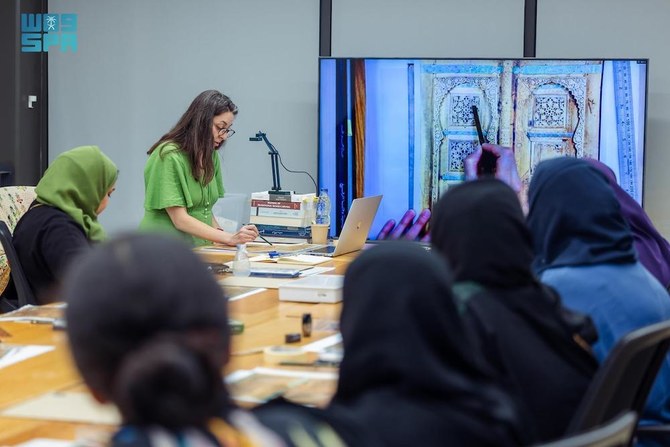
Saudi Arabia’s Royal Institute of Traditional Arts organized programs that align with its core responsibilities of preserving living treasures, offering training and education, and promoting traditional arts. (SPA)
4 / 5
Saudi Arabia’s Royal Institute of Traditional Arts organized programs that align with its core responsibilities of preserving living treasures, offering training and education, and promoting traditional arts. (SPA)
5 / 5
Saudi Arabia’s Royal Institute of Traditional Arts organized programs that align with its core responsibilities of preserving living treasures, offering training and education, and promoting traditional arts. (SPA)
Short Url
Updated 24 September 2023
Follow

Saudi traditional arts institute enhances cultural heritage

RIYADH: Saudi Arabia’s Royal Institute of Traditional Arts recently participated in the 93rd National Day activities by organizing programs that align with its core responsibilities of preserving living treasures, offering training and education, and promoting traditional arts.

The institute presented handmade candles that depicted traditional inscriptions from various regions of the Kingdom. These inscriptions included Najdi patterns, Al-Qatt Al-Asiri, Al-Sadu, and Al-Hasawi patterns, serving as an homage to the diverse cultural heritage of different parts of the country.

In addition to the art programs in Historic Jeddah, the institute presented a collection of gifts to visitors and conducted a series of high-quality workshops in various disciplines.

These workshops covered topics such as drawing and coloring traditional geometric patterns, the process of wood design, and creating traditional designs inspired by the homes of Jeddah Al-Balad.

Suzanne Al-Yahya, CEO of the Royal Institute of Traditional Arts, said that Saudi Arabia’s traditional artistic heritage reflects the diversity and wealth of the country’s cultural heritage.

“The institute works to enhance the rich and distinctive cultural heritage of traditional arts and related artistic works, preserve their authenticity, and support national capabilities and talents as well as their practitioners. encouraging those who are interested to study, practice, and grow in it.”

The Royal Institute of Traditional Arts, chaired on an honorary basis by Crown Prince Mohammed bin Salman, promotes and supports traditional arts. It offers education and training, aims to preserve and raise awareness of national treasures, and enhances their visibility globally.


Winter at Tantora Festival returns to AlUla, showcasing rich cultural heritage

The festival derives its name from the Tantora, an ancient sundial situated in the Old Town’s center. (SPA)
Updated 19 December 2025
Follow

Winter at Tantora Festival returns to AlUla, showcasing rich cultural heritage

  • Festival now established as a premier annual event

AlUla: The Winter at Tantora Festival launched on Thursday in AlUla. It runs until Jan. 10 and presents a cultural season which celebrates the region’s rich civilizational, cultural, and historic legacy.

The festival’s program includes a wide array of cultural, artistic, and traditional activities, reported the Saudi Press Agency. 

Attractions include Old Town Nights, Shorfat Tantora, When Shadow Tracks Us, and the Al-Manshiyah Carnival.

FASTFACT

In the past, AlUla’s inhabitants used this clock to measure time and coordinate their agricultural activities.

In addition, there are guided tours of street art through the Old Town, special events commemorating the Year of Handicrafts, culinary experiences, and artistic and musical performances.

The festival derives its name from the Tantora, an ancient sundial situated in the Old Town’s center. In the past, AlUla’s inhabitants used this clock to measure time and coordinate their agricultural activities. The modern festival honors this tradition by marking the onset of winter and the start of the planting season.

This year’s edition offers a range of experiences to celebrate heritage, genuine local culture, and traditional craftsmanship. 

As part of AlUla Moments, the Winter at Tantora Festival supports efforts to boost cultural and tourist engagement while enhancing the visitor experience.

The initiative reflects Saudi Vision 2030’s commitment to advancing cultural tourism and promoting the Kingdom’s historic landmarks.

The festival has established itself as one of AlUla’s premier annual events, consistently attracting both domestic and international audiences.