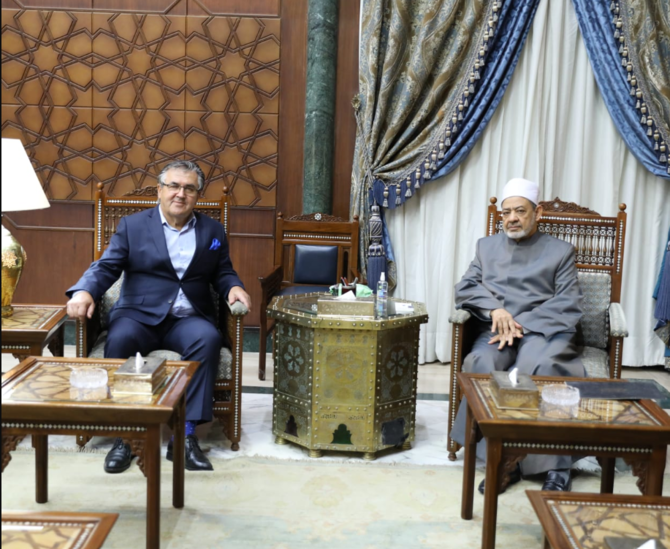
CAIRO: Sheikh Ahmed Al-Tayyeb, the grand imam of Al-Azhar Al-Sharif, the scientific body and largest religious institution in Egypt, said on Wednesday that Sunni Islam’s highest seat of learning will never forget the terrible period of war and persecution that Bosnia and Herzegovina experienced in the 1990s.
Speaking during a meeting with Thabet Subasic, the Balkans country’s ambassador to Egypt, he said: “The suffering of the Bosnian people is still fresh in mind. We are fully prepared to do everything possible to support the Bosnian people, strengthen their adherence to their homeland and country, and be proud of their Islamic identity.”
In April 1992, the government of the republic of Bosnia-Herzegovina declared its independence from Yugoslavia. Over the next several years, Bosnian Serb forces, with the backing of the Serb-dominated Yugoslav army, perpetrated atrocious crimes against Bosnian and Croatian civilians, resulting in the deaths of about 100,000 people by 1995, 80 percent of them Bosnian Muslims.
Al-Tayyeb said Al-Azhar has responsibility of supporting Muslim communities all around the world, especially in Europe, and helping them preserve their religious identity.
It also helps Muslims integrate positively into Western societies, he added, and “will not hesitate to provide all aspects of scientific and cultural support to these societies with our moderate approach.”
The imam stressed the important role of Bosnia and Herzegovina as an effective Islamic center on the European continent. He said Al-Azhar offers five scholarships each year to people from the country and is ready to increase this number and facilitate the enrollment of students at various levels of education. Al-Azhar Academy for Training Imams, Preachers and Fatwa Researchers also hosts and trains Bosnian imams, he added.
Ambassador Subasic extended an official invitation to Al-Tayyeb to visit his country and participate in the events next year to commemorate the 29th anniversary of the Srebrenica massacre, which took place on July 11, 1995.
In the summer of that year, three places in eastern Bosnia — Srebrenica, Zepa and Gorazde — remained under the control of the Bosnian government. The UN had declared these enclaves “safe havens” in 1993, to be disarmed and protected by international peacekeeping forces.
On July 11, 1995, however, Bosnian Serb forces advanced on Srebrenica, overwhelming the Dutch peacekeepers stationed there. The Serbian forces separated the Bosnian Muslims at Srebrenica, putting women and girls onto buses that took them to Bosnian-held territory. Many women were raped or sexually assaulted.
The men and boys were killed immediately or taken to mass execution sites. Official estimates of the number of Bosnians killed by Serbian forces at Srebrenica range from about 7,000 to more than 8,000.
Subasic said that the Bosnian people rely greatly on Al-Azhar Al-Sharif, its international position, and its central role in issues relating to the Islamic nation.
He added that it has great influence on Bosnian society and that for hundreds of years, scholars from Bosnia and Herzegovina have benefited from visiting and studying at Al-Azhar Mosque, after which “they returned to our country and played a large and effective role in its development.”
He continued: “Graduates of Al-Azhar are highly valued and hold senior positions in various Bosnian institutions and bodies.”


![]()

Al-Azhar Al-Sharif will not forget agony Bosnian Muslims endured in 1990s, says grand imam
Short Url
https://arab.news/phdtp
Al-Azhar Al-Sharif will not forget agony Bosnian Muslims endured in 1990s, says grand imam
- Sheikh Ahmed Al-Tayyeb told Thabet Subasic, the Balkans country’s ambassador to Egypt: ‘The suffering of the Bosnian people is still fresh in mind’
- The envoy extended an official invitation to Al-Tayyeb to visit his country and participate in the events next year to commemorate the 29th anniversary of the Srebrenica massacre


Latest updates


© 2026 SAUDI RESEARCH & PUBLISHING COMPANY, All Rights Reserved And subject to Terms of Use Agreement.