

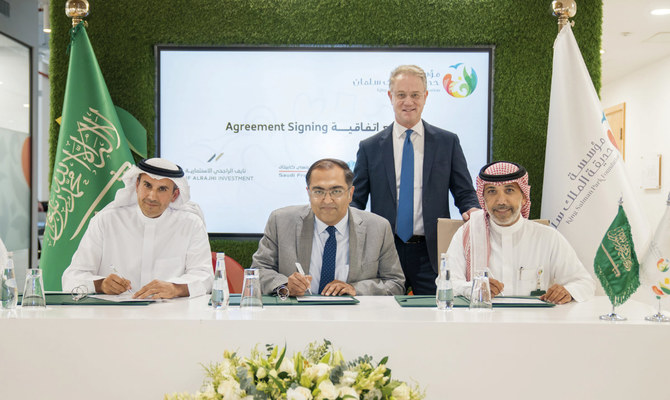
Naif Alrajhi Investment to develop District 1 in King Salman Park

The project is being undertaken in partnership with the King Salman Park Company for Investment and Real Estate Development, as well as Saudi Fransi Capital.
Short Url
Updated 19 September 2023
Follow

Naif Alrajhi Investment to develop District 1 in King Salman Park

Naif Alrajhi Investment has announced its winning of a real estate development contract for the first real estate investment land parcel in King Salman Park in Riyadh. The project is being undertaken in partnership with the King Salman Park Company for Investment and Real Estate Development, as well as Saudi Fransi Capital. The project will be situated within Phase 1, District 1 of King Salman Park, covering an area of 290,000 square meters. It will be located west of the Visitors’ Center, south of the Royal Arts Complex, and east of King Abdulaziz Road.

This project marks the first ever partnership between the government and private sector, utilizing an innovative financial and operational structure developed through a collaboration between the King Salman Park Company and Saudi Fransi Capital. The private sector will fully manage the project in accordance with the objectives of Vision 2030. This partnership follows the successful launch and closure of the “King Salman Park Real Estate Development Fund” by Saudi Fransi Capital and the King Salman Park Company. The private closed investment fund has a total size of SR4 billion ($1.07 billion) and is both Shariah-compliant and registered with the Capital Market Authority of Saudi Arabia.

Naif Alrajhi Investment group will act as the real estate developer and the master lessee for the entire mixed-use project, which will consist of more than 1,500 residential units, 140,000 square meters of rentable office and retail space, a hotel, a school, and public spaces for both religious and
community well-being, along with a variety of amenities. 
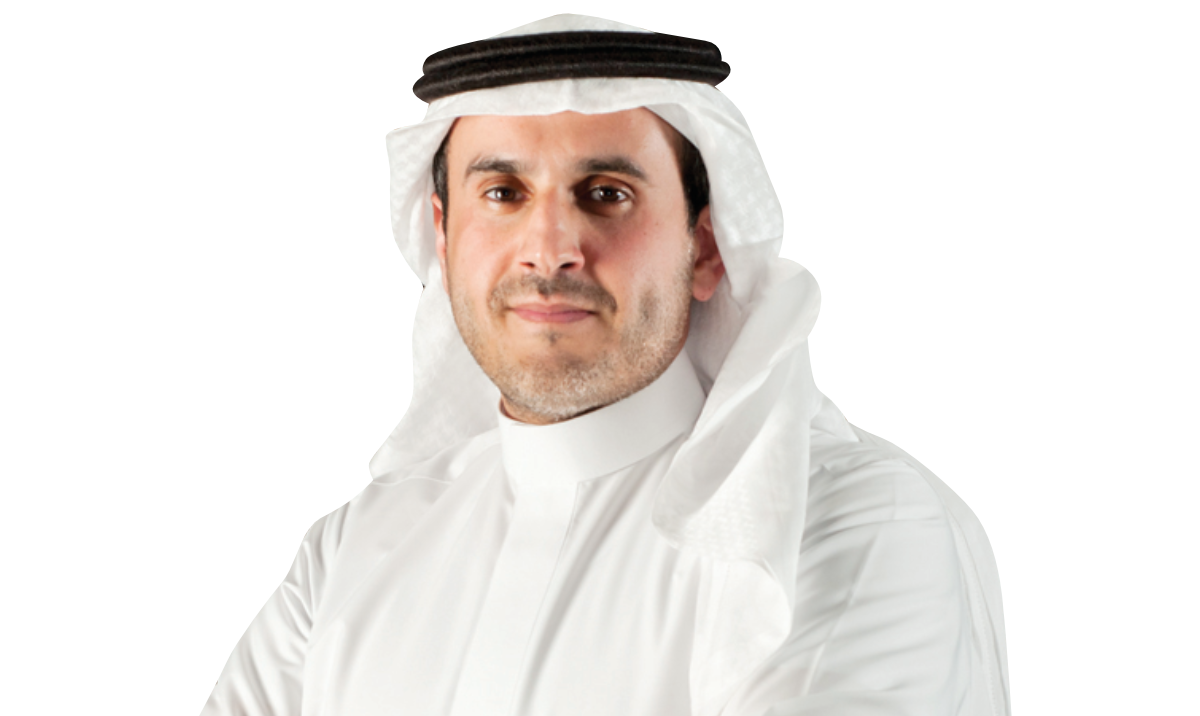


Naif Saleh Al-Rajhi, chairman and CEO of Naif Alrajhi Investment

Naif Saleh Al-Rajhi, chairman and CEO of Naif Alrajhi Investment, said: “At Naif Alrajhi Investment, we take pride in our innovative and futuristic thinking and development, which begins with our belief and commitment to Vision 2030. We are honored to have been chosen to work on this opportunity with our partners to develop the first private real estate investment land parcel within King Salman Park. The project is a mixed-use development and is situated in a vital and highly significant area for the future of Riyadh.”

George Tanasijevich, chief executive of King Salman Park Foundation, said: “We are proud to partner with Naif Alrajhi Investment and Saudi Fransi Capital. The King Salman Park Real Estate Development Fund will realize our shared vision of driving the sustainable growth and development of King Salman Park and the city of Riyadh, in line with Saudi Vision 2030.”

Meanwhile, Salam Alkhunaizi, CEO and board member of Saudi Fransi Capital, said: “We are extremely honored and privileged to be part of the iconic King Salman Park development through the launch of this fund, which is another milestone in Saudi Fransi Capital’s continued efforts to provide its investors with the most innovative and diversified investment solutions whilst striving to play a prominent part in the realization of Vision 2030 projects and its various realization programs. With the unique structuring and partnerships established with this fund alongside King Salman Park Company for Investment and Real Estate Development and Naif Alrajhi Investment group, we hope to provide a groundbreaking blueprint on how public-private partnerships can work profitably and efficiently for all, especially in the execution and management of large-scale and iconic projects such as King Salman Park.”


More crop per drop: NADEC and EF Polymer deploy breakthrough technology to cut agricultural water use by 40%

Updated 24 sec ago
Follow

More crop per drop: NADEC and EF Polymer deploy breakthrough technology to cut agricultural water use by 40%

Following a strategic technology-scouting framework led by Universal Materials Incubator, the National Agricultural Development Company has entered into a partnership to launch large-scale field trials of EF Polymer, marking a significant step in deploying deep-technology solutions to strengthen the Kingdom’s food and water security.

The collaboration initiates field trials of EF Polymer’s proprietary solution — a 100 percent organic, biodegradable powder that performs like a “soil battery” upcycled from food waste. Engineered to address water scarcity in arid and semi-arid regions, the material can absorb up to 50 times its own weight in water and gradually release moisture directly to plant roots. This mechanism has the potential to reduce irrigation water use by up to 40 percent, while enhancing crop yield and long-term agricultural productivity.

Beyond water efficiency, EF Polymer improves nutrient retention by minimizing fertilizer leaching, thereby reducing overall fertilizer requirements. After approximately one year in the soil, the material fully biodegrades into organic carbon, organic matter, and trace nutrients such as magnesium, calcium, and nitrogen — contributing directly to improved soil health and long-term fertility.

The solution is affordable, easy to apply, and suitable for a wide range of crops, making it viable both for individual farmers and for industrial-scale agricultural operations such as NADEC’s. 

EF Polymer has already achieved significant commercial adoption across multiple global markets, including Japan, the US, India and Turkiye, where it is actively used by farmers and agribusiness operators to improve water efficiency, soil health, and crop resilience under varying climatic conditions.

Its organic credentials are certified by OMRI and Ecocert, reinforcing its alignment with sustainable and regenerative agricultural practices.

The stakes for this alliance are high. By 2030, global freshwater demand is projected to exceed supply by 40 percent. In Saudi Arabia, the challenge is localized but intense: the agricultural sector alone consumes approximately 11.4 billion cubic meters of water annually. This partnership underscores NADEC’s commitment to adopting innovative, scalable technologies that conserve natural resources while supporting resilient food systems across the Kingdom.

Mohamed Al-Rajhi, VP of supply chain sector at NADEC, said: “Strategic agriculture today requires a long-term commitment to soil health and resource circularity. NADEC is leading the shift toward regenerative practices that restore our natural capital rather than merely consuming it. By diversifying our crop portfolio and investing in closed-loop nutrient management, we are insulating our operations against global price volatility and environmental shifts.”

“We are aggressively deploying AI-driven irrigation systems and satellite-based crop monitoring to optimize every drop of water and every hectare of land. This strategic pivot toward agri-digitization allows us to mitigate climate risks in real-time while significantly reducing our carbon footprint. Our commitment to sustainability is our greatest competitive advantage, ensuring that NADEC remains the cornerstone of the Middle East’s agri-food sector for decades to come. These trials focus on strategic scalable crops like wheat and olive trees to ensure the future of the Kingdom’s food security is both sustainable and locally rooted,” he added.

Strategic trial milestones:

  • Wheat: Trials have commenced to demonstrate water retention in this water-intensive crop.
  • Olive and blueberry: Specialized testing is scheduled for March to evaluate yield improvements and nutrient efficiency.

This collaboration supports Saudi Vision 2030 goals of reducing non-renewable groundwater use by 90 percent.