

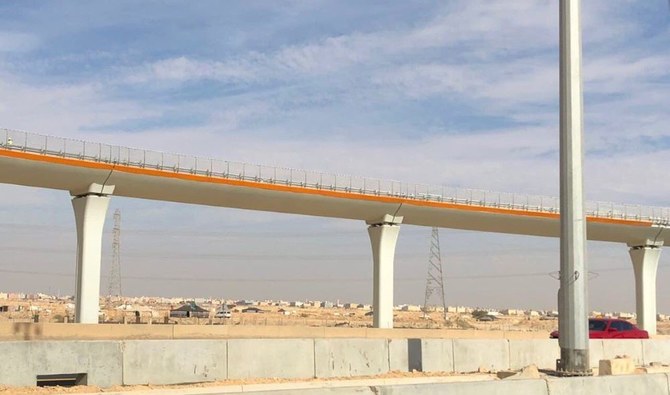



RIYADH: While Riyadh has much going for it in recent years, nothing is as iconic as its subway transportation undertaking. It’s one of the world’s largest metro projects. And yet that is not the best part.
Riyadh Metro is one of the few places in the world where engineering embraces art, where its functionality blends with its magnificence.
With its stunning architecture and captivating design elements, the network will be able to operate electric trains without drivers.
According to the Royal Commission for Riyadh City, the network will consist of six metro lines connecting 85 stations and spanning about 176 km.
Cutting through the densely populated areas, the network will link King Khalid International Airport and King Abdullah Financial District, the prominent universities, downtown Riyadh and the public transport center.
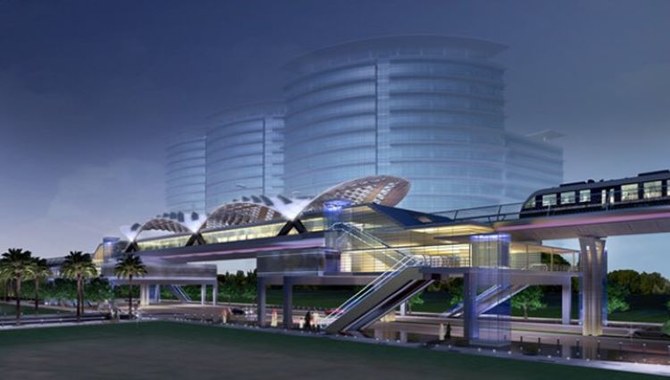
Moreover, the $22.5 billion project with its four grand stations — Qasr Al-Hukm District, King Abdullah Financial District, Western and STC — will also revolutionize the city’s mobility infrastructure, promising to transport 1.2 million passengers daily in its initial phase and eventually 3.6 million at full capacity.
According to One Works, a global design consultancy firm instrumental in planning Western Metro Station, the philosophy demonstrated a design reflective of local culture and heritage.
It absorbed the Kingdom’s dominant desert landscapes, oases and palm groves and created a cluster of dune-shaped, earth-colored structures emerging from the site, creating incredible avenues for station entry, light penetration and pedestrian shading.
The plaza, envisaged as a new and significant urban center external to the downtown area, is a revitalizing force that will reconnect existing neighborhoods, provide transportation and services, and boost the city’s economic development.
Similarly, Zaha Hadid Architects’ conceptualization of the KAFD Metro Station is outstanding and prioritizes connectivity. According to the firm’s website, predicted rail, car and pedestrian traffic across the location was mapped to optimize internal circulation and avoid congestion.
The resulting configuration was a three-dimensional lattice expressed through a sequence of sine waves, which acts as the spine of the building.
The overall composition echoes patterns generated by desert winds in sands, where reverberations generate complex repetitions in natural formations.
According to Riyadh Metro Transit Consultants, one of the consortiums associated with the project, the network has introduced several sustainable measures to reduce energy consumption.
The product has adopted a mix of on-site generated energy from photovoltaic cells, energy-efficient equipment, LED lighting fixtures, and occupancy and presence sensors.
Much thought has gone into water conservation with the project utilizing treated on-site gray water, sewage effluent, water-efficient fixtures, and efficient irrigation systems along the metro corridor.
Once completed, the project will considerably reduce carbon emissions by providing a sustainable means of transportation to facilitate citizens’ and residents’ dependence on vehicles.
In one of its project highlights, RMTC said that the designs developed for the four stations will meet a minimum silver certification of Leadership in Energy and Environmental Design certification.
Overall, the project has taken the lifecycle design approach: plan, design, and construct the project using materials that are local, recyclable and nonpolluting.
Once launched, this monumental project will be a testament to the creativity and ingenuity of architects, artists and engineers, a celebration of the human mind.
It will demonstrate the country’s commitment to modernized structures that offer people top-tier facilities, making it a sought-after experience at the Riyadh Expo 2030.
The expo’s designated location, situated near the King Salman International Airport, is currently under construction, but it is strategically placed to showcase the advanced transportation systems of our times. The world is ready, and so is Riyadh.


