

Red Sea Global’s giga-projects looking to involve Japanese companies

1 / 3
The Red Sea Project aims to be completed by 2030 and to be powered 100 percent by renewable energy. (ANJ)
2 / 3
The Red Sea Project aims to be completed by 2030 and to be powered 100 percent by renewable energy. (ANJ)
3 / 3
The Red Sea Project aims to be completed by 2030 and to be powered 100 percent by renewable energy. (ANJ)
Short Url
Updated 18 September 2023
Follow

Red Sea Global’s giga-projects looking to involve Japanese companies

TOKYO: Red Sea Global outlined its giga-projects and opportunities in Saudi Arabia for Japanese companies interested in being part of the development of tourist destinations along the Red Sea.

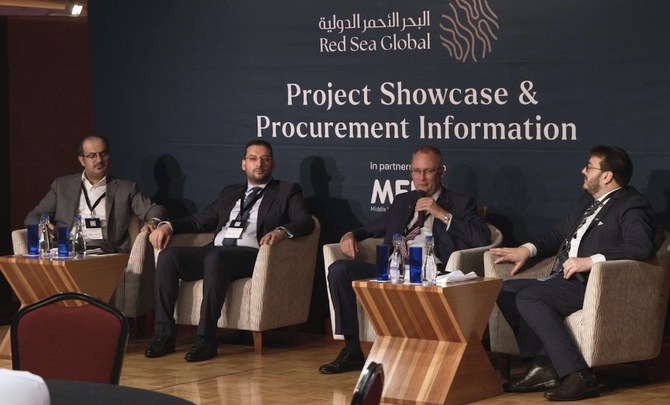
The event was hosted by developer Red Sea Global with participants including the MEED information group and construction company BEC Arabia.

RSG is facilitating an ambitious sustainable tourism industry in Saudi Arabia, which is keen to diversify its economy under its Vision 2030 plan, particularly in the field of tourism. So far, RSG has been involved in the awarding of more than $7.2 billion worth of contracts on the Red Sea project and $3.5 billion on the Amaala project. In 2023, it plans to procure more than $8 billion in contracts.

Ed James of MEED/GlobalData outlined the many opportunities that Saudi Arabia offers as its economy moves away from oil and into other fields, pointing out that nearly half of the contracts awarded in the last two decades have gone to international companies from South Korea, Japan, China and Italy.

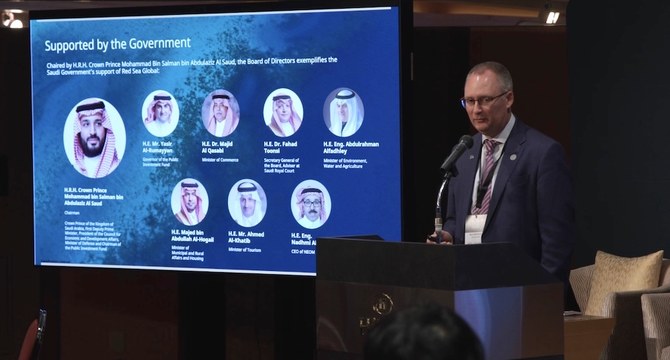
RSG’s Ben Edwards gave an insight into the scale of existing and future projects, which also cover other developments in places such as Qatar and Egypt. He also explained potential costs, material and supply requirements and how companies can be part of the new projects.

“We are the developers behind regenerative tourist destinations on the Red Sea coast in Saudi Arabia, and Phase 1 involves the construction of 16 very luxurious hotels, which are a mixture of inland hotels, some individual island hotels and one large island that has 11 hotels,” he explained. “Add to that Red Sea International Airport and all of the associated backup housing infrastructure of a big tourism resort. A little further up the coast, we have the Amaala project and Phase 1 there consists of eight hotels and a Marina Yacht Club area.

“The opportunities for the Japanese market are very broad as we are not only the designers and constructors of these hotels, we are the operators of them. So, we are procuring the full range of goods and services not only for the design and construction of the resorts and assets but also the operational work streams such as security, catering, air services, ground transportation, even landscaping. So, there are many wide and varied opportunities for Japanese companies, and we are excited to develop the relationships.”

The presentation in Japan aimed to attract the involvement of Japanese companies to the projects, as RSG’S Procurement Executive Director Mohammed Al-Fardan explained: “We are here today in Japan to show the opportunities we have in Red Sea Global and also the projects we have in the pipeline — nine or 10 projects that we have in the master planning phase. Here at Red Sea Global, and also as Saudis, we believe in the Japanese contractors’ and suppliers’ quality and capabilities. We have had a good experience with them at Red Sea Global. We invite all Japanese contractors and suppliers to participate and to join us in our journey.”

Shigeru Nakajima, a senior general manager for Mitsubishi Heavy Industries, told Arab News Japan that his company has had good experiences working in the Kingdom.

“We have long been involved in the Kingdom’s projects in the 1990s and at the beginning of the 2000s. So far, we could not join this project, but we heard that contract conditions had eased, and payment conditions had been worked out, so we really wanted to get involved in Saudi projects again,” he said.

The Red Sea project was launched in 2017 and this year will see the opening of three resorts and Red Sea International Airport, currently for domestic flights only but with international flights to be added next year. The Red Sea project aims to be completed by 2030 and to be entirely powered by renewable energy.

This article originally appeared on Arab News Japan


PIF-backed AviLease achieves revenue of $664m and 19% growth in 2025

Updated 27 February 2026
Follow

PIF-backed AviLease achieves revenue of $664m and 19% growth in 2025

RIYADH: Saudi Arabia’s Public Investment Fund-backed AviLease achieved exceptional performance and sustainable business growth during 2025, supported by the strategic expansion of its global platform.

According to its financial results for 2025, AviLease recorded total revenues of $664 million, an annual increase of 19 percent, driven by disciplined growth in its asset portfolio and strong performance in aircraft remarketing amid sustained global demand for modern, fuel-efficient aircraft, the Saudi Press Agency reported.

Profit before tax doubled compared to the previous year, reaching $122 million. The year witnessed an expansion in AviLease’s portfolio, reaching 202 owned and managed aircraft, leased to over 50 airline companies in more than 30 countries. 

The total value of the company’s assets stabilized at $9.3 billion. AviLease maintained a 100 percent fleet utilization rate, reflecting the resilience of its business model, the efficiency of its asset management, and the strength of its strategic relationships with airlines around the world.

AviLease concluded purchase agreements for aircraft from Airbus, including the A320neo family and A350F, and Boeing 737 aircraft, aiming to enhance its future asset portfolio with modern, fuel-efficient aircraft. This step will contribute to supporting future growth and meeting increasing customer demand for the latest aircraft, aligning with the Kingdom’s ambitions to become a leading global aviation hub.

AviLease strengthened its prestigious credit standing by obtaining a strong Baa2 credit ratings from Moody’s and BBB from Fitch, reflecting its financial solidity, managerial discipline, and efficiency in managing leverage. The company also successfully issued senior unsecured bonds worth $850 million last November under Regulation 144A/RegS. This issuance contributed to diversifying its funding sources and enhancing its financial flexibility.

Commenting on the results, AviLease CEO Edward O’Byrne said: “This exceptional performance reflects the quality of the company’s investment portfolio, the strength of its partnerships with airlines, and its strategic focus on responsibly deploying capital into highly sought-after, efficient, modern aircraft assets.”

He added: “As aviation markets continue to grow, AviLease is strategically positioned to continue its expansion plans and deliver sustainable long-term value for shareholders, contributing to the Kingdom’s ambitions.”

Throughout 2025, AviLease continued to play a pivotal role in the Kingdom’s growing aviation sector and contributed directly to the launch and scaling of the new national carrier, Riyadh Air, by completing a sale and leaseback transaction for a Boeing 787-9 aircraft, which thereby became the first aircraft to join the airline’s fleet.

AviLease also established a strategic partnership with Hassana Investment Co. This partnership aims to provide an opportunity for local and international investors to enter the aircraft financing asset class and benefit from AviLease’s technical expertise and operational capabilities to support partnership growth and enhance performance. 

Hassana Investment Co. has agreed to acquire an initial portfolio of 10 modern aircraft from AviLease.