Kuwait, Bahrain, Arab Parliament commend Saudi-Omani efforts to resolve Yemen conflict

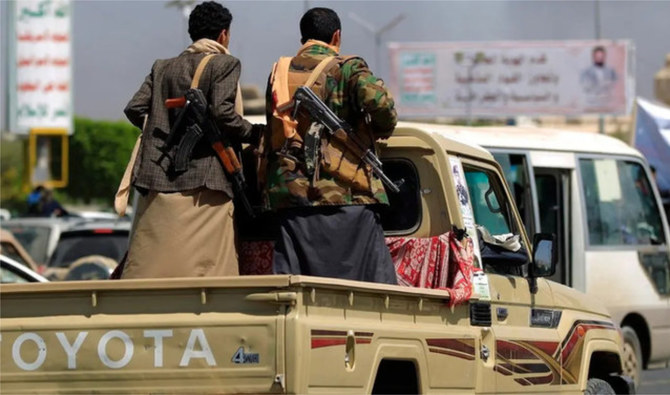
Yemen was plunged into war when the Houthis overran the capital Sanaa in a coup in September 2014. (AFP/File)
Short Url
Updated 18 September 2023
Follow

Kuwait, Bahrain, Arab Parliament commend Saudi-Omani efforts to resolve Yemen conflict

  • Earlier reports said a 10-strong delegation from the Iran-backed Houthi militia flew to Riyadh for their first talks in the Kingdom since the war began in 2014

RIYADH: Kuwait, Bahrain and the Arab Parliament have welcomed the Saudi-Omani efforts to find a comprehensive solution to the Yemeni crisis, the Saudi Press Agency said early Monday.

Statements by the Kuwaiti and Bahraini foreign ministries commended the mediators' invitation to the rival Yemeni groups to resume talks on the ceasefire agreement and to reach a solution that all sides agree on under the auspices of the United Nations.

Earlier reports said a 10-strong delegation from the Iran-backed Houthi militia flew to Riyadh for their first talks in the Kingdom since the war began in 2014.

The first round of the Oman-mediated consultations between Riyadh and Sanaa, which are running in parallel to UN peace efforts, was held in April when Saudi envoys visited Sanaa.

A UN-brokered ceasefire is largely holding, despite having officially lapsed last October.

Kuwait reiterated its full support for all regional and international efforts to resolve the crisis in accordance with an initiative previously launched by the Gulf Cooperation Council, and in line with relevant UN resolutions.

Bahrain stressed its backing for the initiative announced by Saudi Arabia in March 2021 to end the Yemeni crisis through a comprehensive peace settlement.

Arab Parliament chief Adel Al-Asoumi said he looks forward for things to proceed in a way that enables the Yemenis to end the war they have lived in for years and during which they suffered from difficult humanitarian conditions.

He added that since the beginning of the conflict, Saudi Arabia has been leading great efforts to reach a comprehensive political solution to the Yemeni crisis, and striving to work to defuse the conflict between the Yemenis and bring Yemen to safety and stability.

Al-Asoumi likewise praised the tireless efforts made by Oman to bring the views between all concerned parties.

Yemen was plunged into war when the Houthis overran the capital Sanaa in a coup in September 2014.

A Saudi-led Arab coalition intervened on behalf of the internationally recognized government the following March.

The ensuing fighting has forced millions from their homes, and caused one of the world’s worst humanitarian crises in a country already devastated by decades of conflict and upheaval.

UN agencies and 91 NGOs said on Thursday that 21.6 million people — 75 percent of the population — needed humanitarian assistance.

The six-month ceasefire that expired last October is still mostly observed but moves towards peace have been slow since the Saudi delegation visited Sanaa in April. 


Security, economic and political partnerships in the spotlight at first Jordan-EU Summit

Updated 11 sec ago
Follow

Security, economic and political partnerships in the spotlight at first Jordan-EU Summit

  • Event reflects international confidence in Jordan as a reliable partner in efforts to address security threats, advance peace initiatives, and expand cooperation, analysts say
  • Timing is significant, expert says, given the region faces overlapping crises and threats that place security and defense cooperation at the heart of Jordanian-European relations

AMMAN: The inaugural Jordan-EU Summit underlined the depth of the country’s strategic partnership with Europe, officials and experts said, and confirmed the pivotal role Jordan plays in regional security, political stability and economic cooperation.

Analysts told the Jordan News Agency that Thursday’s summit took place at a sensitive moment for the region, but reflected international confidence in Jordan as a reliable partner in efforts to address cross-border security threats, advance peace initiatives, and expand cooperation in trade, investment and development.

Bashir Al-Dajeh, an expert in security and strategy, said the timing of the summit was significant, given the region is facing overlapping crises and transnational threats that place security and defense cooperation at the heart of Jordanian-European relations.

Jordan’s strategic location positions it on the front lines of efforts to tackle illegal migration, organized crime, drug and arms smuggling and cross-border terrorism, he added. The country has hosted more than 3.5 million refugees over the past decade without compromising its security infrastructure, he noted.

Jordan’s effective border controls were helping to curb irregular migration to Europe and disrupting the plans of extremist groups and trafficking networks, Al-Dajeh said, which was directly benefiting regional and European security.

Khaled Abu Hassan, a member of the Jordanian parliament, said the country’s foreign policy under King Abdullah had reinforced its influence, in the region and internationally, particularly its firm stance in support of the Palestinian cause and a two-state solution to the conflict with Israel.

He said the summit reaffirmed Jordan’s political influence in the shaping of regional balances and advancement of efforts to achieve a just and comprehensive peace. The timing of the meeting also demonstrated the resilience of the nation in managing multiple regional and domestic challenges.

Abu Hassan also highlighted the economic aspects of the summit, including the announcement of a Jordan-EU economic conference in April, as a sign of the international recognition of Jordan’s political and economic role.

Economist Mufleh Aql said the high-level summit reflected a shared desire for a broadening of cooperation to encompass politics, trade, security and renewable energy, and Jordan was well-placed to benefit from access to the EU’s large markets, technology and investment opportunities.

The country could benefit from increased exports, technology transfers and financing for major infrastructure projects in sectors such as water, transport and energy, he added, and in return offer the EU skilled human capital amid labor shortages in Europe.

EU support for Jordan’s positions on issues such as Jerusalem, regional stability, energy and migration further strengthens the partnership, Aql said. Jordan also already benefits from EU grants, concessional loans and exports of agricultural, pharmaceutical and chemical products to European markets, he noted.