



NAIROBI, Kenya: Darfur, a part of Sudan that is no stranger to ethnic violence and genocide, is once again making similar headlines, following the discovery of mass graves amid a prolonged power struggle between two Sudanese generals that has reduced entire cities to rubble and triggered a humanitarian crisis of epic proportions.
The UN Joint Human Rights office said it has received credible reports of at least 13 mass graves in the city of El-Geneina and the surrounding areas, the head of the UN’s Sudan mission said on Wednesday.
The graves are believed to contain the bodies of victims of attacks by the paramilitary Rapid Support Forces and allied Arab militias on civilians, the majority of whom were from the Masalit community, Volker Perthes told the UN Security Council.
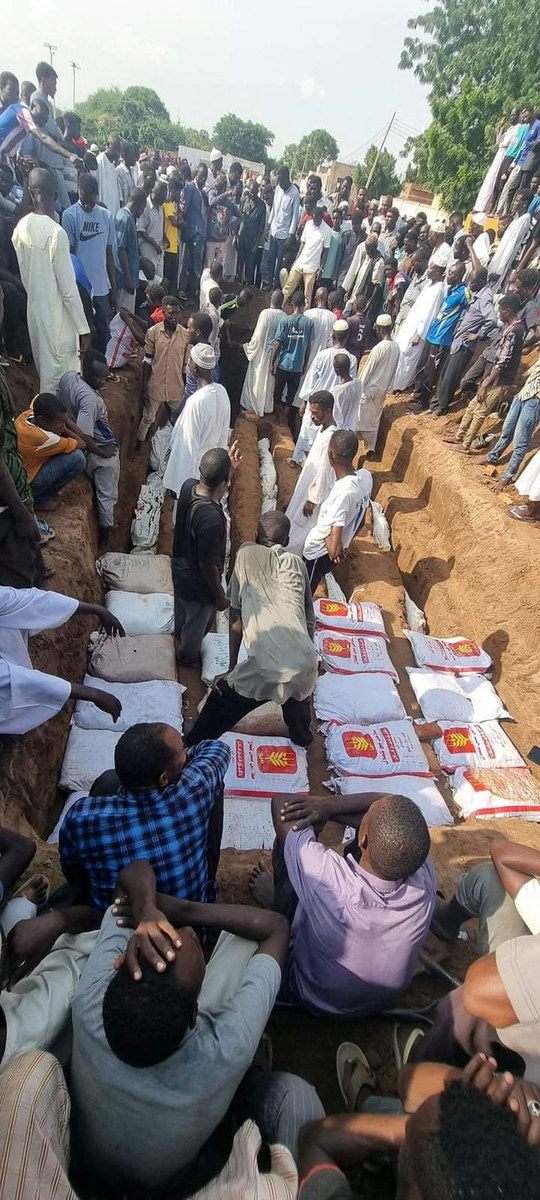
People place bodies into a mass grave in Nyala, Sudan, on August 23, 2023, in the aftermath of a strike near a bridge that killed dozens of people. (Handout via REUTERS)
This latest bout of bloodletting is partly the result of political rivalries compounded by simmering racial tensions. Darfur first gained international notoriety in the early 2000s when ethnic cleansing, economic disparities, and competition for resources sparked a conflict between the Arab-dominated government and non-Arab rebel groups.
Between 2003 and 2005, tens of thousands of civilians in Darfur were systematically killed, marking the first genocide of the 21st century. There are fears that the current conflict, between the RSF and the Sudanese Armed Forces, which is entering its sixth month, could reach similar levels of brutality.
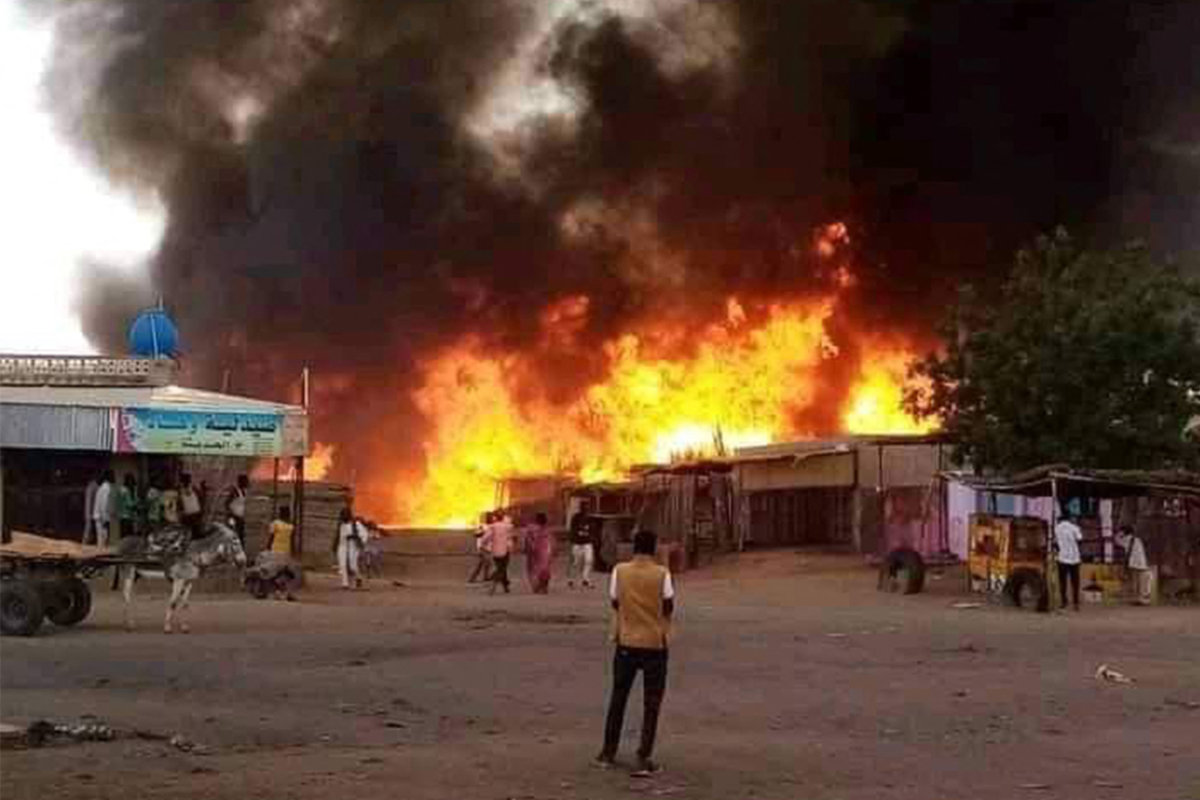
A man stands by as a fire rages in a livestock market area in al-Fasher, the capital of Sudan's North Darfur state, on September 1, 2023, in the aftermath of bombardment by the paramilitary Rapid Support Forces. (AFP)
“These tensions have been exacerbated by factors such as desertification, political instability since Sudan’s independence, economic stagnation, the proliferation of arms from internal and external conflicts, proxy-led battles, and international polarization,” Ahmed Khair, a researcher at the Sudan Research and Consultancy Group, told Arab News.
While the root causes of conflict remain unchanged, the allegiances of the warring parties have steadily shifted.
“New political parties, actors, coalitions, and even a transformation of existing political entities, have emerged, adapting to the ever-shifting political dynamics,” said Khair.
Prominent examples of these groups are the Justice and Equality Movement, the Sudan Liberation Movement-Minni Minnawi, and the Sudan Liberation Movement Abdel Wahid.
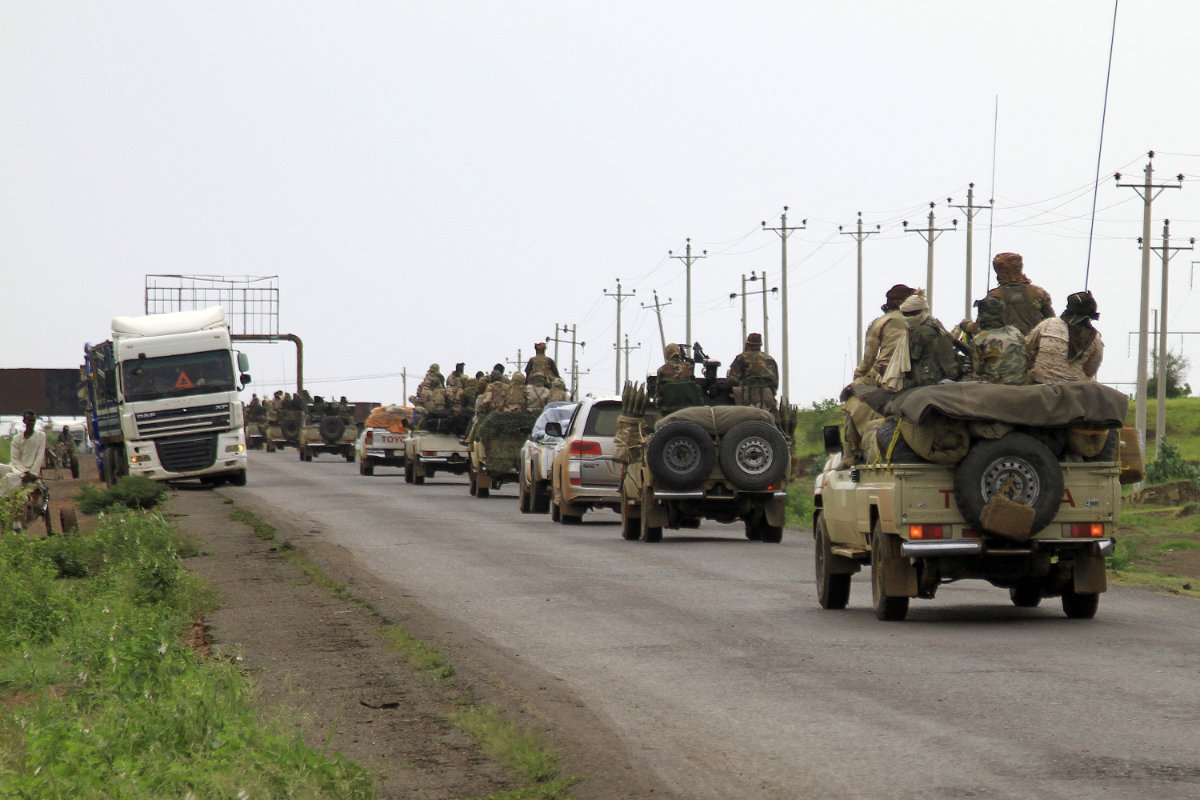
Fighters of the Sudan Liberation Movement-Minni Minnawi ride in vehicles moving in a convoy accompanying the governor of Sudan's Darfur State during a stopover in the eastern city of Gedaref while on the way to Port Sudan on August 30, 2023. (AFP)
According to Khair, they are all motivated by the prospect of “empowering their regions and the citizens living there.”
The current crisis in Sudan began on April 15 when a long-running power struggle between the SAF and the RSF escalated into violence, much of which has been focused around Darfur and the capital, Khartoum. About 4 million people have been internally displaced by the conflict and a further 1.1 million have fled to neighboring countries, primarily Chad and Egypt.
In Darfur, the conflict has taken on an appearance that is both different from previous hostilities yet at the same time all-too familiar, with the RSF and allied militias targeting specific ethno-linguistic groups.
The western region of Darfur, an area about the size of France and home to a quarter of Sudan’s population, had already seen some of the worst unrest during the conflict before the violence further intensified last month. More than 50,000 people fled the city in the space of 10 days in August, according to the UN.
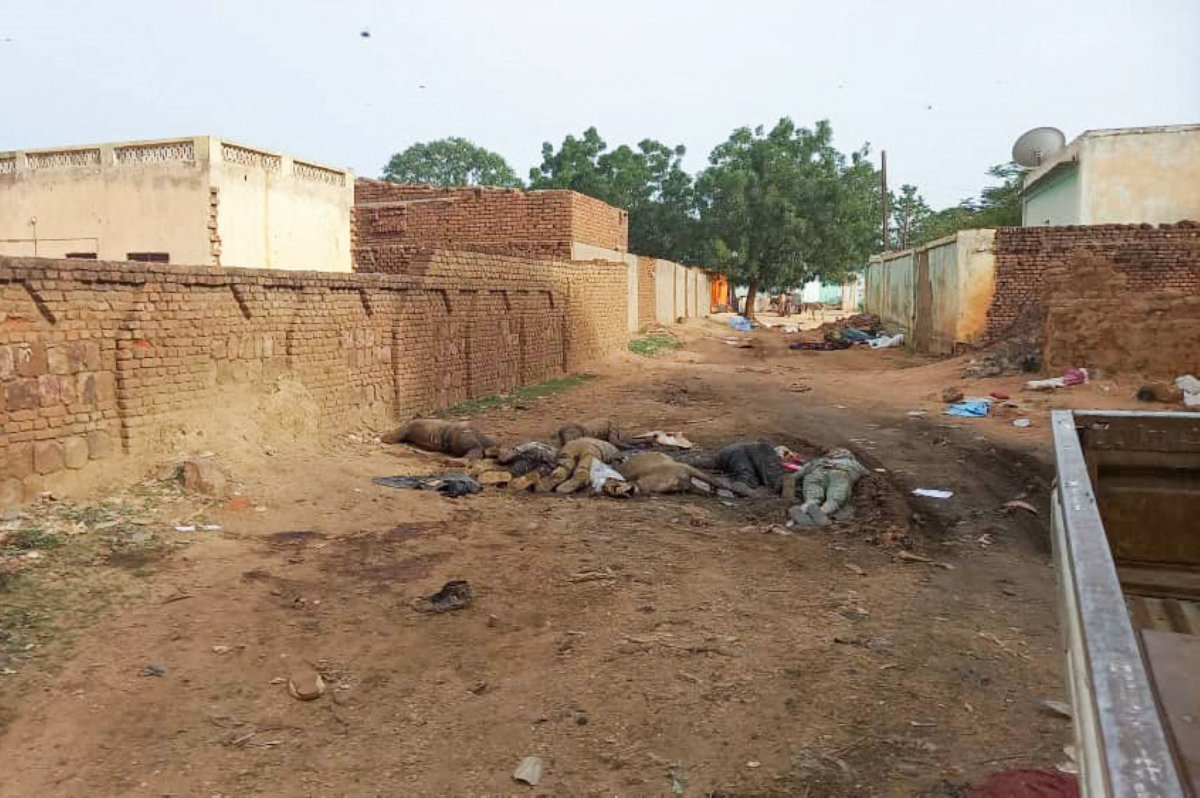
A picture taken on June 16, 2023, shows bodies strewn outdoors near houses in the West Darfur state capital El Geneina, prompting warnings that the conflict between two generals in war-torn Sudan had “taken on an ethnic dimension, resulting in targeted attacks based on people’s identities and subsequent displacement of communities”. (AFP)
Alice Wairimu Nderitu, the UN’s special adviser on the prevention of genocide, sounded the alarm over the increased incidence of “identity-based attacks,” warning that civilians “are being targeted on the basis of race” in Darfur.
Perthes, who this week announced he will step down from his role as head of the UN mission to Sudan, told the UN Security Council on Wednesday, during his final briefing, that the conflict in the country is likely to escalate.
Abdel Fattah Al-Burhan, the head of the SAF and Sudan’s de facto ruler, has repeatedly accused the UN envoy of bias toward the RSF, and Perthes has been persona non grata since he denounced possible “crimes against humanity” in Darfur.
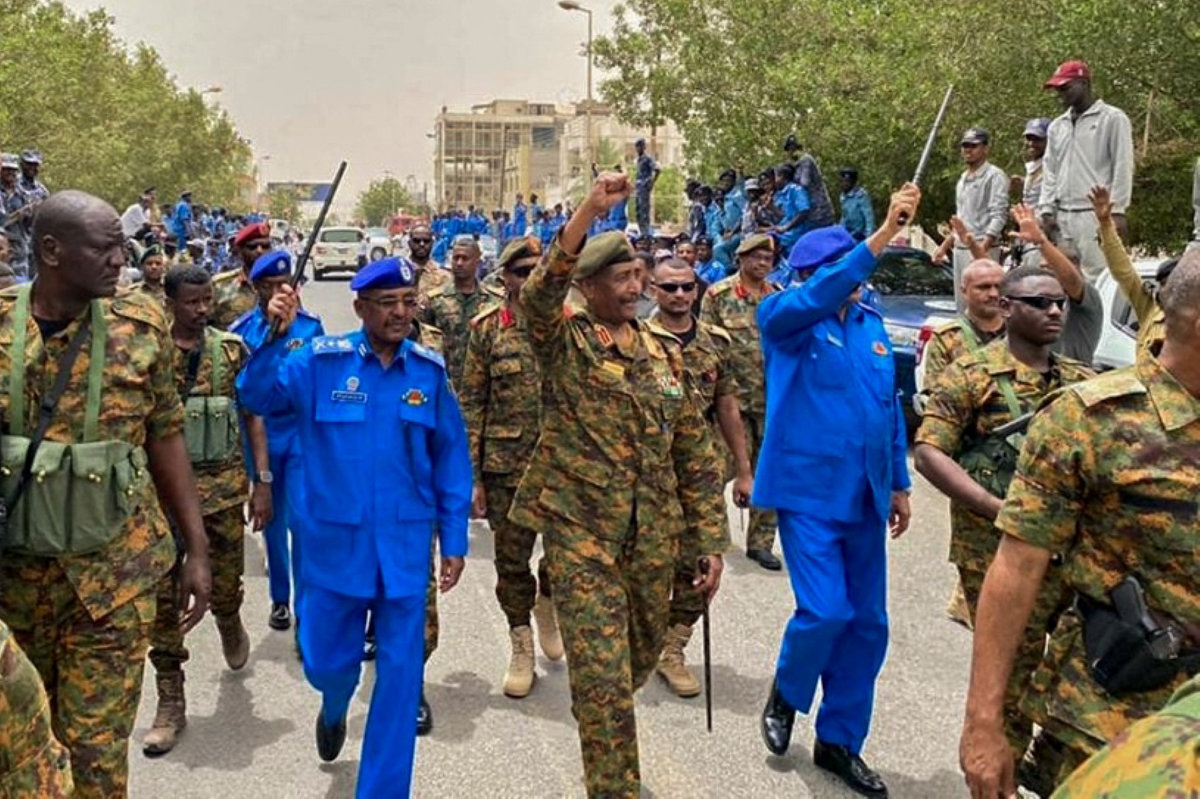
Sudanese Armed Forces chief General Abdel Fattah Al-Burhan greets supporters as tours a neighborhood in Port Sudan (Sudanese Army photo/AFP)
The Sudanese government repeatedly called for him to be dismissed from his role but UN Secretary-General Antonio Guterres had reiterated his support for the envoy. On Wednesday, however, Guterres accepted the resignation of Perthes, saying that the envoy “has very strong reasons” for stepping down.
“I am grateful to the secretary-general for that opportunity and for his confidence in me but I have asked him to relieve me of this duty,” Perthes said, as he warned that the conflict “could be morphing into a full-scale civil war.”
He added that the warring sides “cannot operate with impunity and there will be accountability for the crimes committed.”
In early September, the US imposed sanctions on Abdelrahim Hamdan Dagalo, the brother of RSF chief Mohammed Hamdan “Hemedti” Dagalo, over “the massacre of civilians, ethnic killings, and use of sexual violence.”
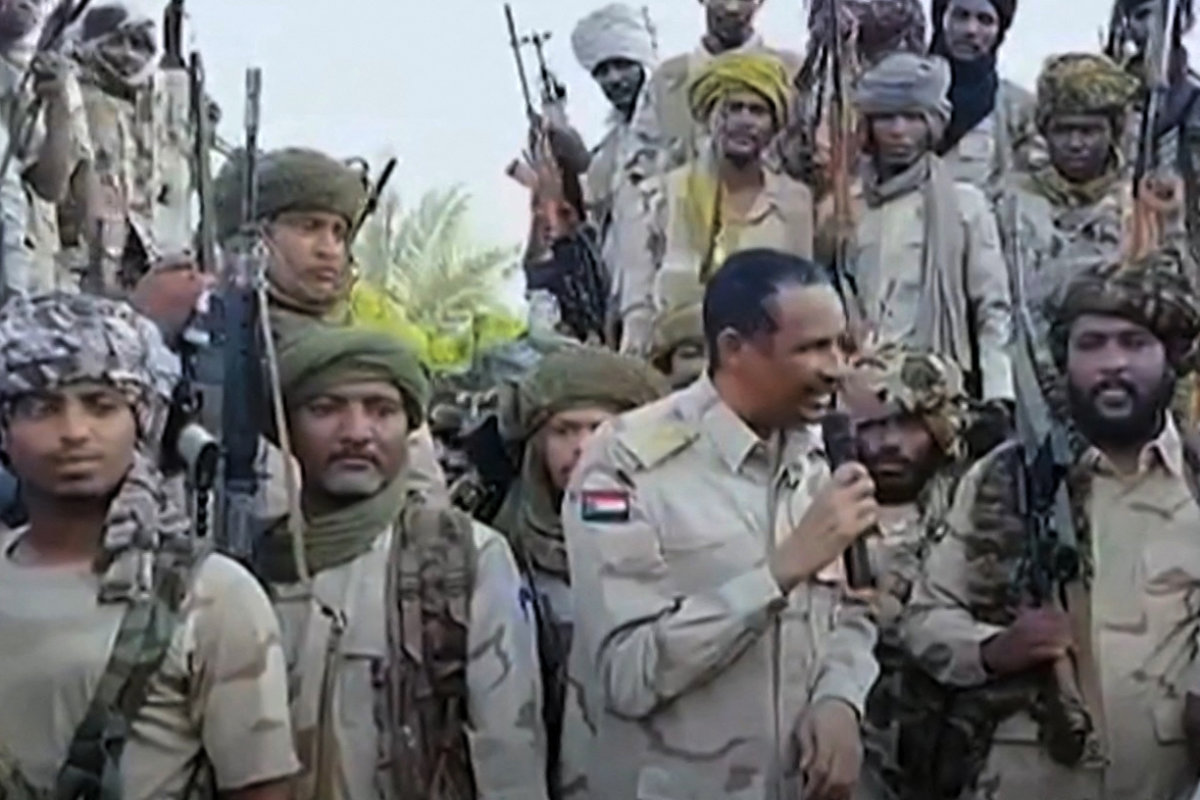
An image grab taken from a handout video posted on the Sudanese paramilitary Rapid Support Forces page on Twitter, rebranded as X, on July 28, 2023 shows its commander Mohamed Hamdan Daglo addressing RSF fighters at an undisclosed location. (Rapid Support Forces photo/AFP)
In South Darfur, a region historically associated with RSF influence, the feuding factions are locked in a fierce struggle for control of the country. While the RSF and its allied Arab militias hold sway over much of South Darfur’s capital, Nyala, the SAF is relying on its artillery and air force to assert its presence in an area that had long been neglected.
Civilians, and the aid workers trying to assist them, have found themselves caught in the crossfire. Sixty were killed and 285 wounded during 12 days of intense fighting in Nyala alone on August 22, according to a recent report by local monitoring group the Darfur Cinema Center. And an air raid on Wednesday killed at least 40 civilians, a medical source told the Agence France-Presse news agency.
On Aug. 21, the SAF reportedly shelled a market in Nyala, killing 24 civilians. The SAF denies being responsible for that incident but residents said they suspect the presence of RSF fighters nearby was the reason for the fatal bombardment.
A similarly harrowing incident occurred two days later when about 30 civilians, most of them women and children, were caught in the crossfire between the RSF and SAF.
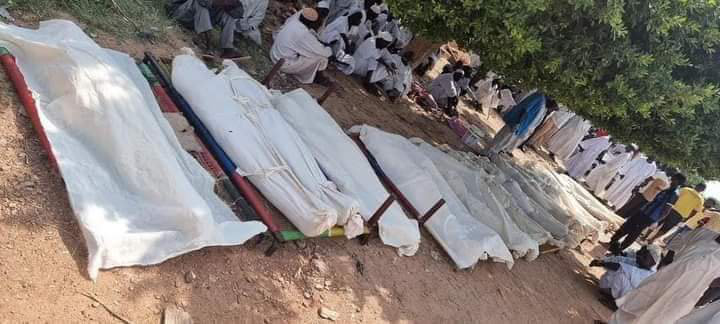
Bodies of civilians were buried in mass graves by local residents in Nyala, Darfur. (Supplied)
According to locals and observers who spoke to Arab News, the actual death tolls resulting from incidents such as these are likely much higher than the reported figures.
The conflict has disrupted communications infrastructure in the region, which is making it difficult for medics to accurately record deaths. In many cases, grieving families have no choice but to bury their dead without officially registering their deaths.
Services at hospitals and clinics in conflict zone have also been affected. Rescue operations have been hampered by the closure of medical facilities, and healthcare workers are at constant risk of being targeted by the warring factions, in breach of international humanitarian law.
The fighting has also disrupted food supplies and “food scarcity is a pressing concern across Darfur, further exacerbating the humanitarian crisis,” William Carter, the country director for Sudan at the Norwegian Refugee Council, told Arab News.
“It’s all very difficult and complex; the safety situation but also logistics, getting across borders from eastern Chad, through the rainy season across huge distances,” he added. “This is one of the most critical areas of the country to make sure a response gets to.”
The scarcity of food and safe drinking water often forces civilians to take extreme risks, placing themselves in the line of fire as they search for supplies.
“The situation is urgent,” Mohammed Adam Hassan, executive director of the Darfur Network for Human Rights, told Arab News. “We, as human rights organizations, continue to document civilian casualties, property destruction and widespread suffering.”
He called on the international community to intervene in the conflict and speed up the humanitarian response.
“The sanctions are a step in the right direction but more must be done to address the complex crisis on the ground,” he added. “Such an intervention should prioritize the protection of civilians and the creation of safe zones and humanitarian corridors to facilitate aid delivery.”
Khair, the researcher with the Sudan Research and Consultancy Group, agreed about the urgent need for urgent external intervention, but added that efforts need to align with the political realities on the ground.
“While coordination in areas controlled by the Sudanese government continues through established mechanisms, challenges arise in areas controlled by armed movements like the RSF,” he said.
Khair identified Minni Arko Minnawi, Darfur’s governor, as a potentially pivotal figure in this process, in light of the fact he has tacit approval from key parties.
“To bridge this gap, initiating dialogue and creating emergency coordination structures must happen,” Khair added.
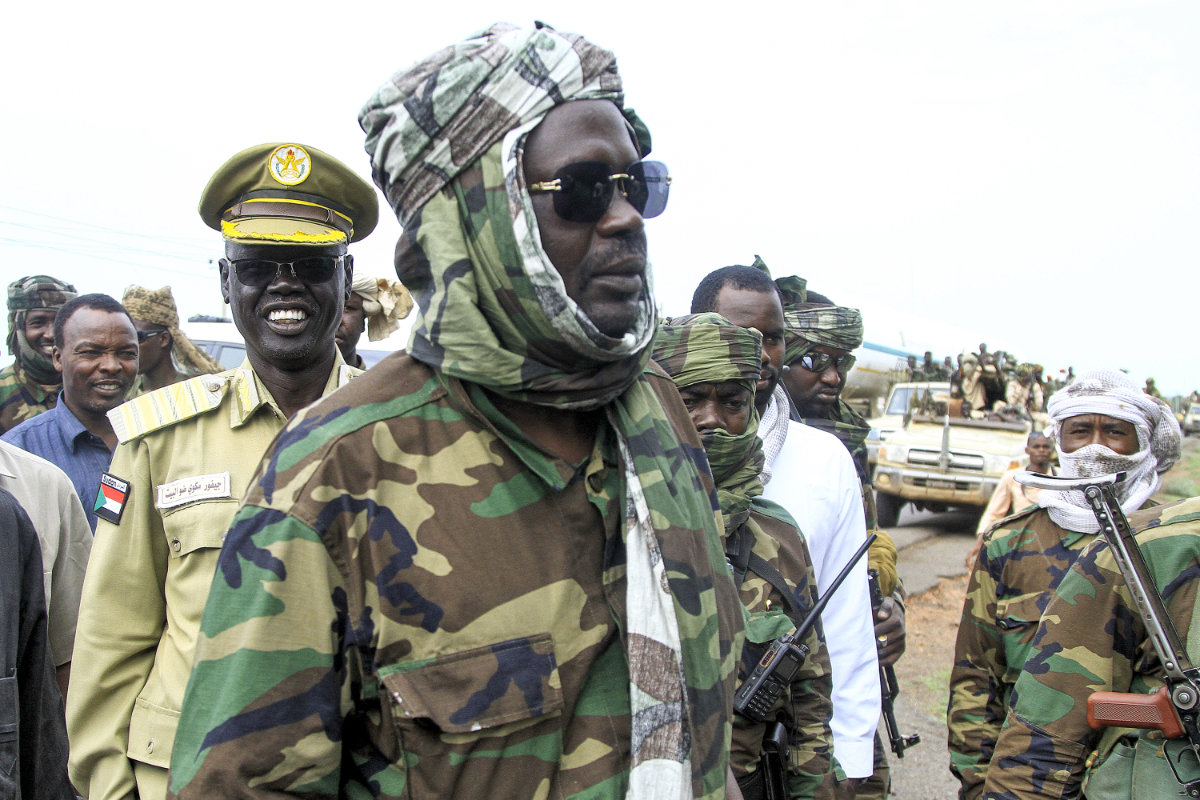
Minni Minnawi (C), governor of Sudan's Darfur State, is greeted by locals during a stopover in the eastern city of Gedaref while on his way to Port Sudan on August 30, 2023. (AFP)
Efforts to address the crisis through regional diplomatic channels, such as the African Union and the Intergovernmental Authority on Development, have faced serious obstacles. Al-Burhan has threatened to withdraw Sudan from organizations that continue to communicate with representatives of the RSF.
Washington’s recent announcement of sanctions on RSF leader Dagalo might suggest the US is taking a side in the conflict but it could simply be a move designed to coax the warring parties back to the negotiating table in Jeddah.
Regardless of the measures taken so far, Hassan said that “accountability and justice are of the highest importance,” and that thorough investigations by organizations such as the International Criminal Court will ultimately be required to ensure the perpetrators of abuses are held to account.


