

Saudi Arabia’s Uruq Bani Ma’arid among MENA sites up for UNESCO World Heritage List consideration

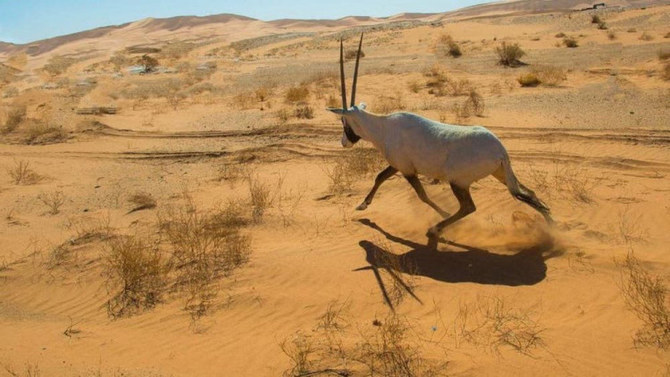
The Saudi site up for consideration is Uruq Bani Ma’arid, in the Kingdom’s southwestern desert. (SPA/File Photo)
Short Url
Updated 14 September 2023
Follow

Saudi Arabia’s Uruq Bani Ma’arid among MENA sites up for UNESCO World Heritage List consideration

  • World Heritage List made up of sites that represent cultural and natural diversity of the world
  • Sites among more than 50 across hoping to be included in the list

LONDON: Six sites in the Middle East and North Africa, including one in Saudi Arabia, are to be considered for the UNESCO World Heritage List when the 45th extended session of its committee gets underway in Riyadh on Sunday.

The sites are among more than 50 across the world hoping to be included in the list following the meeting, which is being chaired by Princess Haifa Al-Mogrin, Saudi Arabia’s permanent representative to UNESCO.

The World Heritage List is made up of sites that represent the cultural and natural diversity of the world, and a yearly meeting is held to review and update the list, accept new applications and make edits.

The list, which currently consists of 1,157 sites, is highly regarded by many countries as it serves as a major driver of tourism, funding and the conservation of historical sites.

The Saudi site up for consideration is Uruq Bani Ma’arid, in the Kingdom’s southwestern desert, which is making a name for itself with its unique vistas, diverse wildlife and eco-tourism offerings.

Another is Ancient Jericho, also known as Tell es-Sultan, an archaeological site located in the West Bank in Palestine, which is famous for its evidence of human habitation dating back more than 11,000 years.


Ancient Jericho, also known as Tell es-Sultan, is an archaeological site located in the West Bank in Palestine. (Wikimedia Commons)

Djerba, an island off the southeastern coast of Tunisia, is the third regional site looking to make the list. The island is renowned for its blend of local Berber culture with Arab and Jewish influences, especially the Ghriba Synagogue.
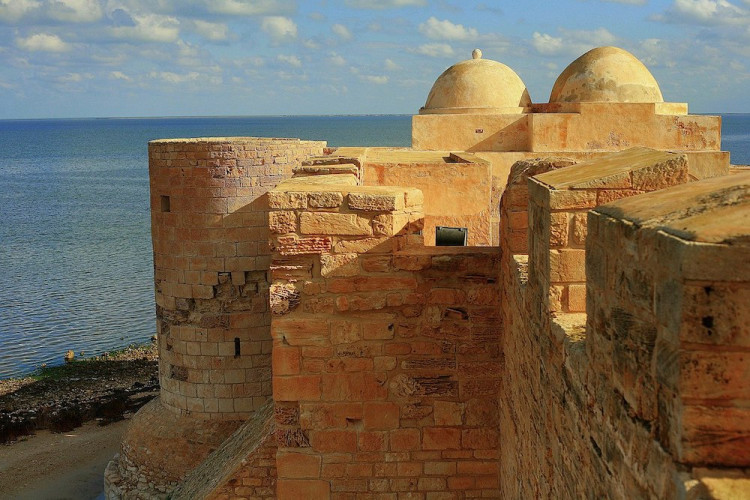


Djerba, an island off the southeastern coast of Tunisia, is the third regional site looking to make the list. (Wikimedia Commons)

The remaining three sites are all in Iran and include the village of Masouleh with its distinct architecture built into the Alborz mountains; the Hyrcanian forests, which span across northern Iran and cover a small part of neighboring Azerbaijan; and, lastly, the Persian Caravanserai, a marvel of ancient Persian architecture that was an important stop for travelers and traders along the Silk Road.


Art Cairo spotlights pioneering artist Inji Efflatoun

Updated 23 January 2026
Follow

Art Cairo spotlights pioneering artist Inji Efflatoun

CAIRO: Art Cairo 2026 returned to Egypt’s bustling capital from Jan. 23-26, with visitors treated to gallery offerings from across the Middle East as well as a solo museum exhibition dedicated to pioneering Egyptian artist Inji Efflatoun.

While gallery booths hailed from across the Arab world, guests also had the chance to explore the oeuvre of the politically charged artist, who died in 1989.

Many of the pieces in the 14-work exhibition were drawn from the collection of the Egyptian Museum of Modern Art and cover four main periods of the artist’s work, including her Harvest, Motherhood, Prison and Knoll series.

While gallery booths hailed from across the Arab world, guests also had the chance to explore the oeuvre of the politically charged artist, who died in 1989. (Supplied)

Efflatoun was a pivotal figure in modern Egyptian art and is as well known for her work as her Marxist and feminist activism.

“This is the third year there is this collaboration between Art Cairo and the Ministry of Culture,” Noor Al-Askar, director of Art Cairo, told Arab News.

“This year we said Inji because (she) has a lot of work.”

Born in 1924 to an affluent, Ottoman-descended family in Cairo, Efflatoun rebelled against her background and took part heavily in communist organizations, with her artwork reflecting her abhorrence of social inequalities and her anti-colonial sentiments.

Many of the pieces in the 14-work exhibition were drawn from the collection of the Egyptian Museum of Modern Art and cover four main periods of the artist’s work, including her Harvest, Motherhood, Prison and Knoll series. (Supplied)

One untitled work on show is a barbed statement on social inequalities and motherhood, featuring a shrouded mother crouched low on the ground, working as she hugs and seemingly protects two infants between her legs.

The artist was a member of the influential Art et Liberte movement, a group of staunchly anti-imperialist artists and thinkers.

In 1959, Efflatoun was imprisoned under Gamal Abdel Nasser, the second president of Egypt. The artist served her sentence for four years across a number of women’s prisons in the deserts near Cairo — it was a period that heavily impacted her art, leading to her post-release “White Light” period, marked dynamic compositions and vibrant tones.

Grouped together, four of the exhibited works take inspiration from her time in prison, with powerful images of women stacked above each other in cell bunkbeds, with feminine bare legs at sharp odds with their surroundings.

Art Cairo 2026 returned to Egypt’s bustling capital from Jan. 23-26. (Supplied)

The bars of the prison cells obstruct the onlooker’s view, with harsh vertical bars juxtaposed against the monochrome stripes of the prison garb in some of her works on show.

“Modern art, Egyptian modern art, most people, they really don’t know it very well,” Al-Askar said, adding that there has been a recent uptick in interest across the Middle East, in the wake of a book on the artist by UAE art patron Sultan Sooud Al-Qassemi.

“So, without any reason, all the lights are now on Inji,” Al-Askar added.

Although it was not all-encompassing, Art Cairo’s spotlight on Efflatoun served as a powerful starting point for guests wishing to explore her artistic journey.