

Pakistani company to convert Jamshoro plant from imported to local coal for cheaper power generation

A general view of Jamshoro power plant, in Jamshoro district of Pakistan's Sindh province on September 9, 2023. (AN photo)
Short Url
Updated 12 September 2023
Follow

Pakistani company to convert Jamshoro plant from imported to local coal for cheaper power generation

  • Project, situated in Jamshoro district 150 kilometers from Karachi, is financed by Asian Development Bank
  • Supercritical coal fired project, designed on imported coal, is 95 percent completed at cost of around $545 million

KARACHI: AsiaPak Investments, a private investment firm with operational assets in Pakistan and Hong Kong, will invest in the transformation of Jamshoro Power Plant from imported to locally-sourced Thar coal to ensure cheaper power generation, the company said on Monday.

The project, situated in the Pakistani province of Sindh in Jamshoro district some 150 kilometers away from the port city of Karachi, is financed by Asian Development Bank (ADB). The supercritical coal fired project, designed on imported coal, is 95 percent complete at the cost of around $545 million.

The plant is ready for power generation but remains non-operational mainly due to increasing costs of energy imports, including coal.

“The government, encouraged by K-Electric and by us, AsiaPak Investments, is now focused on converting this plant to Thar coal so that for the next 30-year life of this project consumes only Thar coal and not imported coal,” Shehryar Chishti, CEO of AsiaPak Investments, told a group of journalists during the visit to the plant on Saturday.

“This is designed as a 2x660 megawatt coal project at highest environmental standards and financed by the Asian Development Bank and of the two units, one unit is almost complete.” 

Chisti said his company would invest in the conversion of the plant, enabling power generation through local coal sourced from Thar at low cost. 

“We have submitted our plan to the government and soon after approval we will execute our investment plan,” he said, adding that the plant would be ready by next year for power generation through local coal. 
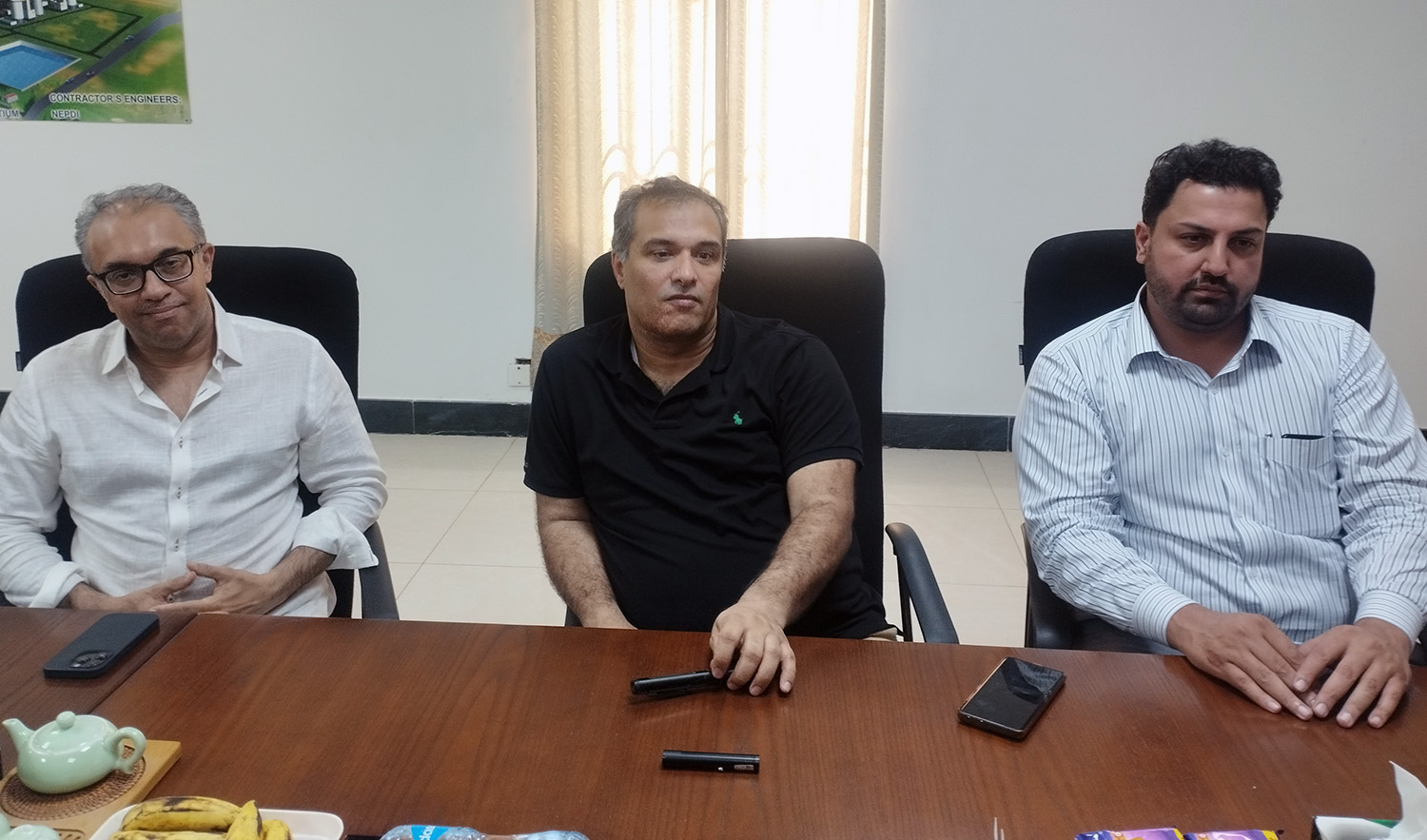


CEO of AsiaPak Investments Shehryar Chishti, center, is briefing visiting journalists about the conversion of Jamshoro power generation plant from imported coal to local coal in Karachi, Pakistan on September 9, 2023. (AN photo)

The AsiaPak chief estimated the cost of conversion for local coal operation would be around $50 million but it was not yet finalized.

Chisti said his company, which is also one of the investors in Block-1 of Thar coal mining, would arrange the supply of around 3.1 million tons per year of coal for the plant. 

Pakistan sits on 186 billion tons of coal deposits, of which 94 percent or 175 billion tons, are in the remote Thar region of Sindh province. The coal deposits are equivalent to 50 billion tons of oil, more than Saudi Arabia and Iranian oil reserves combined. The reserves are equal to 2,000 trillion cubic feet (TCF) of gas which is 68 times higher than Pakistan’s total gas reserves, according to the CPEC Energy Planning Report. 

Potential coal reserves in Pakistan may generate 100,000 MW of power for 350 years, according to an ADB document. 

Chisti said at full capacity, the power plant would produce about 5 billion kilowatt hours per year, which is approximately 25 percent of Karachi’s current requirement. 

“It’s unacceptable that Karachi has expensive electricity when it is sitting next to one of the biggest reservoirs of coal in the world and when it’s sitting next to one of the biggest wind and solar corridors in the world,” Chisti said, referring to the current high cost of electricity. 

Chisti said the process of conversion would take at least 10 months and electricity generated through local coal would be fed into the national grid. He hoped that power generation through local sources would reduce the country’s energy import bill. 

Pakistan’s energy import bill for the outgoing fiscal year, FY23, was $17 billion, 27 percent lower than the previous year, according to the Pakistan Bureau of Statistics.


Thousands of Afghans displaced by Kabul-Islamabad conflict

Updated 03 March 2026
Follow

Thousands of Afghans displaced by Kabul-Islamabad conflict

  • The neighbors have clashed since Thursday when Afghanistan launched a border offensive in retaliation for Pakistani air strikes
  • Islamabad has hit back along the border and with fresh air strikes, bombing multiple sites including the former US air base at Bagram

KABUL: More than 8,000 Afghans have been forced from their homes by fighting with Pakistani forces along the border in recent days, the Taliban government said Tuesday.

The neighbors have clashed along the frontier since Thursday, when Afghanistan launched a border offensive in retaliation for Pakistani air strikes.

Islamabad has hit back along the border and with fresh air strikes, bombing multiple sites including the former US air base at Bagram, the capital Kabul and the southern city of Kandahar.

“Due to these brutal bombings and attacks, 8,400 of our families have been displaced, forced to leave their villages and homes,” Afghan deputy government spokesman Hamdullah Fitrat said at a news conference.

An AFP journalist near the frontier has spoken to residents who have fled the clashes.

Afghanistan’s defense ministry reported “extensive and heavy offensive and revenge attacks” across seven provinces over the past day.

The government acknowledged earlier air strikes on Bagram for the first time.

“Yes, the enemy targeted Bagram as well, but there were no casualties or damage,” defense ministry spokesman Enayatullah Khowarazmi said.

Two residents told AFP on Sunday that they heard air strikes in Bagram, north of the capital.

Pakistani security sources said strikes at Bagram were based on “credible intelligence” to disrupt the “supply of critical equipment and stores” for Afghan soldiers and militants fighting Pakistan forces along the frontier.

They said Pakistan reserves the right to respond to the Taliban government’s “aggression along its border by striking legitimate targets at the time and place of its own choice.”

Pakistani fighter jets also flew nighttime sorties over Kabul, another security source told AFP.

UN ‘ALARMED’
Islamabad’s confirmation that its aircraft flew over the Afghan capital came hours after AFP journalists in the city heard multiple explosions.

The blasts were heard alongside anti-aircraft weapons and gunfire from across the city.

An AFP journalist in Jalalabad city, between Kabul and the frontier, reported hearing explosions and various weapons being fired.

At the nearest border crossing, around 50 kilometers (30 miles) from Jalalabad, residents in Torkham told AFP the days-long fighting was ongoing.

The latest casualties include three children killed in a “crime committed by the Pakistani military regime” in Kunar province, Fitrat said Monday.

At least 39 civilians have been killed since Thursday, the Afghan government said, a toll which Pakistan has not commented on.

The UN children’s charity said it was “alarmed” by reports of child casualties in the conflict, and called on all sides to “exercise maximum restraint, protect civilian lives.”

Pakistan said its February air strikes that sparked the escalation were targeting militants.

Islamabad accuses Afghanistan of failing to act against militant groups that carry out attacks in Pakistan, which the Taliban government rejects.

Pakistan’s Foreign Minister Ishaq Dar said on Tuesday it was “never too late to talk,” but warned: “We will finish this menace.”

The Afghan defense ministry spokesman said more than 25 soldiers have been killed, while estimating Pakistani fatalities among troops at around 150.

Pakistan says more than 430 Afghan soldiers have been killed, with more than 630 wounded.

Casualty claims from both sides are difficult to verify independently.

The violence of recent days is the worst since October fighting killed more than 70 people on both sides, with land borders between the neighbors largely shut since.