

Sayidaty print goes monthly with revamped content style and enhanced opportunities for premium brands

1 / 2
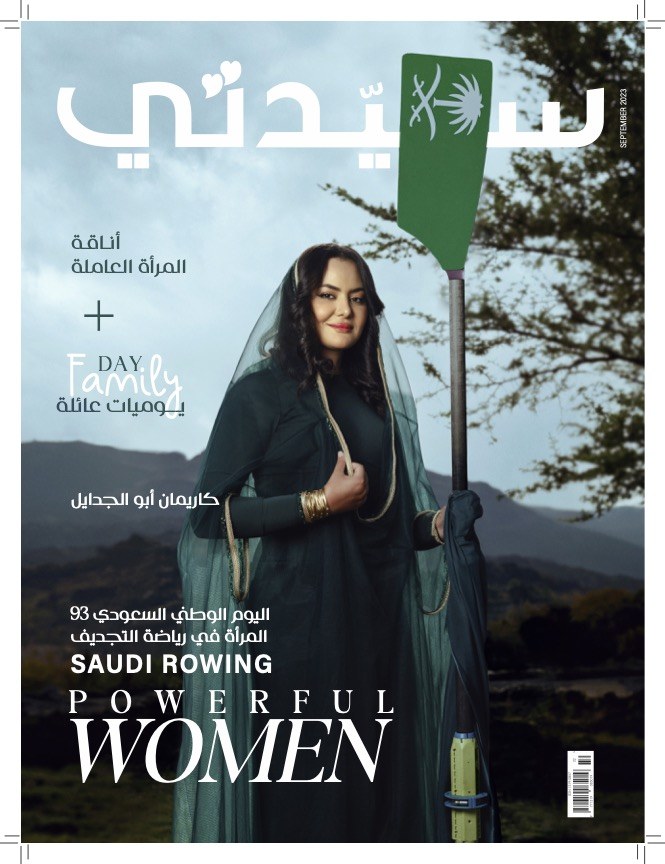
The new monthly print magazine is available for the first time in September with new content now live on Sayidaty.net and social media platforms. (Supplied)
2 / 2
The new monthly print magazine is available for the first time in September with new content now live on Sayidaty.net and social media platforms. (Supplied)
Short Url
Updated 12 September 2023
Follow

Sayidaty print goes monthly with revamped content style and enhanced opportunities for premium brands

  • Sayidaty to transform its content with a more modern editorial approach, a monthly print magazine, updated design and compelling visuals
  • Enhancements reflect audiences’ changing interests and focuses on the experiences of inspiring figures, Sayidaty's Editor-In-Chief said

RIYADH: Sayidaty, the leading Arabic lifestyle magazine, announces a comprehensive revamp plan to appeal to modern audiences, strengthening the magazine’s position as the number one platform for modern Arab women. Starting from September, the magazine will be printed monthly with a fresh new design and an increased number of pages to cover a wide range of topics and appeal to a new diverse and younger audience, ensuring that Sayidaty resonates with the interests of Arab women across multiple generations. 

The new content direction reflects women’s role in society, looking through the lens of its diverse audience and featuring topics including female empowerment, life coaching, mother and child, business and finance, and entrepreneurship. Additionally, Sayidaty will continue to cover popular topics that have driven its loyal following with features on the latest fashion trends, beauty, celebrity news and the matters at the heart of modern Arab women and their families. 

The enhancement plan includes more compelling content focused on the reader, shining a light on stories and unique experiences from inspiring figures, and reaffirming the bond between the platform and the reader. The revamp also includes an updated visual identity and beautifully curated imagery across its print, online and social media platforms. 

The updates announced today are the first step of a comprehensive digital transformation strategy for Sayidaty. These enhancements will further boost Sayidaty’s impressive position as one of the top five most visited websites in the MENA region. As the preferred Arab lifestyle website for over 42 years and a leading voice of inspiration to its audiences, its website - Sayidaty.net - has 10.2 million monthly visitors, including 60 percent of active female internet users and 40 million followers across its social platforms. 

Furthermore, the new Sayidaty offering is designed to offer advertisers more appealing commercial opportunities across its print, digital and social media platforms. The broader range of content that targets a wider demographic, including Generation X, Millennials and Generation Z, enables premium brands to reach diverse and extensive audiences. Sayidaty’s new and improved content will also provide more avenues for advertisers to seamlessly integrate in-streaming branding, sponsorship, and high engagement ad formats, and enhance exposure across multiple devices and products.​ 

Lama AlShethry, the Editor-In-Chief of Sayidaty said: “Sayidaty has been a pioneering force since its inception in 1981, serving as a beacon of empowerment for Arab women, a source of inspiration for their modern families and a bridge across generations. The magazine has contributed to multiple defining moments over the last four decades – such as empowering women’s rights; launching a campaign against child sexual abuse in 2013; and delivering an awareness campaign against underage marriage in 2010. Sayidaty’s enhancements are an important step in bringing this inspirational publication even closer to an expanded and diverse audience by creating content focused on the experiences of inspiring figures from a wide range of creative industries. It also reaffirms Sayidaty’s ongoing role as a champion of Arab women.” ​ 

The first monthly enhanced print magazine is now available in the market and available on Sayidaty.net and social media platforms. Sayidaty’s latest content includes thought-provoking features on Saudi women in sports; organisations empowering up and coming regional designers; a Saudi jewellery design atelier; and the importance of quality time spent between mother and child. ​ 

Sayidaty is owned by SRMG, the largest integrated media group from the Middle East and North Africa since 1972. SRMG’s transformation of Sayidaty follows several successful product relaunches over the last year and is part of SRMG’s strategy to enhance and expand its media portfolio and elevate the media ecosystem.


To infinity and beyond: Grendizer’s 50 years of inspiring Arabs

Updated 27 December 2025
Follow

To infinity and beyond: Grendizer’s 50 years of inspiring Arabs

  • ⁠ ⁠50 years after its creation, the Grendizer anime series continues to capture Arab imagination
  • ⁠ ⁠⁠Arab News Japan speaks to creator Go Nagai, Middle Eastern fans and retells the story behind the UFO Robot tasked with protecting our planet

LONDON: Few cultural imports have crossed borders as unexpectedly, or as powerfully, as Grendizer, the Japanese giant robot that half a century ago became a childhood hero across the Arab world, nowhere more so than in Saudi Arabia.

Created in Japan in the mid-1970s by manga artist Go Nagai, Grendizer was part of the “mecha” tradition of giant robots. The genre was shaped by Japan’s experience during the Second World War, and explored themes of invasion, resistance and loss through the medium of science fiction.

But while the series enjoyed moderate success in Japan, its true legacy was established thousands of kilometers away in the Middle East.

By the early 1980s, “Grendizer” had spread across the Middle East, inspiring fandoms in Saudi Arabia, Kuwait, Iraq and beyond. (Supplied)

The anime “UFO Robot Grendizer” arrived on television in the region in 1979, dubbed into Arabic and initially broadcast in Lebanon during the Lebanese civil war. The story it told of the heroic Duke Fleed, a displaced prince whose planet had been destroyed by alien invaders, struck a chord with children growing up amid regional conflict and occupation by Israel.

Its themes of defending one’s homeland, standing up to aggression and protecting the innocent were painfully relevant in the region, transforming the series from mere entertainment into a kind of emotional refuge.

Much of the show’s impact came from its successful Arabization. The powerful Arabic dubbing and emotionally charged voice-acting, especially by Lebanese actor Jihad El-Atrash as Duke Fleed, lent the show a moral gravity unmatched by other cartoons of the era.

While the series enjoyed moderate success in Japan, its true legacy was established thousands of kilometers away in the Middle East. (Supplied)

The theme song for the series, performed by Sami Clark, became an anthem that the Lebanese singer continued to perform at concerts and festivals right up until his death in 2022.

By the early 1980s, “Grendizer” had spread across the Middle East, inspiring fandoms in Saudi Arabia, Kuwait, Iraq and beyond. For many, it was not only their first exposure to anime, it also delivered lessons on values such as justice and honor.

Grendizer was so influential in the region that it became the subject of scholarly research, which in addition to recognizing the ways in which the plight of the show’s characters resonated with the audience in the Middle East, also linked the show’s popularity to generational memories of displacement, particularly the Palestinian Nakba.

By the early 1980s, “Grendizer” had spread across the Middle East, inspiring fandoms in Saudi Arabia, Kuwait, Iraq and beyond. (Supplied)

Half a century later, “Grendizer” remains culturally alive and relevant in the region. In Saudi Arabia, which embraced the original version of the show wholeheartedly, Manga Productions is now introducing a new generation of fans to a modernized version of the character, through a video game, The Feast of The Wolves, which is available in Arabic and eight other languages on platforms including PlayStation, Xbox and Nintendo Switch, and a new Arabic-language anime series, “Grendizer U,” which was broadcast last year.

Fifty years after the debut of the show, “Grendizer” is back — although to a generation of fans of the original series, their shelves still full of merchandise and memorabilia, it never really went away.


Grendizer at 50
The anime that conquered Arab hearts and minds
Enter
keywords