- Business community says the development has opened the entire Middle Eastern market to Pakistani products
- Pakistan registered the third highest number of companies with the DCC after India and the United Arab Emirates
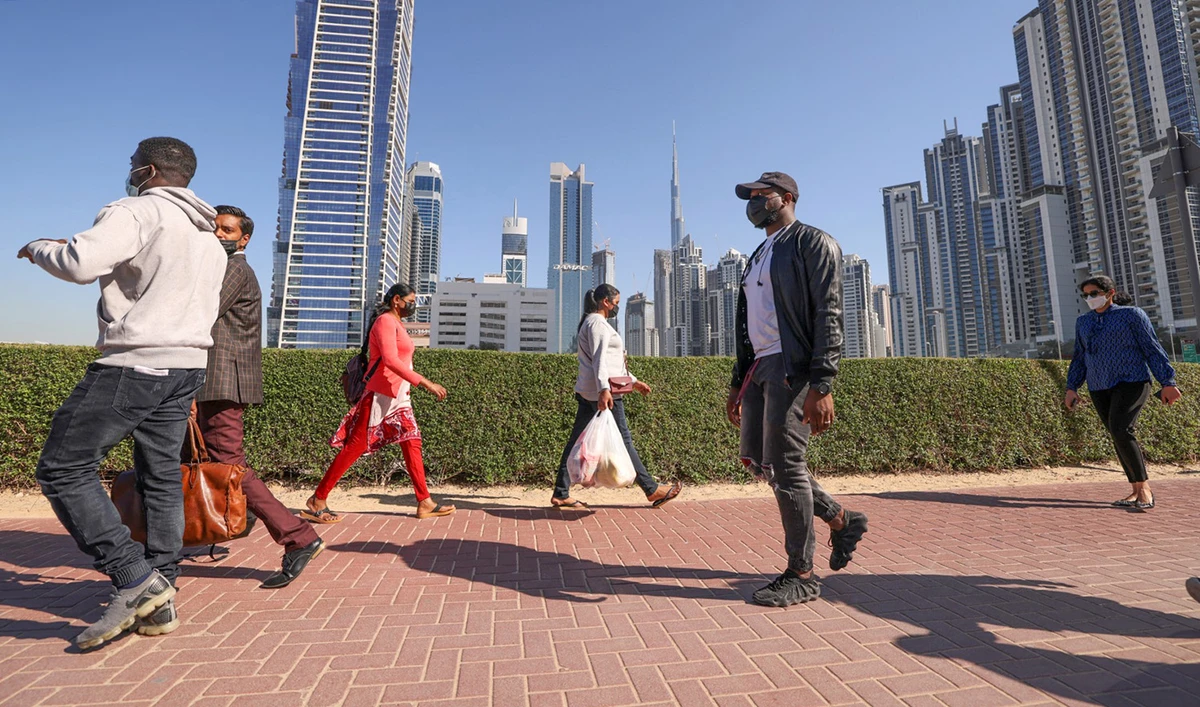
ISLAMABAD: Over 3,300 Pakistani companies joined the Dubai Chamber of Commerce (DCC) in the first quarter of 2023, confirmed the country’s top diplomat in the United Arab Emirates (UAE) on Friday, adding the development reflected the dynamism of Pakistani businesses and the increasing attractiveness of the UAE as an investment destination.
A total of 30,146 new companies joined the DCC during the first quarter, the chamber said in a statement issued this week. India topped the list with 6,717 new companies, followed by the UAE which registered 4,445 firms. Pakistan ranked third with 3,395 new business entities securing the DCC membership, showing a 59 percent increase from the first quarter of the last year. Overall, the number of Pakistani companies with the DCC has reached 40,315.
A statement quoted Mohammad Ali Rashed Lootah, the DCC president and CEO, as saying that the diversity of nationalities represented among the new companies highlighted the vibrancy of Dubai’s dynamic business environment.
“It is indeed a positive development that underscores the resilience and entrepreneurial potential of the Pakistani business community and diaspora,” Ambassador Faisal Niaz Tirmizi told Arab News over the phone from Abu Dhabi.
He said the development also underscored the strong economic fundamentals of UAE’s economy.
“UAE, under its able leadership, is focused on diversifying its economy through global economic partnerships and will present profitable business opportunities in different sectors in the medium term,” the envoy continued, adding that Dubai was an ideal place from where Pakistan could do business with other Gulf states and the rest of the Middle East.
“During the last year, the number of Pakistani expatriates increased from around 1.6 million to 1.8 million in the Emirates,” he informed while pointing out that Pakistanis were participating in every sector of UAE’s economy.
Tirmizi mentioned that many of those who had arrived in the Gulf country were entrepreneurs, doctors, engineers, bankers, and laborers.
Pakistan’s diplomatic mission facilitated the country’s businesses by maintaining an active liaison with the DCC and sharing new opportunities with the chambers in back home along with members of the Pakistani diaspora.
“In recent years, our trade linkages with the UAE have further expanded, which has encouraged entrepreneurs and businesses based in Pakistan to establish local offices and also register themselves with local chambers,” the ambassador said.
He noted the mission had played its due role in facilitating trade by addressing issues such as the non-tariff barriers.
The embassy also brought several Pakistani firms, belonging to healthcare, food, information technology, tourism and other sectors, to attend trade fairs.
“These events provide entrepreneurs with much needed exposure to markets in the UAE, and many businesses have subsequently established their presence in Dubai,” he added.
Tirmizi said the Pakistani mission had also played its role in fast-tracking a bilateral economic partnership agreement with the UAE which would be signed by the end of September.
“This agreement presents potential opportunities in both goods and services sectors,” he informed. “Businesses, it seems, are positioning themselves to take full advantage of this partnership.”
Speaking to Arab News, Fakhruddin Diwan, chairman of the Pakistan-UAE business council at the Federation of Pakistan Chambers of Commerce and Industry (FPCCI), agreed the inclusion of more Pakistani companies in the DCC was a huge achievement.
“With this opening of the UAE market for Pakistani products, we will automatically be able to strengthen our foreign reserves due to an increase in exports,” he told Arab News.
He maintained that Dubai was a hub of international activities and tourism, adding it would also increase the exposure of Pakistani companies to a much wider consumer base across the globe.