

‘Indicator of inhumanity,’ Russia says of US plan to send depleted-uranium munitions to Ukraine

1 / 2
The use of depleted uranium munitions has been fiercely debated, with opponents saying there are dangerous health risks from ingesting or inhaling depleted uranium dust, including cancers and birth defects. (AFP/File)
2 / 2
Depleted uranium ammunition will be provided by the US to Ukraine for use by M1 Abrams tanks (shown in this May 31, 2021, photo) that Washington is expected to deliver to Kyiv before the end of the year. (AFP)
Short Url
Updated 07 September 2023
Follow

‘Indicator of inhumanity,’ Russia says of US plan to send depleted-uranium munitions to Ukraine

  • Russia denounces the US decision as “an indicator of inhumanity” 
  • UK had previousy sent uranium munitions to Ukraine earlier this year

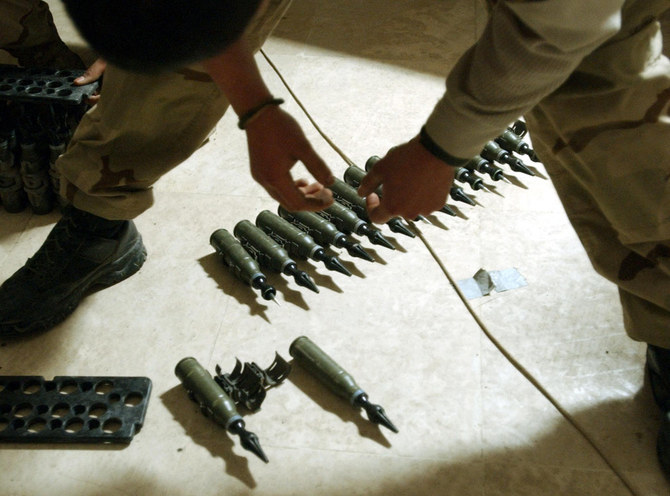
The Pentagon on Wednesday announced a new security assistance package worth up to $175 million for Ukraine, including depleted uranium ammunition for Abrams tanks, the first time the US is sending the controversial armor-piercing munitions to Kyiv.
Reuters was first to report last week that the rounds, which could help destroy Russian tanks, would form part of a new $1 billion military aid package for Ukraine, which Russian forces invaded in February 2022.
On Wednesday, the Pentagon said the military aid would also include anti-armor systems, tactical air navigation systems and additional ammunition for High Mobility Artillery Rocket Systems (HIMARS).
The announcement coincides with top US diplomat Antony Blinken’s visit to Kyiv in a gesture of support as a Ukraine counteroffensive against occupying Russian troops grinds into its fourth month with only small gains.
The $175 million was part of a total of more than $1 billion in assistance that Blinken announced in the Ukrainian capital.
It also included over $665 million in new military and civilian security assistance and millions of dollars in support for Ukraine’s air defenses and other areas.
Although Britain sent depleted uranium munitions to Ukraine earlier this year, this would be the first US shipment of the ammunition and will likely stir controversy.
The Russian embassy in Washington denounced the decision as “an indicator of inhumanity,” adding that “the United States is deluding itself by refusing to accept the failure of the Ukrainian military’s so-called counteroffensive.”

“Clearly, with its idea of inflicting a ‘strategic defeat’, Washington is prepared to fight not only to the last Ukrainian but also to do away with entire generations,” the embassy said in a statement.
Blinken on Wednesday hailed progress in the pushback and said of the fresh US package of support: “This new assistance will help sustain it and build further momentum.”
Washington previously announced it would send cluster munitions to Ukraine, despite concerns over the dangers such weapons pose to civilians.
The use of depleted uranium munitions has been fiercely debated, with opponents like the International Coalition to Ban Uranium Weapons saying there are dangerous health risks from ingesting or inhaling depleted uranium dust, including cancers and birth defects.


Heathrow airport sees record high annual passenger numbers

Updated 8 sec ago
Follow

Heathrow airport sees record high annual passenger numbers

LONDON: Heathrow Airport said Monday it welcomed more than 84 million travelers last year, a record high amount for the London hub which is set to undergo a major expansion.
The annual update comes as Heathrow — Europe’s busiest airport by passenger numbers in 2024 — starts work on a new runway to “unlock even more of that connectivity, trade and economic growth for the UK,” the airport’s chief executive Thomas Woldbye said in a statement.
Istanbul airport last week disclosed that it welcomed 84.4 million passengers in 2025, just below Heathrow’s figure of 84.5 million.
Heathrow said almost 7.2 million passengers traveled through the hub last month, its highest number on record for the month of December.
The airport in August unveiled a £49-billion ($66-billion) expansion plan, including the cost of building a long-awaited third runway, approved by the UK government after years of legal wrangling.
The works will increase capacity to up to 150 million passengers per year, according to Heathrow.
It would be a rare expansion in Europe, where countries are split between efforts to reduce greenhouse gas emissions and the needs of a strategic sector that has seen demand soar since the Covid-era lockdowns.
The runway would cost £21 billion, with flights expected to take off within a decade, while the rest of the privately-funded investment will go toward expanding and modernizing the airport.