

Iraq-Turkiye oil flows not expected to resume before October

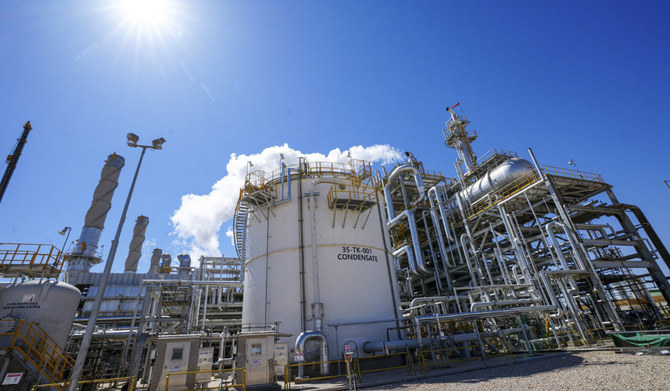
This handout photo released by the Iraqi prime minister's office on April 1, 2023, shows a view of installations at the Karbala oil refinery in the eponymous governorate, on the date it launched operations. (AFP)
Short Url
Updated 06 September 2023
Follow

Iraq-Turkiye oil flows not expected to resume before October

  • Erdogan still intends to visit Baghdad and “wants an agreement to be signed,” but “so far the concrete steps expected by Iraq have not yet been taken,” resulting in slow progress, a senior Turkish official said

BAGHDAD: Iraqi oil flows to Turkiye are not expected to resume before October, when Turkish President Tayyip Erdogan will likely visit Baghdad, sources said, after the trip originally scheduled for August was postponed.
Turkiye halted Iraqi northern oil export flows on March 25 after an arbitration ruling by the International Chamber of Commerce (ICC) ordered Ankara to pay Baghdad damages of $1.5 billion for unauthorized exports by the Kurdistan Regional Government (KRG) between 2014 and 2018.
In April, Iraq petitioned a US federal court to enforce the ICC arbitration award. A lack of progress on resolving this litigation was one of the reasons behind the postponement of Erdogan’s August visit, the sources said.
Erdogan still intends to visit Baghdad and “wants an agreement to be signed,” but “so far the concrete steps expected by Iraq have not yet been taken,” resulting in slow progress, a senior Turkish official said.
One of the steps Ankara is seeking is a halt to the US litigation and as a result, Erdogan’s visit is scheduled for October, the source added.
“Until now we have not received a definite timeline from Ankara on when the Turkish president is expected in Baghdad,” another source, an Iraqi foreign ministry official, said.
“It could be the end of this month, or more likely in October, depending on the successful development of talks on energy issues which require a longer than expected time due to multiple thorny issues.”
Energy officials in Baghdad and Ankara are “having complicated discussions,” with the resumption of flows “the most difficult question,” an Iraqi oil official with knowledge of the talks said, adding it was “not likely” flows would restart this month.
Turkiye has also sought a compromise to reduce the damages to be paid to Iraq under the ICC arbitration, two Iraqi oil officials close the talks said.
Iraqi sources have previously said Turkiye wants Iraq to drop a second arbitration case on exports covering the period from 2018 onwards.
Turkiye’s energy ministry did not immediately respond to a request for comment.
The KRG has lost roughly $4 billion since oil flows to Turkiye’s Ceyhan Port through a pipeline were halted, two sources familiar with the matter said.


Education spending surges 251% as students return from autumn break: SAMA

Updated 12 December 2025
Follow

Education spending surges 251% as students return from autumn break: SAMA

RIYADH: Education spending in Saudi Arabia surged 251.3 percent in the week ending Dec. 6, reflecting the sharp uptick in purchases as students returned from the autumn break.

According to the latest data from the Saudi Central Bank, expenditure in the sector reached SR218.73 million ($58.2 million), with the number of transactions increasing by 61 percent to 233,000.

Despite this surge, overall point-of-sale spending fell 4.3 percent to SR14.45 billion, while the number of transactions dipped 1.7 percent to 236.18 million week on week.

The week saw mixed changes between the sectors. Spending on freight transport, postal and courier services saw the second-biggest uptick at 33.3 percent to SR60.93 million, followed by medical services, which saw an 8.1 percent increase to SR505.35 million.

Expenditure on apparel and clothing saw a decrease of 16.3 percent, followed by a 2 percent reduction in spending on telecommunication.

Jewelry outlays witnessed an 8.1 percent decline to reach SR325.90 million. Data revealed decreases across many other sectors, led by hotels, which saw the largest dip at 24.5 percent to reach SR335.98 million. 

Spending on car rentals in the Kingdom fell by 12.6 percent, while airlines saw a 3.7 percent increase to SR46.28 million.

Expenditure on food and beverages saw a 1.7 percent increase to SR2.35 billion, claiming the largest share of the POS. Restaurants and cafes retained the second position despite a 12.6 percent dip to SR1.66 billion.

Saudi Arabia’s key urban centers mirrored the national decline. Riyadh, which accounted for the largest share of total POS spending, saw a 3.9 percent dip to SR4.89 billion, down from SR5.08 billion the previous week.

The number of transactions in the capital settled at 74.16 million, down 1.4 percent week on week.

In Jeddah, transaction values decreased by 5.9 percent to SR1.91 billion, while Dammam reported a 0.8 percent surge to SR713.71 million.

POS data, tracked weekly by SAMA, provides an indicator of consumer spending trends and the ongoing growth of digital payments in Saudi Arabia. 

The data also highlights the expanding reach of POS infrastructure, extending beyond major retail hubs to smaller cities and service sectors, supporting broader digital inclusion initiatives. 

The growth of digital payment technologies aligns with the Kingdom’s Vision 2030 objectives, promoting electronic transactions and contributing to the nation’s broader digital economy.