Shabtai Shavit, Israeli spymaster who led Mossad in 1990s, dies at 84

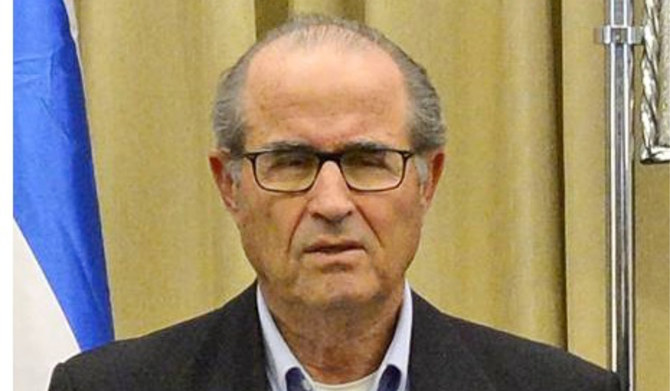
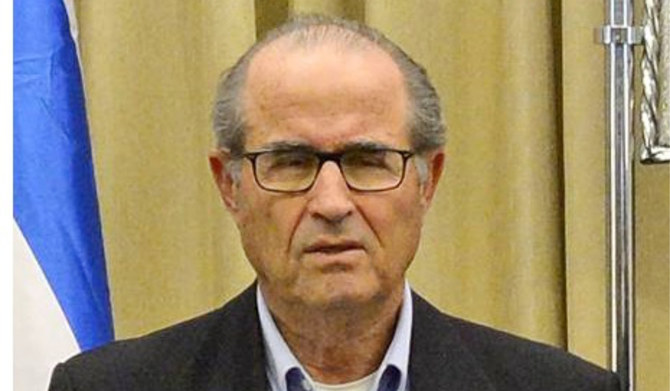
Shabtai Shavit. (Photo/Wikipedia)
Short Url
Updated 06 September 2023
Follow

Shabtai Shavit, Israeli spymaster who led Mossad in 1990s, dies at 84

  • The Mossad has a history of targeting and killing scientists developing weaponry seen as a threat to Israel, which apparently continued under Shavit’s watch

JERUSALEM: Shabtai Shavit, the Israeli spymaster who was credited with advancing Israel’s historic peace treaty with Jordan during his term as director of the Mossad intelligence agency, died Tuesday in Italy. He was 84.
Israeli Prime Minister Benjamin Netanyahu’s office said Shavit died while on vacation in Italy, without specifying a cause of death. The statement quoted Mossad chief, David Barnea, praising Shavit as “a pillar of the world of operations, intelligence, security and strategy of the state of Israel.”
Shavit led the Mossad from 1989 to 1996, guiding the agency through a critical juncture in Middle East history. He oversaw Israeli operations on foreign soil during the collapse of the Soviet Union, the end of the Cold War and the first Gulf War in 1991. Over more than three decades in the service, he spent some two years in an intelligence post in Iran, before the Islamic Revolution that transformed Iran from an Israeli ally to its strongest foe.
During his time at the helm, Shavit played an important role in establishing full diplomatic relations with Jordan in 1994 — ending a state of war that had prevailed between the neighbors for nearly a half-century.
The Mossad has a history of targeting and killing scientists developing weaponry seen as a threat to Israel, which apparently continued under Shavit’s watch. In 1990, two Mossad agents in Brussels were widely suspected to have killed Gerald Bull, a Canadian missile engineer who had promised to build a “supergun” for Iraq that could fire huge shells at Tel Aviv. More recently, the Mossad’s hand has been discerned in attacks on Iranian nuclear scientists and installations as Israel seeks to disrupt its nuclear program.
Other operations on foreign soil widely believed to have been carried out by the Mossad during Shavit’s tenure include the mysterious killing of Atef Bseiso, a top intelligence aide to Palestinian leader Yasser Arafat, in Paris in 1992 and a shooting that killed the leader of the Palestinian Islamic Jihad militant group, Fathi Shiqaqi, in Malta in 1995.
Soon after he retired as Mossad chief, Shavit served as CEO of Maccabi Healthcare Services, one of the country’s main health maintenance organizations. In its condolence announcement, the Mossad said Shavit crucially contributed to preserving knowledge of the intelligence agency and its commanders for future generations.
As turmoil over the push by Netanyahu’s government to overhaul the judiciary engulfed the Israeli security establishment earlier this year, Shavit joined several hundred former Mossad employees, including four other former chiefs, in signing a statement in March opposing the government’s plan to weaken the Supreme Court.
He and the other officials said they held Netanyahu “directly responsible for the serious harm” that the overhaul proposal could inflict on Israel’s national security.




Turkish-language drama ‘Yellow Letters’ wins Berlin Film Festival’s top prize

Updated 22 February 2026
Follow

Turkish-language drama ‘Yellow Letters’ wins Berlin Film Festival’s top prize

  • The report ⁠did ⁠not say who was to blame for the attacks

BERLIN: “Yellow Letters,” a Turkish-language drama about what happens to a marriage put under extraordinary political pressure, ​won the Berlin Film Festival’s Golden Bear top prize on Saturday night.
The drama filmed in Germany but set in Turkiye follows a married actor and playwright who have to leave behind their comfortable lives after the husband is targeted by the state for posting critical content online.
“I know what (this win) means to my cast and crew who came from Turkiye, who now are getting a visibility that is on an international scale,” Turkish-German director Ilker Catak told Reuters after the award ceremony.
The director, whose previous Berlin entry “The Teachers’ Lounge” was nominated for an Oscar, said it was important that the film was not just about Turkiye, but Germany as well.
“There is a ‌sign that says ‌1933 and what we’ve seen in this country before, we must never ​forget,” ‌he ⁠said, referring ​to ⁠the year that Adolf Hitler came to power.
This year’s jury president, legendary German director Wim Wenders, praised the winner as “a movie that speaks up very clearly about the political language of totalitarianism.”
In total, 22 films had been in the running.

POLITICAL FESTIVAL
The festival maintained its reputation as the most overtly political of its peers, Venice and Cannes, with the war in Gaza in particular dominating public discussions about the films.
“If this Berlinale has been emotionally charged, that’s not a failure of the Berlinale, and it’s not a failure of cinema,” said festival director Tricia Tuttle at the opening ⁠ceremony, using the festival’s nickname.
Wenders used his final appearance as jury president to ‌urge filmmakers and activists to act as allies, not rivals, after ‌his comment that filmmakers should not be political caused Indian novelist Arundhati Roy ​to pull out.
Several award winners used their speech ‌to express solidarity with the Palestinians and other oppressed peoples.
“The least we can do here is to ‌break the silence and remind them that they are not really alone,” said Turkish filmmaker Emin Alper, whose film “Salvation” took the second-place Silver Bear Grand Jury Prize.
Palestinian-Syrian director Abdallah Al-Khatib, whose “Chronicles From the Siege” won the Perspectives section for emerging filmmakers, criticized the German government for its stance on Gaza despite concerns about crossing a red line.
“I was under a lot of ‌pressure to participate in Berlinale for one reason only, to stand here and say: ‘The Palestinians will be free,’” he said.

SANDRA HUELLER WINS AGAIN
German actor Sandra Hueller, ⁠who starred in 2024 Oscar-winning ⁠films “Anatomy of a Fall” and “Zone of Interest,” continued her winning streak by taking home best actor for the period piece “Rose,” in which she dresses as a man.
“To me, it’s special because I won my first-ever recognition as an actor in a film at this festival 20 years ago,” Hueller told Reuters, who won best actress in 2006 for “Requiem.”
“Queen at Sea,” a drama that follows French star Juliette Binoche as she deals with her mother’s advanced dementia and its effects on her marriage, won two prizes: the third-place jury prize and best supporting actor, shared by its two elderly performers, Anna Calder-Marshall and Tom Courtenay.
Director Lance Hammer, who last competed at the festival in 2008, said he hoped that maybe “people will see this and feel some comfort or relief that they’re not alone.”
Director Grant Gee won best director for “Everybody Digs Bill Evans,” a black-and-white biographical drama starring Norwegian actor ​Anders Danielsen Lie as the US jazz pianist.
“Nina ​Roza,” about an art curator who returns to Bulgaria to verify whether a child painting prodigy is genuine, won best screenplay while “Yo (Love is a Rebellious Bird)” took the prize for outstanding artistic contribution.