


TRIPOLI, Libya: It’s midnight just before the weekend. Traffic snarls the corniche in Tripoli, where improved electricity service has brought renewed energy to Libya’s capital after years of conflict and power cuts.
Chronic electricity shortages had shaped the daily lives of Libyans since the fall of Muammar Qaddafi in a NATO-backed 2011 uprising.
A decade of stop-start fighting between rival armed groups followed, adding combat damage and looting to an already dilapidated grid in the North African country.
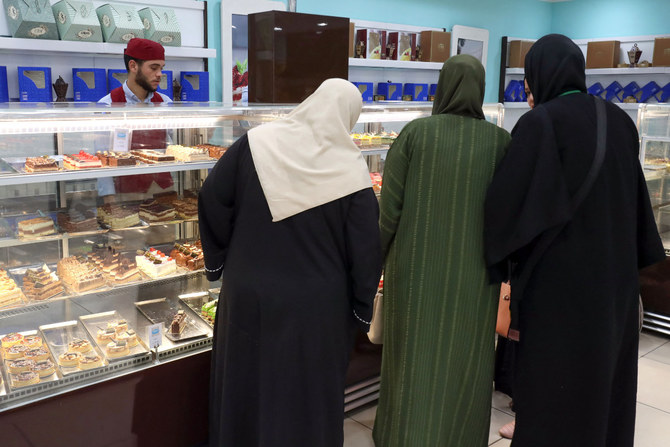
Power “outages were a disaster for my business,” said Hanan Al-Miladi, a 43-year-old baker who sells pastries online for weddings and other celebrations.
After 42 years in power, Qaddafi left behind obsolete infrastructure, an economy largely dependent on oil, and an underskilled workforce.
To protect the network and prevent overloads, the General Electricity Company of Libya (Gecol) resorted to widespread power cuts over the past 10 years during the peak consumption periods of summer and winter.
Until last year, outages could last 10 or even 20 hours, turning the city’s streets dark and leaving residents sweltering in summer temperatures above 40 degrees Celsius (104 Fahrenheit) without air conditioning.
The most “unbearable thing was never knowing when the power would go out or for how many hours,” said Miladi.
But with new management at Gecol since last year, along with a relatively stable security situation, Libyans now receive a markedly improved electricity supply.
Prime Minister Abdelhamid Dbeibah, who heads a United Nations-backed government in Tripoli and is the Gecol chairman, in July 2022 sacked the previous manager.
He also made sure the power company’s new boss saw through projects, including a plan for maintenance of damaged infrastructure and tight control of funds to curb corruption.
Some foreign companies have now even revived projects they had suspended in Libya.
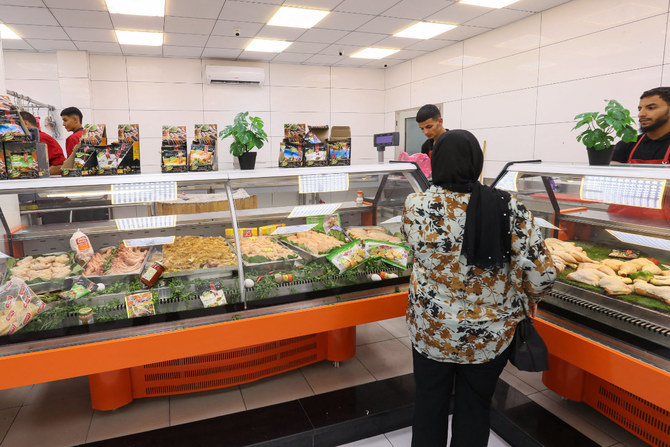
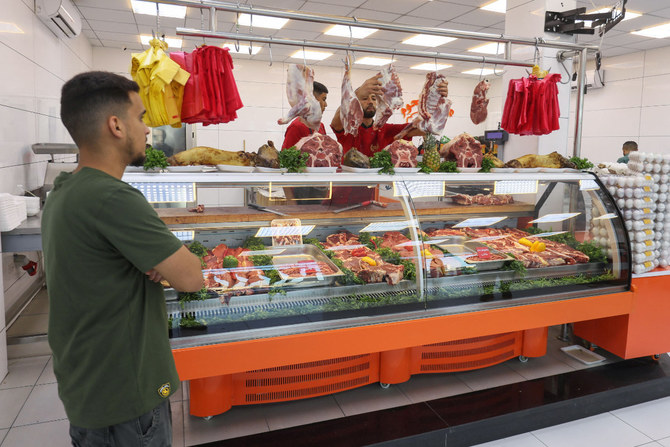
“The situation has improved, and customers notice it,” said 34-year-old butcher Moaed Zayani, who also sells frozen products.
To avoid countless sleepless nights, Libyans did adapt to the power outages.
Buying batteries costing a few hundred dinars (tens of dollars), they could power a television set and one or two lamps, as well as provide basic Internet connectivity.
Those who could afford it spent thousands of dollars on buying noisy, polluting fuel-guzzling generators.
But “even with a generator, refrigerators weaken after 10 hours,” said Zayani.
The roar of generators hasn’t completely gone away — it returned in a July heatwave — but not a week goes by without Gecol announcing the arrival of new equipment at the country’s roughly 20 power plants.
Since a 2020 cease-fire between Libya’s two rival administrations — Dbeibah’s in Tripoli, and another in the east backed by military strongman Khalifa Haftar — the country has been slowly trying to rebuild.
The electricity supply has improved countrywide, although the boost to Tripoli’s was the most dramatic and significant.
Electricity network stability is the foundation of the “Return to Life” campaign launched by the city government, and is slowly restoring Tripoli’s soul.
Residents proudly nickname their city “Siren of the Mediterranean” for its attractive seafront.
“It’s clear that administrative stability within Gecol has contributed to the stability of the power network,” said Mohamad Rahoumi, 53, spokesman for a pastry brand.
“But consumers also have a role to play in reducing their consumption and paying their bills.”
Libyan electricity rates are among the lowest in the region, at 0.050 dinars (one US cent) per kilowatt-hour for individuals and 0.20 dinars for businesses.
“The government’s efforts are visible, but citizens still have a constant apprehension due to instability,” said 34-year-old downtown bartender Abdelmalek Fathallah.
In August, clashes between two militias using rocket launchers and machine guns killed 55 people. It was Tripoli’s worst unrest in more than a year.
Although such incidents are less frequent, they “can erupt at any moment,” destroying infrastructure as well as people’s homes, Fathallah said.
Still, the lights shining in Tripoli’s medina and silhouetting the adjacent Red Castle, a 16th-century fortress built by the Spanish, symbolize hope for a brighter future.


