

Pakistani musician Bilal Maqsood launches online puppet show for children 

Musician Bilal Maqsood addresses the audience at the launch of his puppet show, Pakkay Dost, at the Arts Council of Pakistan in Karachi on September 1, 2023. (Photo courtesy: ACP)
Short Url
Updated 02 September 2023
Follow

Pakistani musician Bilal Maqsood launches online puppet show for children 

  • Titled ‘Pakkay Dost’, the four-episode show features eight skits and 13 songs 
  • The show aims to provide local content to Pakistani children in Urdu language 

KARACHI: Famed Pakistani musician Bilal Maqsood on Friday launched an online puppet show, ‘Pakkay Dost,’ for Pakistani children, saying the show uses “humor” to educate kids in a fun way. 

Maqsood co-founded popular Pakistani pop rock band ‘Strings’ that ended its 33-year run in March 2021. Since then, the 52-year-old has been working on creating content for kids, an idea he says has been on his mind “for the longest time.” 

Last year, Maqsood created a few poems for children but that was more of a commercial venture. His latest production for Pakistani children has been released on his YouTube channel. 

Speaking at the show’s launch in Karachi, the musician said the fact that there were no songs for children in the Urdu language had troubled him since the birth of his son, Mikail, who is now aged 26. 

“This was my life-long passion project. When Mikael, my first son, was born, I used to wonder why don’t we have songs for children in Urdu,” Maqsood said at the launch. 
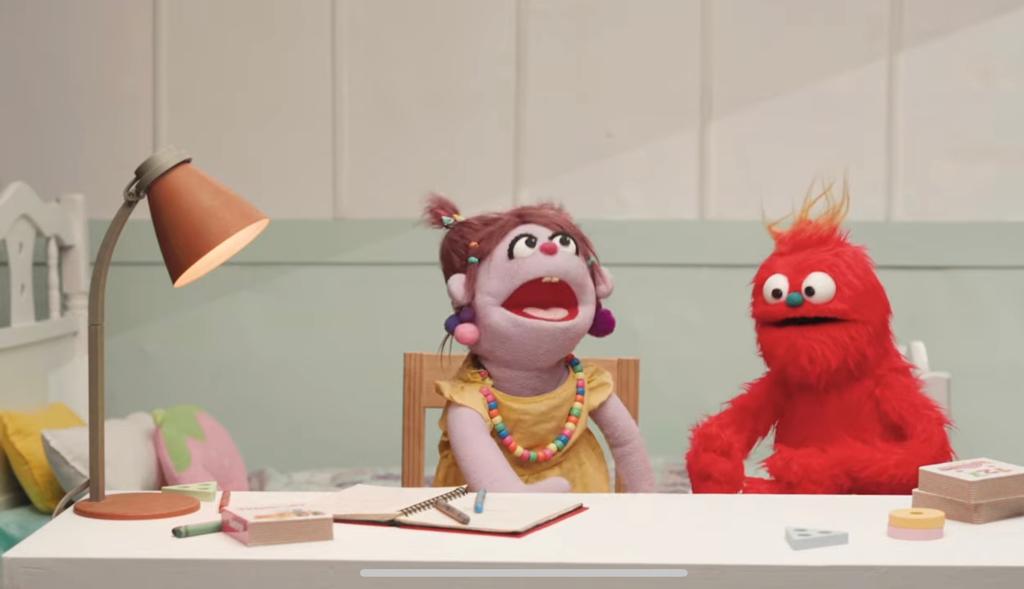


The screen grab taken on September 2, 2023, features characters Miraal and Laal Baig from children's puppet show, Pakkay Dost. (Photo courtesy: Pakkay Dost/YouTube)

“We grew up listening to Sohail Rana’s music. Even today, when we hear his songs, it takes us back to our childhood. These songs keep us connected to our values and our culture. But when my kids were growing up, there wasn’t any such thing. They instead listened to Sesame Street, Mary Poppins.” 

In the mid-70s, Pakistan’s state TV aired the children’s show ‘Kaliyan’ that featured famed puppet character Uncle Sargam, created and voiced by award-winning puppeteer and television director Farooq Qaiser. 

To date, Uncle Sargam and Maasi Museebtay are regarded as Pakistan’s legendary puppet duo, but the South Asian country has hardly ever produced a similar show again. 

Pakkay Dost is based on four episodes, each averaging a 15-minute duration and exploring “diverse” themes, according to Maqsood. 

The show includes a total of eight skits and 13 songs for children, ranging from education (alphabets, names of days) to life lessons, while a team of more than 100 people worked on the project that features six key characters. 

“There is a bit of fun and message but the engine the show is riding on is humor so that children learn and enjoy at the same time,” said Maqsood, who has already started working on the second season of the show. 

To create Pakkay Dost, Maqsood said, he studied Disney and Sesame Street songs in order to understand the “science behind it.” He said he wanted to create local content with a “foreign sound” and in three months, he developed a range of characters together with Canada-based puppet-maker Allison Ewert that suited his songs and vision. 

For the art direction, Maqsood got the husband-and-wife duo of Umer Adil and Beenish Umer on-board, who have a three-year-old daughter. 

“Our audience was at home. We have a three-year-old daughter. When we started working, she was one and starting to talk. She started picking up Urdu language words and we gauged what she resonated with,” Adil told Arab News. 

“So many things in Pakkay Dost are inspired from kids and only parents can understand that. The idea is to fill the major gap that’s there in kids’ content. Puppet shows are our legacy that we wish to carry forward so that it is visible in the new-age media.” 

Sarwat Gilani, an actor and a mother of two, also attended the launch, where she praised the show for focusing on children and adults alike. 

“As a mother, it is very tough for me to teach Urdu alphabets to kids. But teaching Urdu alphabets through this in the form of a rhyme, mothers will thank Bilal for this. I hope it gets the kind of attention that it truly deserves,” she told Arab News. 

“I would suggest all parents to google and to watch Pakkay Dost with their kids and entire family. The best part about this is, it has talked about friendship, values and things that we as adults also face in Pakistan.” 


‘Look ahead or look up?’: Pakistan’s police face new challenge as militants take to drone warfare

Updated 14 January 2026
Follow

‘Look ahead or look up?’: Pakistan’s police face new challenge as militants take to drone warfare

  • Officials say militants are using weapons and equipment left behind after allied forces withdrew from Afghanistan
  • Police in northwest Pakistan say electronic jammers have helped repel more than 300 drone attacks since mid-2025

BANNU, Pakistan: On a quiet morning last July, Constable Hazrat Ali had just finished his prayers at the Miryan police station in Pakistan’s volatile northwest when the shouting began.

His colleagues in Bannu district spotted a small speck in the sky. Before Ali could take cover, an explosion tore through the compound behind him. It was not a mortar or a suicide vest, but an improvised explosive dropped from a drone.

“Now should we look ahead or look up [to sky]?” said Ali, who was wounded again in a second drone strike during an operation against militants last month. He still carries shrapnel scars on his back, hand and foot, physical reminders of how the battlefield has shifted upward.

For police in the northwestern Khyber Pakhtunkhwa (KP) province, the fight against militancy has become a three-dimensional conflict. Pakistani officials say armed groups, including the Tehreek-e-Taliban Pakistan (TTP), are increasingly deploying commercial drones modified to drop explosives, alongside other weapons they say were acquired after the US military withdrawal from neighboring Afghanistan.

Security analysts say the trend mirrors a wider global pattern, where low-cost, commercially available drones are being repurposed by non-state actors from the Middle East to Eastern Europe, challenging traditional policing and counterinsurgency tactics.

The escalation comes as militant violence has surged across Pakistan. Islamabad-based Pakistan Institute for Conflict and Security Studies (PICSS) reported a 73 percent rise in combat-related deaths in 2025, with fatalities climbing to 3,387 from 1,950 a year earlier. Militants have increasingly shifted operations from northern tribal belts to southern KP districts such as Bannu, Lakki Marwat and Dera Ismail Khan.

“Bannu is an important town of southern KP, and we are feeling the heat,” said Sajjad Khan, the region’s police chief. “There has been an enormous increase in the number of incidents of terrorism… It is a mix of local militants and Afghan militants.”

In 2025 alone, Bannu police recorded 134 attacks on stations, checkpoints and personnel. At least 27 police officers were killed, while authorities say 53 militants died in the clashes. Many assaults involved coordinated, multi-pronged attacks using heavy weapons.

Drones have also added a new layer of danger. What began as reconnaissance tools have been weaponized with improvised devices that rely on gravity rather than guidance systems.

“Earlier, they used to drop [explosives] in bottles. After that, they started cutting pipes for this purpose,” said Jamshed Khan, head of the regional bomb disposal unit. “Now we have encountered a new type: a pistol hand grenade.”

When dropped from above, he explained, a metal pin ignites the charge on impact.

Deputy Superintendent of Police Raza Khan, who narrowly survived a drone strike during construction at a checkpoint, described devices packed with nails, bullets and metal fragments.

“They attach a shuttlecock-like piece on top. When they drop it from a height, its direction remains straight toward the ground,” he said.

TARGETING CIVILIANS

Officials say militants’ rapid adoption of drone technology has been fueled by access to equipment on informal markets, while police procurement remains slower.

“It is easy for militants to get such things,” Sajjad Khan said. “And for us, I mean, we have to go through certain process and procedures as per rules.”

That imbalance began to shift in mid-2025, when authorities deployed electronic anti-drone systems in the region. Before that, officers relied on snipers or improvised nets strung over police compounds.

“Initially, when we did not have that anti-drone system, their strikes were effective,” the police chief said, adding that more than 300 attempted drone attacks have since been repelled or electronically disrupted. “That was a decisive moment.”

Police say militants have also targeted civilians, killing nine people in drone attacks this year, often in communities accused of cooperating with authorities. Several police stations suffered structural damage.

Bannu’s location as a gateway between Pakistan and Afghanistan has made it a security flashpoint since colonial times. But officials say the aerial dimension of the conflict has placed unprecedented strain on local forces.

For constables like Hazrat Ali, new technology offers some protection, but resolve remains central.

“Nowadays, they have ammunition and all kinds of the most modern weapons. They also have large drones,” he said. “When we fight them, we fight with our courage and determination.”