

UK misses own deadline for Afghan refugee resettlements

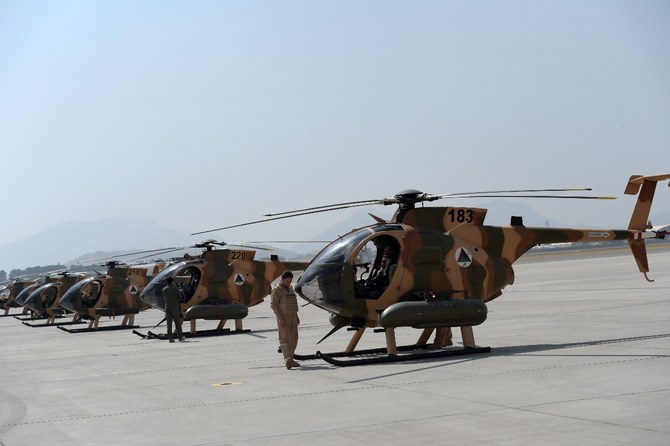
Govt pledged to clear backlog by end-August, but Defence Ministry revised this to non-complex cases. (AFP filephoto)
Short Url
Updated 01 September 2023
Follow

UK misses own deadline for Afghan refugee resettlements

  • Govt pledged to clear backlog by end-August, but Defence Ministry revised this to non-complex cases
  • Around 8,000 ARAP applications remain outstanding, with many Afghans in UK facing homelessness

London: The UK government has failed to meet a self-imposed deadline to resettle Afghan refugees in long-term accommodation in Britain.

As of Aug. 30 the government had received over 141,000 applications under the Afghan Relocations and Assistance Policy since its launch in April 2021, of which around 93,000 were unique applications. Nearly 8,000 of these remain unprocessed.

In May the Armed Forces Minister James Heappey told Parliament “we will complete the processing of applications by this summer,” but the Ministry of Defence later scaled down that prediction, saying it would resolve all but the most complex cases by the end of August.

The failure to meet the deadline has been complicated after it emerged numerous Afghans who were told to vacate temporary hotel accommodation this month to find long-term private housing, will have to stay in their rooms or become homeless.

In addition, around 2,000 people who qualify for UK resettlement under ARAP remain in Afghanistan, with a similar number left to fend for themselves in neighboring Pakistan.

John Healey MP, Labour’s shadow defence secretary, said it was “shameful that thousands of ARAP applications are still not processed despite the government promising to clear the backlog by today.

“Not only that, (but) eligible Afghans are now being kicked out of hotels without new housing, while hundreds remain stuck in Pakistan. Ministers must fix the failing ARAP scheme.”

One former Afghan military analyst, who worked alongside British and coalition forces and is awaiting the outcome of his ARAP application, told The Independent: “The MoD told the Parliament they will finish with the ARAP eligibility by August, and August is almost gone and they still haven’t sent me anything.

“I don’t know why my case is so complex or why it’s taking such an unacceptable amount of time. Despite the government’s promise to process applicants, years have passed and there are still simple applications pending.”

Sarah Fenby-Dixon, a consultant with the Refugee Aid Network, a charity, said she was working with 52 Afghans who applied for ARAP visas, and that 20 of these had received no response to their applications from the MoD.

“Many of them have extensive proof of their work alongside British soldiers, have supporting letters from their former British colleagues and evidence of horrific attacks that they have faced from the Taliban because of their work,” she told The Independent.

“People are hiding in cellars or in the mountains; they cannot go out and they cannot work to feed their children. The government’s treatment of them is a shameful betrayal.”

Becky Hart, a lawyer for the Afghan Pro Bono Initiative, which represents several clients still waiting on responses to their ARAP applications, told the paper: “Our clients are living in hell, with many now waiting two years for a response from this government. Many remain torn apart from family, desperate to be together again. We have had clients face torture and death by the Taliban, and they are living in constant fear for their lives while they wait for answers.”

Senior military figures have written to UK Prime Minister Rishi Sunak urging him to take action and ensure promises made to Britain’s Afghan allies are kept.

An MoD spokesperson told The Independent: “We owe a debt of gratitude to those interpreters and other staff eligible under the ARAP scheme who worked for, or with, UK forces in Afghanistan. That’s why we have committed to relocating all eligible Afghans and their families to the UK under the ARAP scheme — a commitment we will honour.

“Our absolute priority is supporting the movement of eligible people out of Afghanistan and to date, we have relocated around 12,200 individuals to the UK under ARAP.”


’Our children are next’ fear Kenyans as drought wipes out livestock

Updated 2 sec ago
Follow

’Our children are next’ fear Kenyans as drought wipes out livestock

MANDERA: In drought-hit northeastern Kenya, villagers have been forced to drag their dead livestock to distant fields for burning to keep the stench of death and scavenging hyenas away from their homes.
Mandera county along Kenya’s borders with Ethiopia and Somalia has seen no rain since May and is now on the point of a full-blown water emergency.
“I have lost all my cows and goats, and burned them here,” Bishar Maalim Mohammed, 60, a resident of Tawakal village, told AFP.
In his village, where most are pastoralists relying heavily on their animals, the only remaining bull can no longer stand. He has lain in the same spot for nearly a week, severely dehydrated with bones protruding through his skin, as his owner watches helplessly.
In the nearby town of Banissa, the man-made watering hole that once held 60,000 cubic meters of water is dry, leaving a barren expanse that children have turned into a playground.
Herds of goats, cattle and camels must now trek up to 30 kilometers (20 miles) to the nearest watering hole at Lulis village, jostling for the remaining water that officials are rationing.
“In two weeks this water will be finished... we are in a very bad state,” said local resident Aden Hussein, 40.
More than two million people across 23 counties in Kenya are facing worsening food insecurity after the October-December short rains failed, with rainfall two-thirds below average.
The National Drought Management Authority has placed about nine counties on alert, while Mandera County is at the “alarm” phase, one step short of an official emergency.
The Famine Early Warning Systems Network recently said 20 to 25 million people in Kenya, Somalia and Ethiopia need humanitarian food assistance, more than half because of drought.
“Our children are the next ones who are going to die,” said Maalim Mohammed in Tawakal.

- ‘No milk at all’ -

At Banissa’s main hospital, an influx of severely malnourished children — some arriving from neighboring Ethiopia — has overwhelmed the paediatric ward.
During a recent visit, AFP saw eight children suffering from severe malnutrition, including a 32-month-old girl weighing just 4.5 kilograms and another child who had been readmitted after returning to a household with no food.
“Children are not getting an adequate diet because of this drought...they depend on camel and goat milk but there is now no milk at all,” said hospital nutritionist Khalid Ahmed Wethow.
The hospital, which serves around 200,000 people, has only eight tins of therapeutic milk remaining in its paediatric unit, which were expected to run out this week.
The unit depends on donations from organizations such as the World Food Programme, but with Western countries slashing aid budgets over the past year, it has not received any supplies in six months.
The Kenyan government and aid groups such as the Red Cross have increased water-trucking efforts, food assistance and cash support, but say they cannot keep up with demand.

- ‘Tried to escape’ -

In desperation, Bishar Mohamed, no relation to the first villager, traveled more than 150 kilometers with his herd of 170 goats in search of pasture. Around 100 died along the way and the rest died after he returned home to Hawara village.
“We have tried to escape in search of better places and failed,” he told AFP, standing in a field where the carcasses of his goats were piled up. “I have been moving by foot... my head is severely in pain... we are thirsty.”
In nearby Jabi Bar village, enrolment at a nearby school has dropped by more than half, headteacher Ali Hajji Shabure told AFP.
“Only 99 children are in school, most of them have left with their parents,” Shabure said.
The next rains — if they come — are not due before April.
Bishara Maalim, a mother of 10 in Hawara, has only one hope for her children: “May God save them.”