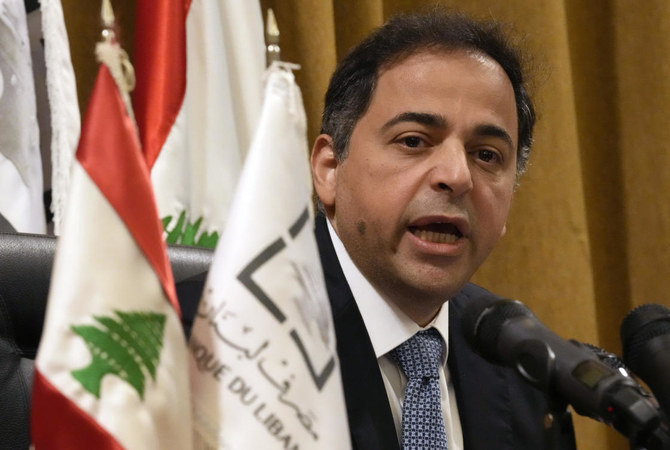
BEIRUT: Lebanon’s central bank will not print money to lend the state or cover the crisis-hit economy’s projected deficit, acting central bank governor Wassim Mansouri said on Friday, calling on leaders to undertake urgent financial reforms.
Mansouri told a press conference at the central bank the draft budget for 2023 included a state deficit of 24 percent, or 46 trillion Lebanese pounds. That would amount to about $500 million at the parallel rate for the collapsed currency, according to a calculation by Reuters.
“We affirm today that the central bank will not cover the deficit by lending to the government, neither in dollars or in Lebanese pounds. Lebanese currency will not be printed to cover the deficit,” he told reporters.
He said the government would pay public sector salaries for the month of August in US dollars, calculated using an exchange rate of 85,500 pounds per US dollar to “pump cash into the market through public sector employees.”
Mansouri took the helm at the central bank on Aug. 1, after the previous governor, Riad Salameh, ended his 30-year tenure with his legacy in tatters over corruption allegations, which he denies, and with the financial sector in turmoil.
Since Lebanon’s economy began to unravel in 2019, the pound has severely devalued, depositors have been locked out of their bank savings and families have been pushed into poverty.
But the country has failed to enact reforms demanded by the International Monetary Fund to gain access to $3 billion in aid.
Mansouri said that further delaying reforms “risks isolating the country from the global financial system.”
A financial crime watchdog this year warned Lebanon could be placed on a grey-list under special scrutiny over unsatisfactory practices to prevent money laundering and terrorism financing, unless it enacted reforms.


![]()

Lebanon’s central bank will not print money to lend state, cover deficit – acting governor
Short Url
https://arab.news/8wuvh
Lebanon’s central bank will not print money to lend state, cover deficit – acting governor
- Draft budget for 2023 includes a state deficit of 24 percent, or 46 trillion Lebanese pounds
- Since Lebanon’s economy began to unravel in 2019, the pound has severely devalued


Latest updates



Recommended


© 2026 SAUDI RESEARCH & PUBLISHING COMPANY, All Rights Reserved And subject to Terms of Use Agreement.