BEIRUT: The Lebanese army turned away around 700 Syrians attempting to cross into the neighboring country illegally over the past week, the armed forces said in a statement on Wednesday.
The attempted influx coincides with days of rare protest in Syria’s southern city of Sweida, as dire living conditions stoke discontent in regime-held areas.
Millions of Syrians have already fled abroad since Syria’s war began in 2011 following the government’s repression of peaceful pro-democracy protests.
Lebanon’s army “prevented, over several days this past week, about 700 Syrians from crossing the Lebanese-Syrian border,” the Lebanese armed forces statement said.
A security official told AFP that deteriorating economic conditions in Syria had pushed more people to flee their homeland, with many hoping to reach Europe. The official couldn’t give data to illustrate the increase, and it was not clear where along the border the migrants were blocked.
Syrians are fleeing “because of the economic situation, because the Syrian pound has further collapsed,” he said, on condition of anonymity because he was not allowed to speak to the press.
Syria’s 12-year conflict has ravaged the country’s infrastructure and industry, the Syrian pound has lost most of its value against the dollar, and most of the population has been pushed into poverty.
“Some hope to find work here in Lebanon, but many are hoping to flee to Europe,” the source added.
The protests by hundreds in Syria erupted after the government lifted fuel subsidies last week, dealing a blow to people already struggling with the war’s heavy economic toll.
On August 12, Lebanon’s army said it arrested 134 migrants, most of them Syrians, near the northern border with Syria after foiling their attempt to take a boat to Europe.
The same day, the armed forces said they had arrested 150 Syrians who had crossed into Lebanon illegally in the same province of Akkar.
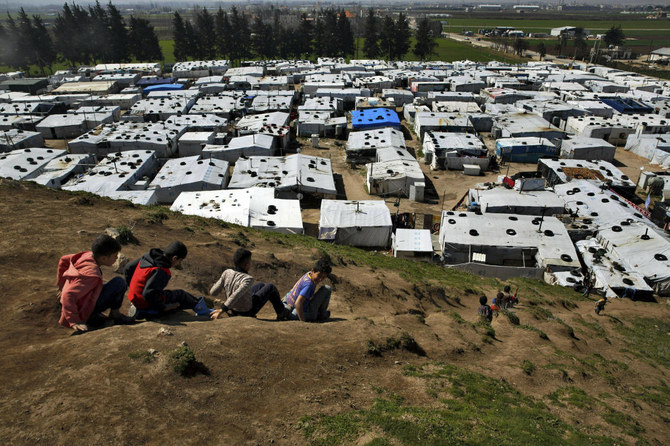
Lebanon’s own economic collapse has turned it into a launchpad for migrants. Lebanese are joining Syrian and Palestinian refugees clamouring to leave by taking dangerous sea routes.
Authorities say Lebanon currently hosts around two million Syrians, while more than 800,000 are registered with the United Nations — the highest number of refugees per capita in the world.
Migrants departing from Lebanon head for Europe, with one of the main destinations Cyprus, only 175 kilometers (110 miles) away.
Syria’s war has killed more than half a million people and forced around half the country’s pre-war population from their homes.

700 Syrians caught trying to enter Lebanon in a week: army
Short Url
https://arab.news/zt3wx
700 Syrians caught trying to enter Lebanon in a week: army
- The attempted influx coincides with days of rare protest in Syria’s southern city of Sweida
- Lebanon’s army “prevented, over several days this past week, about 700 Syrians from crossing the Lebanese-Syrian border”
US touts ‘New Gaza’ filled with luxury real estate
Davos, Switzerland: US officials on Thursday presented their vision for a “New Gaza” that would turn the shattered Palestinian territory into a glitzy resort of skyscrapers by the sea, saying the transformation could emerge in three years.
The war in Gaza, sparked by Hamas’s October 2023 attack on Israel, left much of the Palestinian territory damaged or destroyed and forced most of its residents to flee their homes.
A US-brokered ceasefire took effect last October, reducing the level of bombing and fighting, but for most Gazans, the humanitarian disaster has endured three months on.
“We’re going to be very successful in Gaza. It’s going to be a great thing to watch,” President Donald Trump said while presenting his controversial “Board of Peace” conflict-resolution body in Davos.
“I’m a real estate person at heart... and I said, look at this location on the sea. Look at this beautiful piece of property. What it could be for so many people,” he said at the World Economic Forum.
His son-in-law Jared Kushner, who has no official title but is one of Trump’s envoys for the Gaza ceasefire, said his “master plan” aimed for “catastrophic success.”
With a slide showing dozens of shiny terraced apartment towers overlooking a tree-lined promenade, he promised a Mediterranean utopia rising from the scarred Gaza landscape.
“In the Middle East they build cities like this, you know for two or three million people, they build this in three years,” Kushner said.
“And so stuff like this is very doable if we make it happen.”
He touted investments of at least $25 billion to rebuild destroyed infrastructure and public services.
Within 10 years, the territory’s GDP would be $10 billion, and households would enjoy average income of $13,000 a year thanks to “100-percent full employment and opportunity for everybody there,” he said.
“It could be a hope. It could be a destination, have a lot of industry and really be a place that the people there can thrive.”
’Amazing’ opportunities
Kushner said the so-called National Committee for the Administration of Gaza (NCAG) had enlisted help from Israeli real estate developer Yakir Gabay.
“He’s volunteered to do this not for profit, really because of his heart he wants to do this,” Kushner said.
“So the next 100 days, we’re going to continue to just be heads down and focused on making sure this is implemented.”
Trump had earlier in the conflict floated his vision of turning Gaza into a “Riviera of the Middle East,” sparking outrage around the world.
Notably absent from Kushner’s presentation was Egypt’s President Abdel Fattah El-Sisi, whose country had spearheaded in 2025 a reconstruction plan for Gaza supported by Arab nations and welcomed by the European Union.
According to a brief statement from his office, El-Sisi flew home at dawn on Thursday, hours after he and Trump exchanged praise in a tete-a-tete, with the US president calling him “a great leader, a great guy.”
Ali Shaath, Gaza’s recently appointed administrator under Trump’s “Board of Peace,” has said the Egyptian plan was the “foundation” of his committee’s reconstruction project.
A top UN official warned this month that Gazans were living in “inhumane” conditions even as the US-backed truce entered its second phase.
Entire neighborhoods, hospitals and schools have been heavily damaged or destroyed, forcing hundreds of thousands of people to live in makeshift shelters.
Kushner said 85 percent of Gaza’s economic output had been aid for a long time.
“That’s not sustainable. It doesn’t give these people dignity. It doesn’t give them hope,” he said.
He insisted that the full disarming of Hamas, as called for in the October ceasefire, would convince firms and donors to commit to the territory.
“We’ll announce a lot of the contributions that will be made in a couple of weeks in Washington,” he said.
“There’ll be amazing investment opportunities.”
Hamas’s October 7, 2023 attack on Israel resulted in the deaths of 1,221 people, and 251 people were taken hostage that day, including 44 who were dead.
Israel’s retaliatory assault on Gaza has killed at least 71,562 people, according to figures from the territory’s health ministry that the United Nations considers reliable.
The ministry also said 477 Palestinians have been killed since the ceasefire took effect on October 10.
The war in Gaza, sparked by Hamas’s October 2023 attack on Israel, left much of the Palestinian territory damaged or destroyed and forced most of its residents to flee their homes.
A US-brokered ceasefire took effect last October, reducing the level of bombing and fighting, but for most Gazans, the humanitarian disaster has endured three months on.
“We’re going to be very successful in Gaza. It’s going to be a great thing to watch,” President Donald Trump said while presenting his controversial “Board of Peace” conflict-resolution body in Davos.
“I’m a real estate person at heart... and I said, look at this location on the sea. Look at this beautiful piece of property. What it could be for so many people,” he said at the World Economic Forum.
His son-in-law Jared Kushner, who has no official title but is one of Trump’s envoys for the Gaza ceasefire, said his “master plan” aimed for “catastrophic success.”
With a slide showing dozens of shiny terraced apartment towers overlooking a tree-lined promenade, he promised a Mediterranean utopia rising from the scarred Gaza landscape.
“In the Middle East they build cities like this, you know for two or three million people, they build this in three years,” Kushner said.
“And so stuff like this is very doable if we make it happen.”
He touted investments of at least $25 billion to rebuild destroyed infrastructure and public services.
Within 10 years, the territory’s GDP would be $10 billion, and households would enjoy average income of $13,000 a year thanks to “100-percent full employment and opportunity for everybody there,” he said.
“It could be a hope. It could be a destination, have a lot of industry and really be a place that the people there can thrive.”
’Amazing’ opportunities
Kushner said the so-called National Committee for the Administration of Gaza (NCAG) had enlisted help from Israeli real estate developer Yakir Gabay.
“He’s volunteered to do this not for profit, really because of his heart he wants to do this,” Kushner said.
“So the next 100 days, we’re going to continue to just be heads down and focused on making sure this is implemented.”
Trump had earlier in the conflict floated his vision of turning Gaza into a “Riviera of the Middle East,” sparking outrage around the world.
Notably absent from Kushner’s presentation was Egypt’s President Abdel Fattah El-Sisi, whose country had spearheaded in 2025 a reconstruction plan for Gaza supported by Arab nations and welcomed by the European Union.
According to a brief statement from his office, El-Sisi flew home at dawn on Thursday, hours after he and Trump exchanged praise in a tete-a-tete, with the US president calling him “a great leader, a great guy.”
Ali Shaath, Gaza’s recently appointed administrator under Trump’s “Board of Peace,” has said the Egyptian plan was the “foundation” of his committee’s reconstruction project.
A top UN official warned this month that Gazans were living in “inhumane” conditions even as the US-backed truce entered its second phase.
Entire neighborhoods, hospitals and schools have been heavily damaged or destroyed, forcing hundreds of thousands of people to live in makeshift shelters.
Kushner said 85 percent of Gaza’s economic output had been aid for a long time.
“That’s not sustainable. It doesn’t give these people dignity. It doesn’t give them hope,” he said.
He insisted that the full disarming of Hamas, as called for in the October ceasefire, would convince firms and donors to commit to the territory.
“We’ll announce a lot of the contributions that will be made in a couple of weeks in Washington,” he said.
“There’ll be amazing investment opportunities.”
Hamas’s October 7, 2023 attack on Israel resulted in the deaths of 1,221 people, and 251 people were taken hostage that day, including 44 who were dead.
Israel’s retaliatory assault on Gaza has killed at least 71,562 people, according to figures from the territory’s health ministry that the United Nations considers reliable.
The ministry also said 477 Palestinians have been killed since the ceasefire took effect on October 10.
© 2026 SAUDI RESEARCH & PUBLISHING COMPANY, All Rights Reserved And subject to Terms of Use Agreement.


