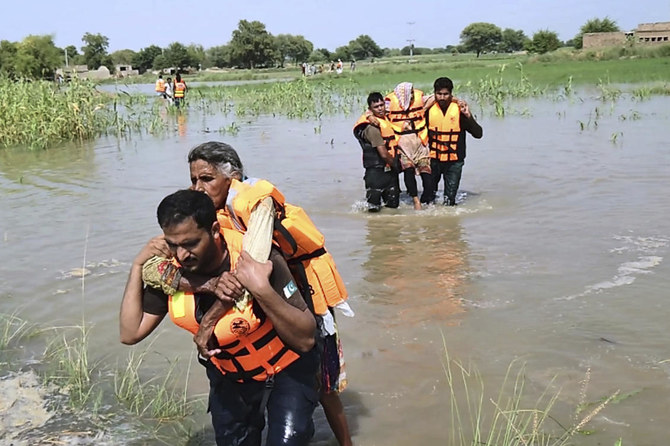
MULTAN, Pakistan: Rescuers have evacuated more than 100,000 people from flood-hit areas of Pakistan’s eastern Punjab province in the past three weeks, officials said Wednesday.
The rescue operations were expanded last week when the Sutlej River started overflowing, inundating several districts. Most of the evacuations were reported in the districts of Bahawalpur and Kasur in Punjab province.
Small-scale evacuations began in July after neighboring India diverted water from dams into the Ravi River, which flows from India into Pakistan.
Later rains also flooded the Sutlej River, prompting authorities to evacuate people living nearby.
The national disaster management agency said water levels in the Ravi River are currently normal but will rise further in the Sutlej River this week.
Pakistani authorities are still struggling to overcome the damage caused by massive floods last summer that affected 33 million people and killed 1,739. They caused $30 billion in damage to the country’s economy.
The monsoon season began in July and will continue until September.

Rescuers evacuate over 100,000 people from flood-hit areas of Pakistan’s Punjab province in 3 weeks
Short Url
https://arab.news/rhryz
Rescuers evacuate over 100,000 people from flood-hit areas of Pakistan’s Punjab province in 3 weeks
- The rescue operations were expanded last week when the Sutlej River started overflowing, inundating several districts
- Small-scale evacuations began in July after neighboring India diverted water from dams into the Ravi River
Three Afghan migrants die of cold while trying to cross into Iran
AFGHANISTAN: Three Afghans died from exposure in freezing temperatures in the western province of Herat while trying to illegally enter Iran, a local army official said on Saturday.
“Three people who wanted to illegally cross the Iran-Afghanistan border have died because of the cold weather,” the Afghan army official told AFP on condition of anonymity.
He added that a shepherd was also found dead in the mountainous area of Kohsan from the cold.
The migrants were part of a group that attempted to cross into Iran on Wednesday and was stopped by Afghan border forces.
“Searches took place on Wednesday night, but the bodies were only found on Thursday,” the army official said.
More than 1.8 million Afghans were forced to return to Afghanistan by the Iranian authorities between January and the end of November 2025, according to the latest figures from the United Nations refugee agency (UNHCR), which said that the majority were “forced and coerced returns.”
“These mass returns in adverse circumstances have strained Afghanistan’s already overstretched resources and services” which leads to “risks of onward and new displacement, including return movements back into Pakistan and Iran and onward,” UNHCR posted on its site dedicated to Afghanistan’s situation.
This week, Amnesty International called on countries to stop forcibly returning people to Afghanistan, citing a “real risk of serious harm for returnees.”
Hit by two major earthquakes in recent months and highly vulnerable to climate change, Afghanistan faces multiple challenges.
It is subject to international sanctions particularly due to the exclusion of women from many jobs and public places, described by the UN as “gender apartheid.”
More than 17 million people in the country are facing acute food insecurity, the UN World Food Programme said Tuesday.
“Three people who wanted to illegally cross the Iran-Afghanistan border have died because of the cold weather,” the Afghan army official told AFP on condition of anonymity.
He added that a shepherd was also found dead in the mountainous area of Kohsan from the cold.
The migrants were part of a group that attempted to cross into Iran on Wednesday and was stopped by Afghan border forces.
“Searches took place on Wednesday night, but the bodies were only found on Thursday,” the army official said.
More than 1.8 million Afghans were forced to return to Afghanistan by the Iranian authorities between January and the end of November 2025, according to the latest figures from the United Nations refugee agency (UNHCR), which said that the majority were “forced and coerced returns.”
“These mass returns in adverse circumstances have strained Afghanistan’s already overstretched resources and services” which leads to “risks of onward and new displacement, including return movements back into Pakistan and Iran and onward,” UNHCR posted on its site dedicated to Afghanistan’s situation.
This week, Amnesty International called on countries to stop forcibly returning people to Afghanistan, citing a “real risk of serious harm for returnees.”
Hit by two major earthquakes in recent months and highly vulnerable to climate change, Afghanistan faces multiple challenges.
It is subject to international sanctions particularly due to the exclusion of women from many jobs and public places, described by the UN as “gender apartheid.”
More than 17 million people in the country are facing acute food insecurity, the UN World Food Programme said Tuesday.
© 2025 SAUDI RESEARCH & PUBLISHING COMPANY, All Rights Reserved And subject to Terms of Use Agreement.


