DUBAI: Iran sentenced seven men and a woman to prison after their convictions over allegedly aiding two men who were earlier executed for killing a paramilitary volunteer during the nationwide protests last year that followed Mahsa Amini’s death in police custody, state media reported Wednesday.
The sentences come just ahead of the one-year anniversary of Amini’s Sept. 16 death, as authorities have been rounding up activists and others in an apparent attempt to tamp down on any dissent ahead of it.
The report by the judiciary’s Mizan news agency offered the first official confirmation of the sentences apparently handed down earlier by a Revolutionary Court in the city of Karaj, where the November slaying happened. The report said the country’s Supreme Court upheld the sentences handed down following an appeal by the lawyers for those convicted.
The defendants were found guilty of committing “warfare” and of “corruption on Earth,” a term often used to describe attempts to undermine the Iranian government, Mizan said.
Iran’s Revolutionary Court conducts closed-door hearings and has long been criticized by activists and other nations for their harsh sentences against opposition figures and those with Western ties. The tribunals don’t allow those on trial to pick their own lawyers or see the evidence against them.
Among those sentenced, Dr. Hamid Qarahasnalu received a 15-year sentence, while his wife Farzaneh received a five-year sentence, Mizan said. The two must serve that time in a prison far from their homes, as must the others sentenced in the case.
It’s not clear exactly what the doctor and his wife did. However, during the protests, doctors who treated those taking part in the demonstrations faced harassment and arrest.
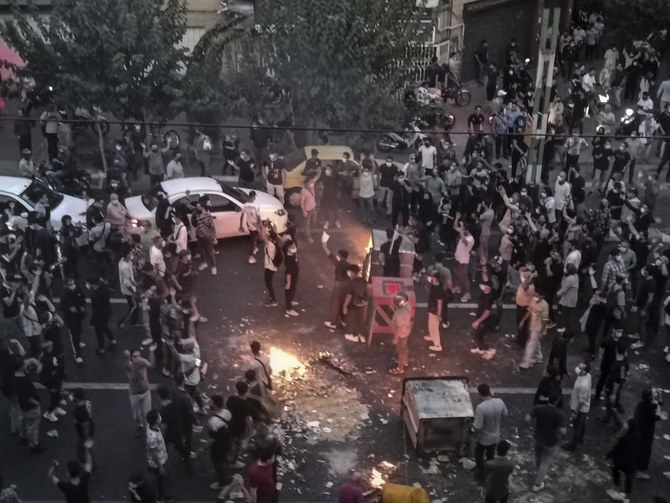
Their sentencing comes as part of the case that saw two men identified as Mohammad Mehdi Karami and Mohammad Hosseini executed in January. The men had been convicted of killing Ruhollah Ajamian, a member of the Iranian Revolutionary Guard’s volunteer Basij force, in the city of Karaj, some 40 kilometers (25 miles) northwest of Tehran, on Nov. 3. The Basij were deployed in major cities during the demonstrations, attacking and detaining protesters who in many cases fought back.
More than 500 people were killed and 22,000 others arrested in the security crackdown that followed the demonstrations.
The protests began in mid-September when 22-year-old Amini died after being arrested by Iran’s morality police for allegedly violating the Islamic Republic’s strict dress code requiring women to wear the hijab, or Islamic headscarf.
The protests marked one of the biggest challenges to Iran’s theocracy since the 1979 Islamic Revolution. Women continue to flout wearing the hijab, though authorities have lately increased their enforcement of the law by targeting businesses and other locations.
In recent weeks, authorities have detained at least 22 activists, the majority of them women, in an attempt to squash any renewed demonstrations, the New York-based Center for Human Rights in Iran said in a statement.
“Iranian authorities are rounding up activists around the country, especially women, to deliver a message of fear to the populace ahead of the one-year anniversary of the ‘Woman Life Freedom’ protest movement: Stand up again, and we’ll crush you,” said Hadi Ghaemi, the center’s executive director.
“This surge in repression, after the state’s killing of hundreds of protesters over the last year, demands a global response that goes beyond amplifying the voices of these courageous women.”


![]()

Iran sentences 8 to prison over paramilitary’s death during last year’s nationwide protests
Short Url
https://arab.news/7nhcn
Iran sentences 8 to prison over paramilitary’s death during last year’s nationwide protests


Latest updates


© 2026 SAUDI RESEARCH & PUBLISHING COMPANY, All Rights Reserved And subject to Terms of Use Agreement.