SME count in Saudi Arabia surges by 2.6% to reach 1.23m in Q2 

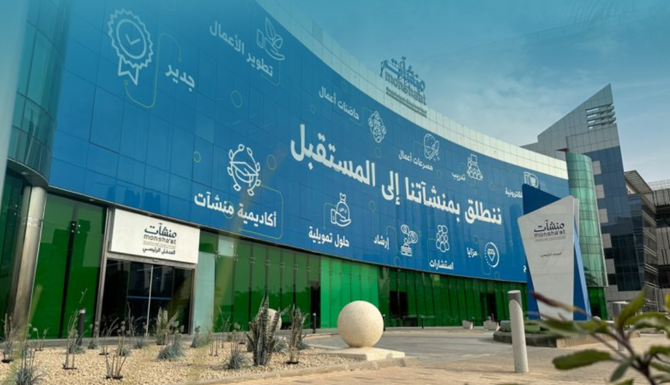
Riyadh emerged as the hub for 42.3 percent of the SMEs by the end of the second quarter. (Supplied)
Short Url
Updated 22 August 2023
Follow

SME count in Saudi Arabia surges by 2.6% to reach 1.23m in Q2 

RIYADH: Saudi Arabia’s small and medium enterprise landscape saw a 2.6 percent uptick in the second quarter of 2023, with the number of SMEs reaching 1.23 million, up from 1.2 million in the first quarter, according to official data.  

Riyadh emerged as the hub for 42.3 percent of the SMEs by the end of the second quarter, the latest report released by the Small and Medium Enterprises General Authority, Monsha’at, showed.  

The Makkah region and the Eastern Province followed with 18.6 percent and 10.9 percent, respectively. The Aseer Province hosted 5.3 percent of the SMEs, while other cities collectively accounted for 22.9 percent of the total. 

The report provided a breakdown of Saudi Arabia’s SME ecosystem, revealing the presence of 17,888 medium-sized companies, 152,825 small-sized establishments, and 1.06 million micro-sized firms. 

In terms of specific regions, the Riyadh province housed 518,516 SMEs by the second quarter’s conclusion, while the Eastern Province hosted 228,337. Aseer region’s contribution stood at 64,440 SMEs. 

Hashim Al-Dabbagh, acting CEO of Aseer Development Authority, attributed the sector’s growth to Saudi Arabia’s investor-friendly environment. He added: “Our nation’s advanced regulatory and legislative environment has helped to establish an investor base that believes in Saudi Arabia’s economic direction, which has resulted in unprecedented growth in the volume and quality of startup deals.” 

Promoting the SME sector aligns with Saudi Arabia’s Vision 2030 goals. The vision aims for SMEs to contribute 35 percent of the gross domestic product by 2030, with a significant role in reducing the unemployment rate from 11.6 percent to 7 percent and increasing women’s workforce participation from 22 percent to 30 percent. 

Amid a decline in venture capital funding in the Middle East and North Africa region during the second quarter of 2023, Saudi Arabia maintained its leadership, raising $446 million in the first half of the year, the report outlined.

It further noted that 42 percent of all MENA funding to SMEs during the first half of 2023 was directed to Saudi Arabia. 

Al-Dabbagh emphasized the collaboration between the public and private sectors, contributing to Saudi Arabia’s pursuit of its Vision 2030 goals.  

He added: “When combined with enabling factors such as the strong collaboration between the public and private sectors, the positive growth trajectory of Saudi Arabia’s entrepreneurs and smaller businesses is providing crucial momentum to the Kingdom’s progress toward its ambitious Vision 2030 goals.” 


First EU–Saudi roundtable on critical raw materials reflects shared policy commitment

Updated 16 January 2026
Follow

First EU–Saudi roundtable on critical raw materials reflects shared policy commitment

RIYADH: The EU–Saudi Arabia Business and Investment Dialogue on Advancing Critical Raw Materials Value Chains, held in Riyadh as part of the Future Minerals Forum, brought together senior policymakers, industry leaders, and investors to advance strategic cooperation across critical raw materials value chains.

Organized under a Team Europe approach by the EU–GCC Cooperation on Green Transition Project, in coordination with the EU Delegation to Saudi Arabia, the European Chamber of Commerce in the Kingdom and in close cooperation with FMF, the dialogue provided a high-level platform to explore European actions under the EU Critical Raw Materials Act and ResourceEU alongside the Kingdom’s aspirations for minerals, industrial, and investment priorities.

This is in line with Saudi Vision 2030 and broader regional ambitions across the GCC, MENA, and Africa.

ResourceEU is the EU’s new strategic action plan, launched in late 2025, to secure a reliable supply of critical raw materials like lithium, rare earths, and cobalt, reducing dependency on single suppliers, such as China, by boosting domestic extraction, processing, recycling, stockpiling, and strategic partnerships with resource-rich nations.

The first ever EU–Saudi roundtable on critical raw materials was opened by the bloc’s Ambassador to the Kingdom, Christophe Farnaud, together with Saudi Deputy Minister for Mining Development Turki Al-Babtain, turning policy alignment into concrete cooperation.

Farnaud underlined the central role of international cooperation in the implementation of the EU’s critical raw materials policy framework.

“As the European Union advances the implementation of its Critical Raw Materials policy, international cooperation is indispensable to building secure, diversified, and sustainable value chains. Saudi Arabia is a key partner in this effort. This dialogue reflects our shared commitment to translate policy alignment into concrete business and investment cooperation that supports the green and digital transitions,” said the ambassador.

Discussions focused on strengthening resilient, diversified, and responsible CRM supply chains that are essential to the green and digital transitions.

Participants explored concrete opportunities for EU–Saudi cooperation across the full value chain, including exploration, mining, and processing and refining, as well as recycling, downstream manufacturing, and the mobilization of private investment and sustainable finance, underpinned by high environmental, social, and governance standards.

From the Saudi side, the dialogue was framed as a key contribution to the Kingdom’s industrial transformation and long-term economic diversification agenda under Vision 2030, with a strong focus on responsible resource development and global market integration.

“Developing globally competitive mineral hubs and sustainable value chains is a central pillar of Saudi Vision 2030 and the Kingdom’s industrial transformation. Our engagement with the European Union through this dialogue to strengthen upstream and downstream integration, attract high-quality investment, and advance responsible mining and processing. Enhanced cooperation with the EU, capitalizing on the demand dynamics of the EU Critical Raw Materials Act, will be key to delivering long-term value for both sides,” said Al-Babtain.

Valere Moutarlier, deputy director-general for European industry decarbonization, and directorate-general for the internal market, industry, entrepreneurship and SMEs at European Commission, said the EU Critical Raw Materials Act and ResourceEU provided a clear framework to strengthen Europe’s resilience while deepening its cooperation with international partners.

“Cooperation with Saudi Arabia is essential to advancing secure, sustainable, and diversified critical raw materials value chains. Dialogues such as this play a key role in translating policy ambitions into concrete industrial and investment cooperation,” she added.