KARACHI: Pakistani traders on Friday staged a protest demonstration in the commercial capital of the country against the escalating costs of energy and essential food items amid mounting inflationary pressure.
The protest was organized by various representative bodies of traders in front of Karachi’s historic Memon Masjid situated near the harbor. Around 100 trade associations participated in the protest and vowed to continue their struggle against the rising cost of doing business in the country.
Speaking to the participants of the demonstration, Atiq Mir, chairman of All Karachi Tajir Ithehad (AKTI), said traders had launched a series of protests in different parts of the city to save their business from complete collapse and protect their livelihood.
“The unprecedented rise in the prices of electricity and fuel has now become unbearable for traders and masses alike,” he said. “That is why we have launched the drive to protect the business.”
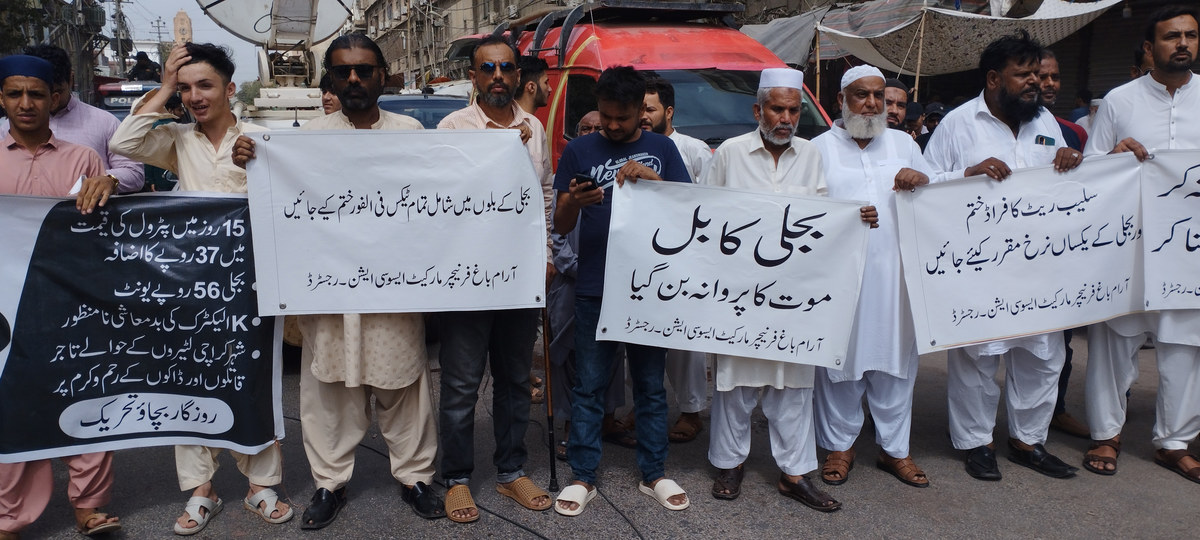
Local traders stage protest demonstration against rising inflation caused by increased fuel and electricity prices in Karachi, Pakistan, on August 18, 2023. (AN Photo)
He warned if the government failed to take corrective measures by curtailing power and fuel rates, all traders would begin to stop payment of electricity bills.
“In the next phase of our protests, the payments of electricity bills would be stopped,” Mir said, adding: “Payment of electricity bills has become a more difficult task for over 90 percent of people due to high tariffs.”
In Pakistan, the outgoing coalition government of former prime minister Shehbaz Sharif had authorized a significant increase in the electricity base tariff to meet one of the key demands of the International Monetary Fund (IMF) under a $3 billion stand-by arrangement (SBA), a short-term financing program signed in June 2023.
The power regulator, National Electric Power Regulatory Authority (NEPRA), in June this year raised the power base tariff by Rs4.96 per unit.
The power tariff hike has increased electricity bills between Rs1,836 to Rs16,000 for various categories of consumers across the country.
Hamid Mehmood, another trade leader, representing small industries agreed with Mir and his other colleagues.
“The high cost of electricity is badly impacting the business,” he said and demanded that all the taxes imposed on electricity consumption must be withdrawn.
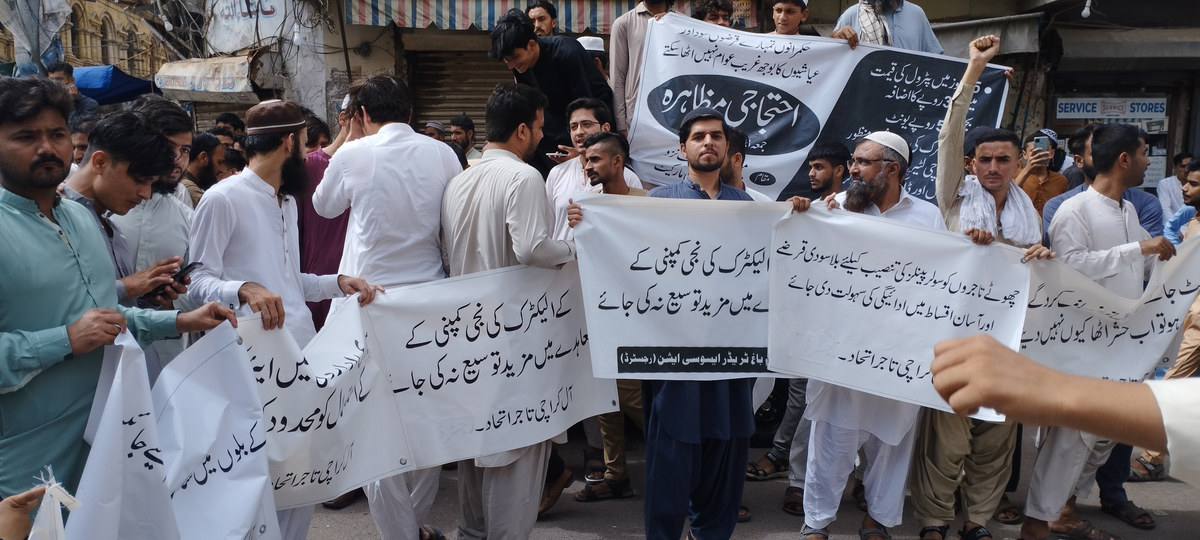
Local traders stage protest demonstration against rising inflation caused by increased fuel and electricity prices in Karachi, Pakistan, on August 18, 2023. (AN Photo)
Traders also urged the government to end the peak hours and off-peak hours while calculating electricity bills.
Pakistan has jacked up fuel prices twice in the last 30 days under a fortnightly price adjustment mechanism. The fuel rates with over 15 percent hike have gone up to an all-time high in the country.
Traders said the recent hike in the prices of petroleum products and power couple with spiraling inflation had almost crippled the business activities.
“Our business has almost declined by 80 percent,” Ahsan Gujjar, a motorcycle dealer, said, adding that most of the traders were surviving on what used to be about 20 percent of their trade.
Traders also criticized the newly appointed caretaker administration, saying they were following in the footsteps of the previous coalition government of Shehbaz Sharif which, according to many of them, was responsible for the current economic chaos.
Inflation in Pakistan hit a historic high of 38 percent in May this year before easing off to 28.3 percent in July. However, it still remains toward the higher side.