

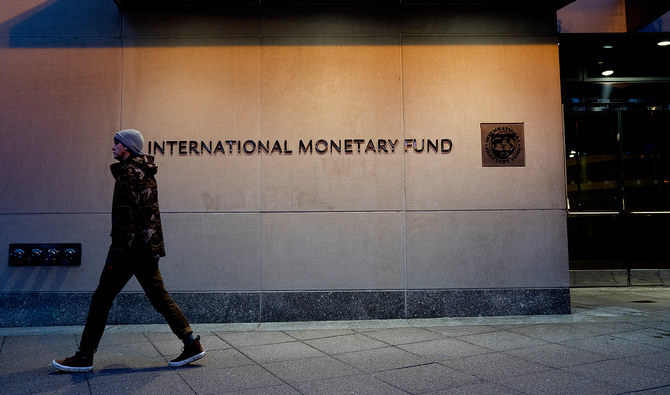

KARACHI: Pakistan’s Caretaker Prime Minister Anwaar-ul-Haq Kakar will face several challenges while he governs Pakistan, which includes implementing a tough International Monetary Fund (IMF) loan program, advancing Arab investments and ensuring the national currency remains stable, Pakistani economists and financial experts said on Wednesday.
The outgoing government of former prime minister Shehbaz Sharif signed a $3 billion standby agreement (SBA) with the IMF as Pakistan narrowly avoided a sovereign default. The South Asian country is still reeling from staggering inflation, a weak currency and dwindling foreign exchange reserves. The devastating floods of 2022 wreaked immense damage on Pakistan’s already fragile economy.
Most financial experts believe implementing the fund’s program will be the foremost challenge for the new government.
“The caretakers at the federal level are going to face numerous challenges vis-a-vis the nine-month $3 billion SBA with the IMF,” Dr. Ikram ul Haq, a Lahore-based senior economist, told Arab News.
Dr. Haq believed the high cost of borrowing to run even the country’s day-to-day expenditure and then achieve primary surplus targets agreed with the IMF on a quarterly basis, were daunting challenges.
“It needs drastic cuts in expenditure as the revenue stream due to [Pakistan’s] sluggish economy cannot be improved,” he added.
The IMF program focuses on implementation of the FY24 budget to facilitate Pakistan’s needed fiscal adjustment and ensure debt sustainability and a return to a market-determined exchange rate, and proper forex market functioning to absorb external shocks and eliminate forex shortages.
The IMF program has also urged Pakistan to adopt an appropriately tight monetary policy aimed at disinflation; and demanded further progress on structural reforms, particularly with regard to energy sector viability, SOE governance, and climate resilience, according to IMF.
Haroon Sharif, former chairman of the Board of Investment (BoI) agreed with Haq by saying that the caretaker government is facing “immediate challenge of completing the upcoming review under the SBA.”
“Dealing with IMF is a very clear challenge,” Sharif told Arab News.
Sharif said picking the right people for the right job is another challenge for Kakar, adding that the caretaker prime ministers needed an experienced and technical team.
He said another challenge for the government would be to ensure Pakistan’s effective representation at the COP28 climate conference which would take place from November 30 to December 12 in the UAE.
Sharif said the first commitment made at the COP27 conference was made but not honored, adding that though the loss and damage fund was created, however, the money was not distributed.
“Now the challenge is to have a very solid strong team to deal with COP28 so that they could ensure future support for Pakistan,” he added.
Dr. Haq, however, said the second biggest challenge for the caretaker government is ensuring stability of the national currency.
“The second challenge is dollar to rupee parity,” Haq said, referring to the recent hike in the value of dollar against the Pakistani rupee. On Wednesday afternoon, the US dollar was trading at around Rs295 in the interbank market and at Rs302 in the open market.
“IMF will certainly ask [Pakistan] to bridge the gap between the interbank rate and open market rate,” Haq said. “The State Bank needs to take stringent measures to counter speculative business in open market.”
Sharif believes advancing projects identified by the Special Investment Facilitation Council (SIFC), a hybrid civil-military government body formed by the outgoing government to attract international investments in mining, agriculture and other sectors, will be another daunting task for the caretaker government.
“The approved projects are mostly with Saudis and UAE and now they will face pressure to deliver on those projects and finalize transactions,” Sharif said.


