

‘Barbie’ fever hits Saudi Arabia

1 / 3
Pink Night at Riyadh Front drew crowds in pink, ready to embark on the ‘Barbie’ cinematic experience. (Instagram/voxcinemasksa)
2 / 3
Pink Night at Riyadh Front drew crowds in pink, ready to embark on the ‘Barbie’ cinematic experience. (Supplied)
3 / 3
Pink Night at Riyadh Front drew crowds in pink, ready to embark on the ‘Barbie’ cinematic experience. (Supplied)
Short Url
Updated 16 August 2023
Follow

‘Barbie’ fever hits Saudi Arabia

  • Highly-anticipated film starring Margot Robbie has evoked mixed reactions from movie goers
  • Several nations in region considering outright ban of the movie

RIYADH: People have been rushing to cinemas here to watch “Barbie,” the movie that has garnered $1 billion at the US box office but also caused a storm of criticism, particularly from people and governments in the Middle East.

Last Thursday, on the opening day in Riyadh, movie goers descended on cinemas wearing various shades of pink and their funkiest accessories, demonstrating how the popularity of the film has affected local audiences.

Kuwait has banned “Barbie,” while there is heated debate underway in Lebanon on whether to do so. Concerns have been raised across the region about the movie’s supposed disruption of cultural norms.
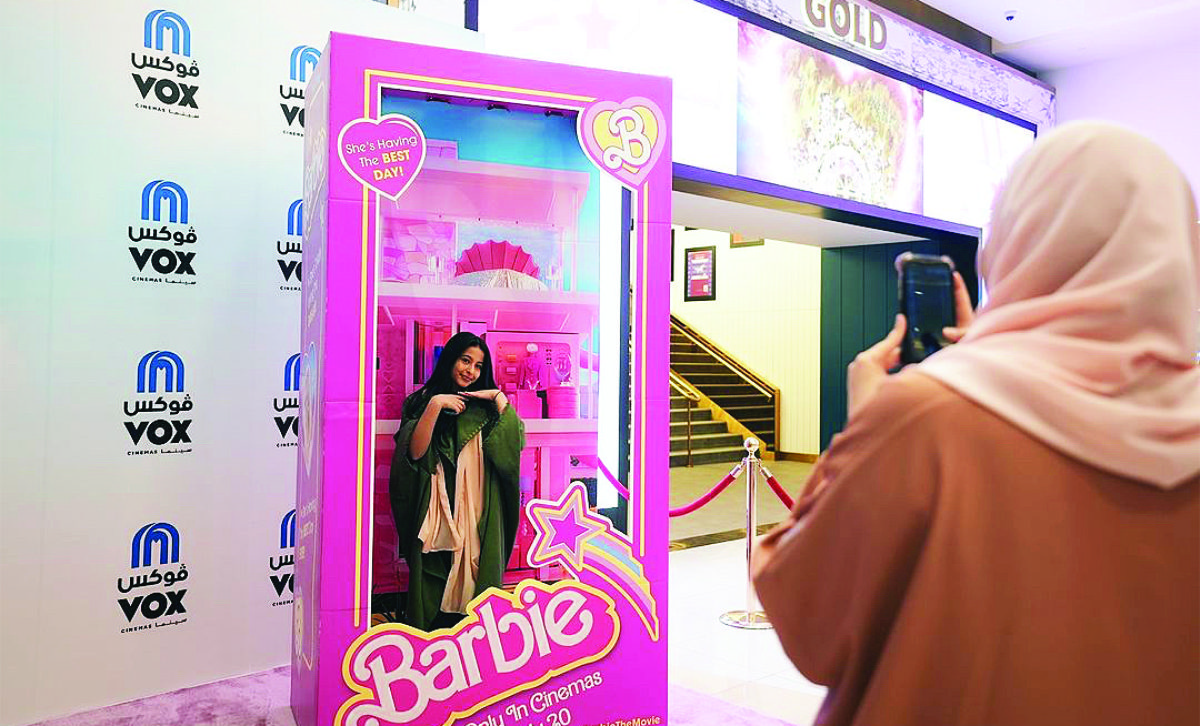


Pink Night at Riyadh Front drew crowds in pink, ready to embark on the ‘Barbie’ cinematic experience. (Instagram/voxcinemasksa)

Rumors had been circulating that Saudi Arabia would also prohibit the film when its screening was pushed to Aug. 31 — a month after its US release. But the film, starring Margot Robbie and Ryan Gosling as Barbie and Ken respectively, was unexpectedly released on Aug. 10, with only a few days’ notice given for advanced ticket purchases.

Some also rushed to criticism.

The movie is essentially about the tribulations of a woman in the “real world,” but individuals across the Arab region have been bashing the film, claiming it is packed with extreme feminist ideologies that degrade men. Many also claimed it violated traditional family values.

On Aug. 10, one person shared a post on X that stated: “Honestly, whoever is booking, I assure you you’ll regret it and won’t finish the film. You’ll just be wasting your weekend.”
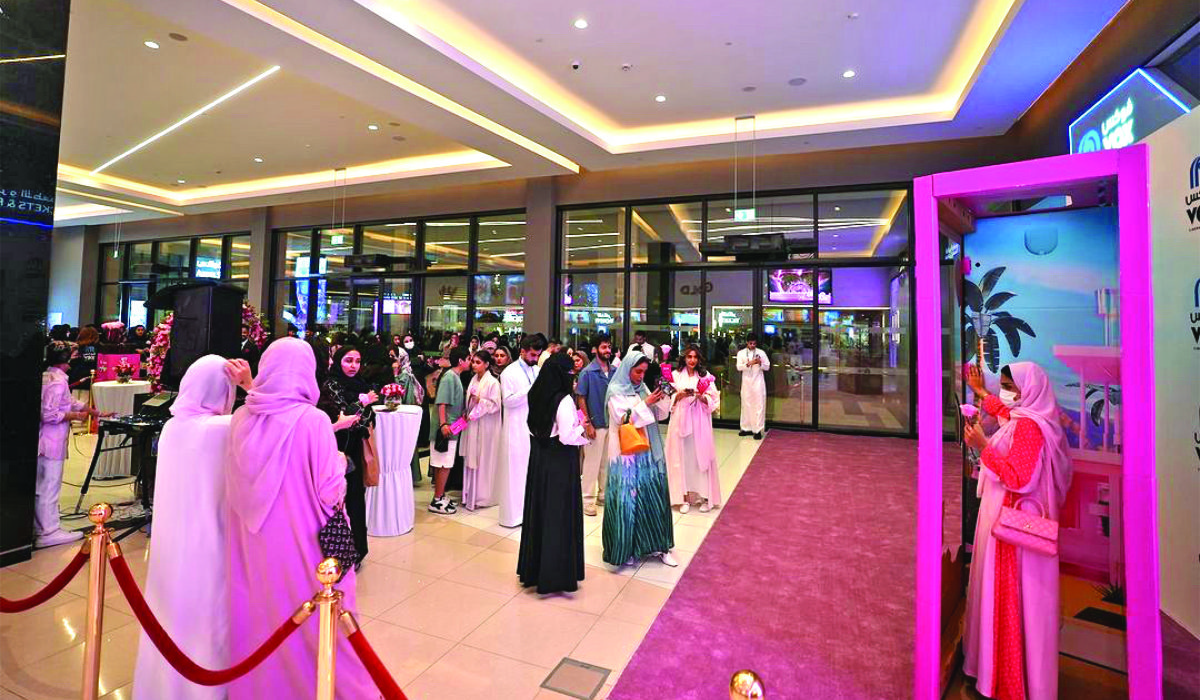


Pink Night at Riyadh Front drew crowds in pink, ready to embark on the ‘Barbie’ cinematic experience. (Instagram/voxcinemasksa)

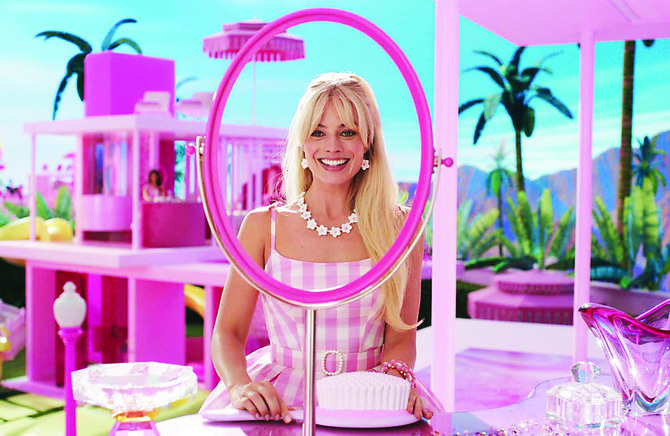
The film’s marketing campaign, reportedly costing a whopping $150 million, has left no commercial area free of the signature Barbie color — from clothing and makeup collaborations, to pink-coated desserts and tourist initiatives, which includes Airbnb listing Barbie’s Malibu Dream House for bookings.

For weeks “Barbie” has gone viral on social media platforms. Saudi movie goers have also weighed in with their views.

Mohammed F. told Arab News that the film’s strong point is that it tackles issues such as patriarchal attitudes and consumerism, in playful and fun ways, using Barbie dolls.

I enjoyed it for what it was and it was definitely funny but the movie did not bring anything new to the table when tackling feminism.

Nora Al-sadoon, Moviegoer

“It’s very educational especially for women who don’t realize or have a clear understanding on why unfortunately a lot of men with privilege abuse their rights and basically how the current reality — patriarchy — affects women’s growth and dreams and aspirations to accomplish greatness,” he added.

In the film, there are Barbies with careers traditionally taken up by men, like doctors, astronauts and construction workers, but central to the plot is a stereotypical Barbie still trying to find her place in the world.

Mohammed continued: “I think that also speaks to women who are currently objectified and put in a box, to then realize how important it is to find themselves.



Mattel’s Margot Robbie Barbie doll. (Supplied)

“I believe men should definitely learn from this movie especially men who are toxic and objectify women because they are unfortunately the ones who find this movie controversial because they feel attacked by the truth they know is real.”

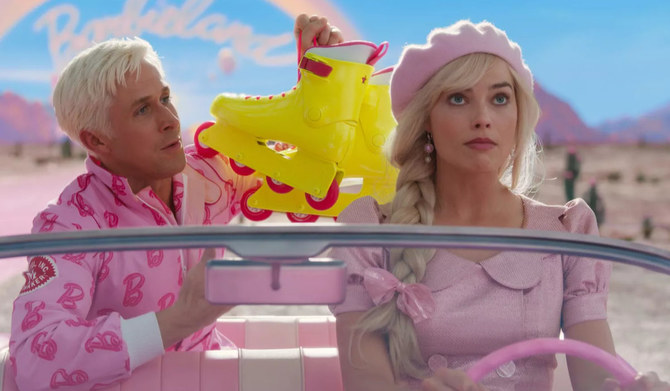
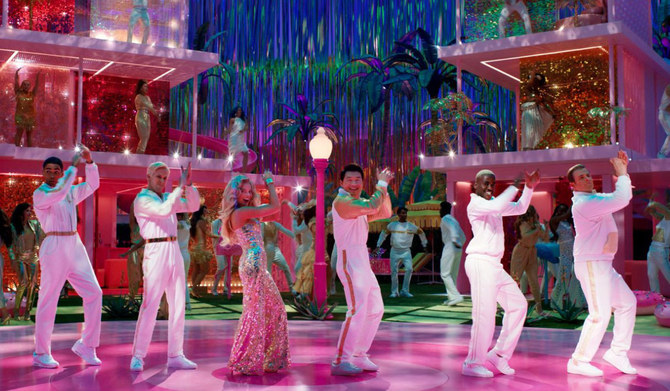
Many applauded the technical aspects and script of the film, which include lavish wardrobes, elaborate set designs, catchy soundtrack, and witty zingers in the all-so-pink world of Barbie Land.

For some women, it was the movie they have been waiting for because it appeared to represent their transition from innocent young girls to women facing the reality of contemporary society.

“It brought back so many precious childhood memories,” Mashael Abdulrahman told Arab News.

“What touched me the most was that it was about experiencing life, specifically through different human emotions. In several scenes I was left speechless, the way Barbie was trying to make sense of what she’s going through, how she was on a journey to self-discovery, understanding what does she truly want. And Ken too,” Abdulrahman explained.

For some, the storyline fell flat. “It just wasn’t very good,” said one woman who preferred to remain anonymous. While it flipped the idea of patriarchy on its head, she believes it did not go much further than that.

“Mostly I felt like it was a beautiful movie that was poorly made. Some parts felt rushed or unnecessary … But generally I felt like (it was) a modern blockbuster in the sense that it was a movie about an IP (a company’s intellectual property), trying to revitalize its image, and a director trying to break into making large blockbuster films. There were plenty of parts that were fun and funny but I don’t think it’s a breakthrough film,” the woman added.

Nora Al-Sadoon, who also watched the film, told Arab News: “Personally, I walked into it expecting a slightly more serious movie. I did like how it talked about Barbie presenting the dream for girls and them being anything they want to be, but the script and the story felt a little weak. I enjoyed it for what it was and it was definitely funny but the movie did not bring anything new to the table when tackling feminism.”

Some said that they expected more from Greta Gerwig, the actress, director, and screenwriter behind the critically-acclaimed films “Little Women” and “Ladybird.”

Abdullah Faisal said that he “resonated with some moments of the movie, yet given who worked on this movie, it wasn’t as strong or impactful as I expected it to be. For major topics like patriarchy and gender discrimination, the movie didn’t give them justice.”

Aside from gender, Faisal said the film seems to have highlighted generational differences in his family on certain issues. While his 37-year-old sister felt connected to the themes as a Saudi woman facing various societal challenges, his mother expressed a dislike for the film. “She said it had great messages but nothing new or emotionally provocative,” he explained.


Saudi House kicks off Davos with push on Vision 2030, AI platform and ‘humanizing’ tourism

At Saudi House, ministers and executives set out how the Kingdom sees the next phase of its transformation. (Supplied)
Updated 20 January 2026
Follow

Saudi House kicks off Davos with push on Vision 2030, AI platform and ‘humanizing’ tourism

  • Saudi ministers dominate pre-summit spotlight at Saudi pavilion, touting Vision 2030’s next phase and human capital as key to global edge
  • Ministry of Economy and Planning announced the SUSTAIN Platform which aims to accelerate AI-enabled, cross-sector collaboration for sustainable development

DAVOS: For regulars at the World Economic Forum, Monday in Davos is usually a chance to ease into the week, a time to reconnect, plan meetings and prepare for the intense schedule ahead.

This year, Saudi Arabia moved quickly to fill that lull, taking center stage with a packed program of panels ahead of Tuesday’s official opening.

At the Saudi House — the Kingdom’s official pavilion on the Promenade, returning after its debut as a standalone venue at the 2025 WEF Annual Meeting — Saudi ministers and global executives set out how the Kingdom sees the next phase of its transformation.

Monday’s speakers at the Saudi House included Minister of Finance Mohammed Al-Jadaan, Minister of Investment Khalid Al-Falih, Minister of Tourism Ahmed Al-Khateeb, and President and Vice Chairman of Meta Dina Powell McCormick. (Supplied)

Established by the Ministry of Economy and Planning, the venue is pitched as a platform for international thought leaders to tackle the challenges, opportunities and solutions shaping the global economy.

Opening a session on the Kingdom’s role at this year’s Forum and the next phase of Vision 2030 — now in its 10th year and roughly two-thirds complete — Princess Reema bint Bandar, Saudi Arabia’s ambassador to the US, said human capital “is the actual driver if you want a competitive, modern economy.”

She described one of the biggest achievements of the past decade as the emergence of a highly qualified cohort of young Saudis who could work anywhere in the world but “choose to come home, choose to build at home and choose to deliver at home,” calling this “the biggest symbol of the success of Vision 2030.”

Who can give you optimum access to opportunities while addressing risks? I contend that Saudi Arabia has been able to provide that formula.

Khalid Al-Falih, Saudi minister of investment

On the same panel, Minister of Finance Mohammed Aljadaan said this success is rooted in a “behavioral change” that has strengthened the Kingdom’s credibility with both international partners and its own citizens.

“Credibility comes from being very pragmatic, making sure that you maintain your fiscal policy discipline, but at the same time refocus your resources where it matters,” he said, warning that “markets will call your bluff if you’re not serious.”

The Saudi House, a cross-ministerial initiative led by the Ministry of Economy and Planning, is intended to underscore the Kingdom’s “commitment to global cooperation” by offering “a platform where visionary ideas are shared and shaped,” while showcasing opportunities and lessons from its “unprecedented national transformation.”

Lubna Olayan, Chair of the Corporate Board, Olayan Group

Echoing earlier comments to Arab News, Economy and Planning Minister Faisal Alibrahim said the Kingdom’s role as an anchor of stability has helped unlock its potential, stressing that while the objective is to decouple from reliance on a single commodity, “2030 is not the finishing line.”

Khalid Al-Falih, Saudi minister of investment, said Saudi Arabia has been able to enable access to opportunities while addressing major risks, arguing that few countries can match the Kingdom’s overall mix.

“No country has all of those to 100 percent,” he said. “But who can give you the mix that gives you optimum access to opportunities while addressing all of those risks?

Dr. Bedour Alrayes, Deputy CEO, Human Capability Development Program, Saudi Arabia

“I contend that Saudi Arabia has been able to provide that formula and the proof is in the pudding,” noting that local investment has doubled in recent years to reach levels comparable with India and China.

While societal transformation dominated the morning discussions, the afternoon turned to technology, tourism, sport and culture, four strategic sectors expected to spearhead Vision 2030’s next phase.

The Ministry of Economy and Planning used the day to announce the SUSTAIN Platform, due to launch in 2026, which aims to accelerate AI-enabled, cross-sector collaboration for sustainable development.

The ministry said SUSTAIN will translate the Kingdom’s public and private-sector coordination mandate into a practical national tool to help government entities, businesses, investors, academia and civil society identify credible partners, form trusted coalitions and move initiatives “from planning to implementation more efficiently,” addressing a global challenge where fragmented partnerships often slow delivery and blunt impact.

“We are in a moment in time where technology may well impact the face of humanity,” said Dina Powell McCormick, recently appointed president and vice chairman of Meta, welcoming the Kingdom’s “desire” to partner with technology companies and its embrace of innovation.

Minister of Tourism Ahmed Alkhateeb, discussing how technology is being deployed in his sector, underlined that “in travel and tourism, people are very important. We learn about other people’s culture through interacting with people. We digitalize the unnecessary and humanize the necessary.”

He added that while technological transformation is a priority, “we don’t want to replace this big workforce with technology. I think we need to protect them in Saudi Arabia, where we’re being a model. I’m an advocate of keeping the people.”

Throughout the week, Saudi House will host more than 20 sessions, including over 10 accredited by the WEF, across six themes: Bold Vision, Insights for Impact, People and Human Capability, Quality of Life, Investment and Collaboration, and Welcoming the World.

The pavilion will also launch “NextOn,” a new series of influential and educational talks featuring leading global voices.