

British-Pakistani journalist wins right to sue CNN for ‘unfair dismissal, discrimination’ 

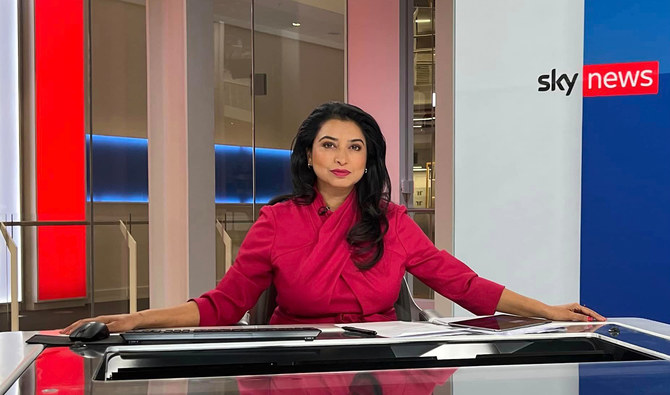
The picture posted on February 25, 2023 shows British-Pakistani journalist, Saima Mohsin. (Photo courtesy: Saima Mohsin/Facebook)
Short Url
Updated 15 August 2023
Follow

British-Pakistani journalist wins right to sue CNN for ‘unfair dismissal, discrimination’ 

  • Saima Mohsin, an international correspondent for CNN, was injured on a reporting assignment in Jerusalem in 2014 
  • Mohsin claims she requested CNN for alternative duties, support for rehabilitation but the network denied her request 

ISLAMABAD: Former CNN reporter and British-Pakistani journalist Saima Mohsin has won the right to take the news network to an employment tribunal in the United Kingdom (UK) for “unfair dismissal” and “discrimination” after she was injured on an assignment in Israel. 

Mohsin, who now works on a freelance basis for Sky News, was injured on assignment in Jerusalem for CNN in 2014 when she was covering the Israel-Palestine conflict. Her cameraman ran over her foot, causing tissue damage and chronic pain, meaning she uses a walking stick and is unable to work full-time. 

The incident also led to a mental health breakdown and Mohsin suffers from depression, according to international media reports. She claims that CNN terminated her contract in 2017 after she requested alternative duties and support during rehab. 

The British-Pakistani journalist last month announced that she was suing CNN for “unfair dismissal” and “discrimination.” 

“I won! I won the hearing against CNN,” Mohsin said on X Tuesday. “Employment Tribunal will hear my case on unfair dismissal #disability discrimination & #equalpay in London.” 

The journalist shared a report by the Deadline magazine which stated that the judge ruled in her favor following a preliminary hearing last month, meaning that her case can proceed to the London Central Employment Tribunal. A date for the hearing has yet to be determined. 

CNN declined a comment to the publication. 

Mohsin’s case can now proceed on the grounds of dismissal, disability discrimination, victimization, failure to make reasonable adjustments, and equal pay in relation to claims after March 1, 2017, according to the Deadline report. A separate claim of racial discrimination falls outside of this period of consideration so will not now move forward. 

“I have constantly offered reinstatement or mediation and negotiations. I didn’t ask for this battle while learning to deal with an invisible disability and rebuild my life,” Mohsin was quoted as saying in a statement. 

“But it was important I take a stand.” 


EU, Pakistan sign €60 million loan agreement for clean drinking water in Karachi

Updated 17 December 2025
Follow

EU, Pakistan sign €60 million loan agreement for clean drinking water in Karachi

  • Project will finance rehabilitation, construction of water treatment facilities in Karachi city, says European Investment Bank
  • As per a report in 2023, 90 percent of water samples collected from various places in city was deemed unfit for drinking

ISLAMABAD: The European Investment Bank (EIB) and Pakistan’s government on Wednesday signed a €60 million loan agreement, the first between the two sides in a decade, to support the delivery of clean drinking water in Karachi, the EU said in a statement. 

The Karachi Water Infrastructure Framework, approved in August this year by the EIB, will finance the rehabilitation and construction of water treatment facilities in Pakistan’s most populous city of Karachi to increase safe water supply and improve water security. 

The agreement was signed between the two sides at the sidelines of the 15th Pak-EU Joint Commission in Brussels, state broadcaster Radio Pakistan reported. 

“Today, the @EIB signed its first loan agreement with Pakistan in a decade: a €60 million loan supporting the delivery of clean drinking water for #Karachi,” the EU said on social media platform X. 

Radio Pakistan said the agreement reflects Pakistan’s commitment to modernize essential urban services and promote climate-resilient infrastructure.

“The declaration demonstrates the continued momentum in Pakistan-EU cooperation and highlights shared priorities in sustainable development, public service delivery, and climate and environmental resilience,” it said. 

Karachi has a chronic clean drinking water problem. As per a Karachi Water and Sewerage Corporation (KWSC) study conducted in 2023, 90 percent of water from samples collected from various places in the city was deemed unsafe for drinking purposes, contaminated with E. coli, coliform bacteria, and other harmful pathogens. 

The problem has forced most residents of the city to get their water through drilled motor-operated wells (known as ‘bores’), even as groundwater in the coastal city tends to be salty and unfit for human consumption.

Other options for residents include either buying unfiltered water from private water tanker operators, who fill up at a network of legal and illegal water hydrants across the city, or buying it from reverse osmosis plants that they visit to fill up bottles or have delivered to their homes.

The EU provides Pakistan about €100 million annually in grants for development and cooperation. This includes efforts to achieve green inclusive growth, increase education and employment skills, promote good governance, human rights, rule of law and ensure sustainable management of natural resources.