Oman LNG partners with German firm to expand global footprint 

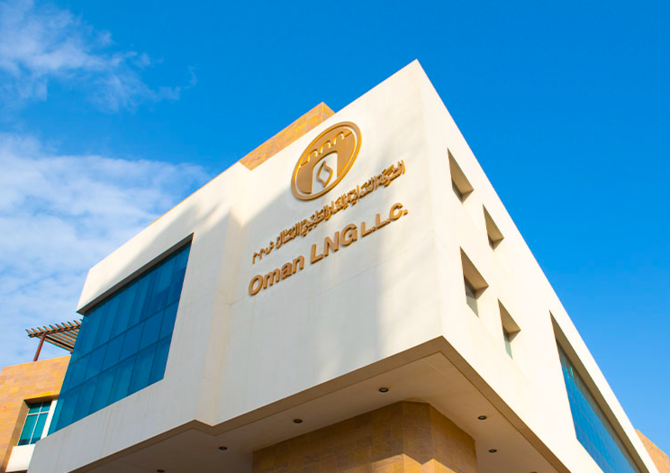
Oman has emerged as one of the leading players in the global LNG market (Oman LNG)
Short Url
Updated 15 August 2023
Follow

Oman LNG partners with German firm to expand global footprint 

RIYADH: In a move to strengthen its global presence, Oman LNG has struck a partnership agreement with the German company Secure Energy for Europe to supply 0.4 million tons of liquefied natural gas per annum.    

The four-year contract, which will see Oman LNG beginning the supply in 2026, is part of the firm’s strategy to tap new opportunities in the European energy markets.   

“The term-sheet signing with SEFE marks another milestone. Going further, the agreement leverages our constant efforts to add value to Oman’s economy through growth and collaborations,” said Mahmoud Abdulsatar Al-Balushi, chief commercial officer at Oman LNG, in a statement.   

The company’s CEO Hamed Al-Naamany and SEFE’s chief commercial officer Frederic Barnaud inked the term-sheet agreement, while Oman’s Minister of Energy and Minerals Salim Nasser Al-Aufi presided over the event.   

“As pioneers among German companies to embark on this partnership, SEFE is proud to lead the way toward enhanced collaboration,” said SEFE CEO Egbert Laege. 

The deal underpins the Gulf country’s standing as a trustworthy LNG source and reinforces its ability to generate reliable energy and efficiently deliver it to clients globally, according to a press release.

In January, Oman LNG agreed to supply up to 1.6 million metric tons of LNG to France’s TotalEnergies and Thai state-owned firm PTT.   

According to the deal, TotalEnergies and PTT will each receive 800,000 tons of LNG annually. While the French firm struck a 10-year deal beginning in 2025, the Thai company agreed on a nine-year contract from 2026. 

Oman has emerged as one of the leading players in the global LNG market, with an operational capacity totaling 10.4 million tons per annum as of April 2023, according to the International Gas Union’s World LNG Report.   

The firm’s LNG exports saw an annual increase of 11.3 percent in 2022 thanks to Oman’s unique geographic position, which allows for easy transportation and delivery of LNG to various locations. 

In addition to making significant commitments to environmental sustainability with carbon-offset initiatives, the country has also heavily invested in LNG infrastructure like liquefaction facilities and export terminals. 


Sustainability Forum Middle East spotlights Saudi role in driving climate finance deployment

Updated 5 sec ago
Follow

Sustainability Forum Middle East spotlights Saudi role in driving climate finance deployment

MANAMA: Saudi Arabia’s growing influence over sustainable finance and climate-aligned investment was a central theme at the Sustainability Forum Middle East, as regional banks, investors, and policymakers signaled a shift from climate pledges to market execution.

The fourth edition of the forum, held in Bahrain under the theme “Advancing Alignment, Innovation, and Implementation for Energy and Climate Transformation,” brought together more than 500 participants and over 50 speakers from government, finance, energy, and industry. 

While the agenda covered climate diplomacy and national strategies, the dominant conversations this year centered on capital deployment, bankability, technology, and the commercial realities of the energy transition.

Saudi Arabia’s role in shaping that transition was repeatedly highlighted, particularly through its efforts to structure green finance instruments, integrate sustainability into Vision 2030 programs, and scale renewable energy ambitions. Global banks at the forum pointed to the kingdom as a key driver of demand for credible sustainable finance frameworks in the Gulf.

“Saudi Arabia has demonstrated clear leadership through Vision 2030 and its green financing frameworks,” Lina Osman, managing director and head of sustainable finance for the Middle East, Africa and Pakistan at Standard Chartered, told Arab News.

“The Public Investment Fund’s green bond issuance is a clear demonstration of the value of the opportunity that is available in Saudi Arabia and how Saudi Arabia is seizing that opportunity,” she added.

Osman also noted that Saudi Arabia’s target of sourcing 50 percent of its electricity from renewables represents a “true demonstration of leadership in sustainability,” adding that financing instruments will need to evolve to serve those ambitions. 

She said the bank has been customizing sustainable finance structures for Gulf Cooperation Council clients as the market becomes more sophisticated and sector-specific.

Organizations at the forum said the region has moved beyond ESG signaling and into discussions about return profiles, risk pricing, and revenue impact. 

“Financial institutions are now focused on how sustainability generates value — reducing costs, building resilience, and boosting revenue. Previously, it was mostly window dressing,” said Ian McCallum, chief sustainability officer at Bank ABC. 

Speaking to Arab News, he added that Saudi Arabia is playing a “significant role in shaping the direction of sustainable finance by continuing to strengthen ESG regulatory and disclosure requirements.”

Speakers from private markets and venture capital also pointed to Saudi Arabia as an emerging market for climate technologies that are moving from pilot phase to commercialization. 

Investors highlighted carbon removal, energy optimization, and AI-enabled climate solutions as areas where the Kingdom’s scaling capacity and demand for industrial decarbonization make deployment feasible.

Beyond finance, the forum examined how the GCC can accelerate industrial decarbonization through AI integration, carbon capture, supply chain reform, and the expansion of renewables. 

Panels explored how sovereign strategies and industrial policy are aligning across the region, with Saudi Arabia’s energy transition goals seen as an anchor for cross-border capital flows.

The event saw memorandums of understanding and multi-sector partnerships intended to translate national ambitions into deployable projects. 

Organizers said the agreements reflect a shift toward implementation, positioning the Gulf as a market where climate action is increasingly tied to competitiveness, industrial growth, and long-term economic resilience.