

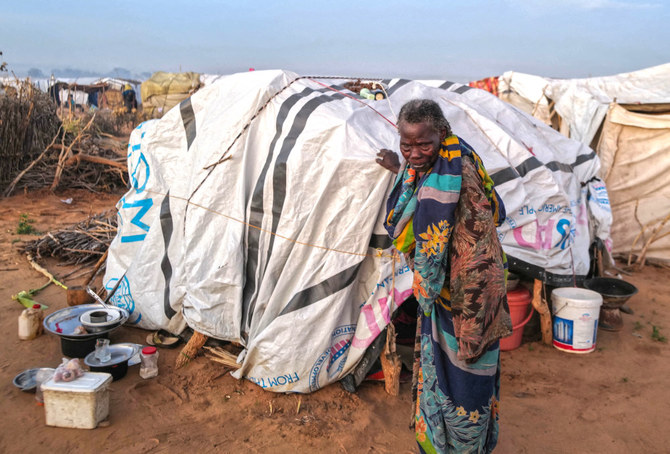

NEW YORK CITY: The people of Sudan continue to face “unimaginable suffering” amid continuing clashes between the Sudanese Armed Forces and rival militia the Rapid Support Forces in several parts of the country, “with neither side achieving victory nor making any significant gains,” UN officials said on Wednesday.
Assistant Secretary-General Martha Ama Akyaa Pobee told a Security Council meeting on the situation in the country that the ongoing violence has resulted in the widespread displacement of civilians. She also expressed concern about the escalation of the conflict in key areas, and the designation of civilian neighborhoods as “areas of operations” by both sides, which is exacerbating a desperate humanitarian crisis.
Indiscriminate and targeted attacks on civilians and infrastructure continue in Khartoum, Darfur and North Kordofan, Pobee added, and calls for the protection of civilians and to ensure that human rights and humanitarian law are not violated are being ignored.
Widespread sexual violence, victimization of children and the risk of forced recruitment into fighting forces continue, she said, along with the increased threat of abduction and the killings of human rights defenders in Darfur and Khartoum.
The effects of the conflict on the Darfur region is a particular concern, Pobee continued, as she highlighted the rekindling of simmering ethnic tensions and the “brutal violence” in areas such as El-Geneina and Sirba.
“The parties have exacted tremendous suffering on the people of the Darfur region (where) the fighting continues to reopen the old wounds of ethnic tensions of past conflicts in the region,” she said.
“This is deeply worrying and could quickly engulf the country in a prolonged ethnic conflict, with regional spillovers.”
Pobee welcomed a recent initiative by Chad to convene a meeting of stakeholders from Darfur, and stressed the need for broad participation, including by armed groups, tribal leaders, civil society organizations, and women’s groups.
She also welcomed efforts by the African Union and the Intergovernmental Authority on Development to help resolve the conflict, and applauded mediation initiatives by the US and Saudi Arabia, as well as Sudan’s neighbors. She stressed the “vital” importance of coordination between regional and international entities for effective mediation.
Edem Wosornu, director of the UN Office for the Coordination of Humanitarian Affairs’ Operations and Advocacy Division, speaking on behalf of the under-secretary-general for humanitarian affairs and emergency relief coordinator, Martin Griffiths, also painted a grim picture of the humanitarian catastrophe unfolding in Sudan, including the displacement of millions, widespread sexual violence, lack of access to medical care, and severe food insecurity.
She stressed the urgent need to fully fund the $2.6 billion Humanitarian Response Plan, which has so far reached only 25 percent of its target, to ensure vital assistance reaches those in need.
Lamenting lack of coverage of Sudan in the global media, Wosornu said: “Nearly four months into this conflict, millions of people remain trapped in a humanitarian calamity that continues to grow.
“More than 4 million people have now fled from their homes — 3.2 million people displaced internally, and close to 900,000 people who have crossed the border into Chad, Egypt, South Sudan and other countries.
“The alarming accounts of sexual violence that I heard from people who have fled to Port Sudan are just a fraction of those being reported at a sickening scale from conflict hot spots across the country. People are finding it more and more difficult to access urgent medical assistance, with 80 percent of hospitals across the country not functioning.”
Wosornu continued: “14 million children in Sudan, half of all children in the country, need humanitarian support. More than 20 million people, over 40 per cent of the population, are facing high levels of acute food insecurity. The conflict is disrupting livelihoods and physical access to markets. It is also fueling steep increases in the price of commodities.
“The banking system has been heavily disrupted, as have public and civil institutions. This is leading to severe disruption of public services and less and less money circulating within the economy. Electricity blackouts are extensive. Education services are interrupted. It is the story of a country and its people being driven to the point of collapse.”
Humanitarian access to those in need remains challenging in Khartoum, Wosornu said, with only limited local resources available to provide some small measure of assistance, and humanitarian convoys to replenish supplies have not been guaranteed since June.
Although aid organizations are eager to help, they require regular access facilitated by the parties involved in the conflict and the removal of bureaucratic obstacles, she added, and the current limited deliveries are a result of “intricate negotiations,” often supported by the Jeddah process.
Wosornu called for direct contact with the warring factions to be urgently reestablished to negotiate access for humanitarian workers and safeguard their operations, and said that swift and large-scale assistance “hinges on necessary permits and visas.” She urged Sudanese authorities to ease this process and accelerate approvals.
Ambassador Linda Thomas-Greenfield, the US permanent representative to the UN, expressed deep concern about the Sudanese government’s alleged threat to eject the UN Mission in Sudan from the country if Volker Perthes, the special representative of UN Secretary-General Antonio Guterres participated in Wednesday’s briefing.
Perthes has been declared a persona non grata by the Sudan’s government but the UN said that its officials must not be subjected to such a status.
“One of the worst chapters of recent history is repeating itself and it’s beyond horrifying,” Thomas-Greenfield said in reference to the situation in Darfur.
“The Security Council, and the entire international community, has a responsibility to demand the parties comply with their obligations under international humanitarian law regarding the protection of civilians.
“We have a responsibility to ensure humanitarian assistance can reach people in dire need. And we have a responsibility to urge the Sudanese Armed Forces and the Rapid Support Forces to immediately put down their weapons.”
She called for coordinated diplomatic efforts by regional and international actors to help end the conflict, emphasized the commitment of the US to efforts to provide humanitarian assistance, and urged the international community to support the people of Sudan during this time of crisis.
“At this perilous moment, the Security Council and all member states must stand on the side of peace and on the right side of history,” she said.
“Let us do everything in our power to end the bloodshed. Sudan’s political future belongs to the Sudanese people, not to the men with guns who are prolonging human suffering.”


