



JUBA, South Sudan: Blistering heatwaves across the Northern Hemisphere throughout this summer are a stark reminder of the need for sustainable energy solutions. The good news is that one Arab country has positioned itself as a potential supplier of solar power to energy-hungry Europe.
Morocco has developed a vibrant solar energy sector, making use of year-round sunshine, wide open spaces for infrastructure projects, and access to millions of euros in EU development funding.
Europe’s energy crisis, coupled with the urgency of tackling the challenge of global warming and climate change, has catalyzed efforts to seek new sources of clean and renewable energy.
Located on Europe’s doorstep and armed with ambitious plans to generate 52 percent of its domestic electricity from renewables by 2030, Morocco has emerged as a promising energy partner.
The vision is to export a significant amount of its solar energy capacity via undersea cables to Europe — an initiative that holds the promise of bolstering the continent’s clean energy transition while helping Morocco achieve its development goals.
Earlier this year, the EU committed itself to programs worth €624 million ($688.6 million) to support Morocco’s transition to “green energy,” as well as tackling irregular migration, and facilitating key reforms in crucial areas like social protection, climate policy and public administration.
Despite its enormous untapped potential, Morocco faces challenges in expanding its renewable energy capacity. Currently, the nation relies on imports for 90 percent of its energy, mostly from fossil fuels.
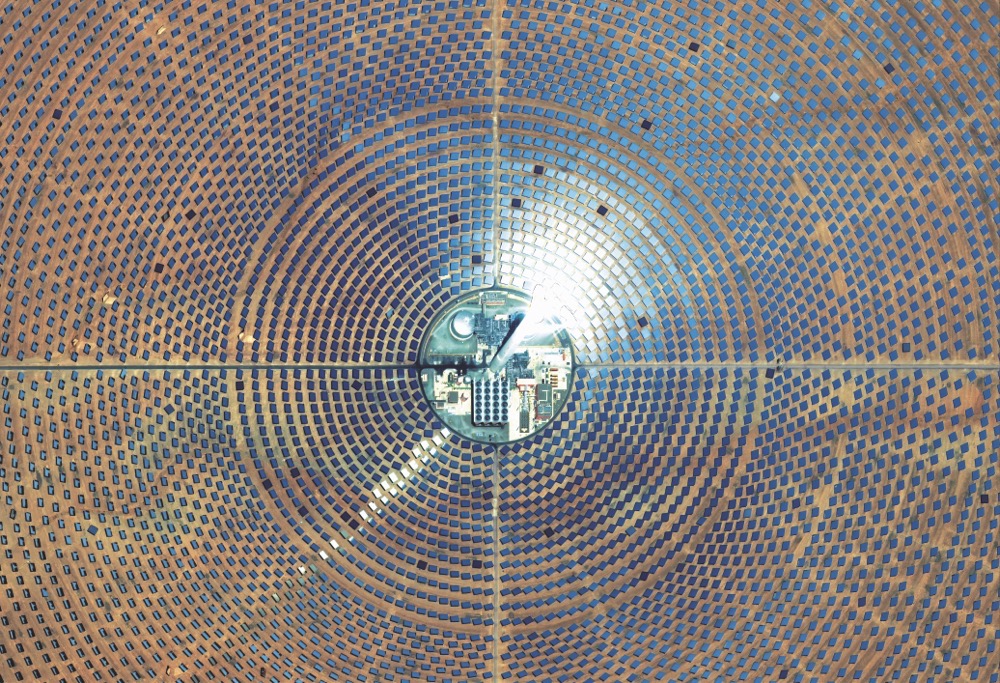
Increasing solar and wind power generation could spur economic growth, create much-needed jobs, and decouple the country from fossil fuel price volatility. (AFP/File)
The transition to renewables alone requires substantial investment, estimated at $52 billion, to achieve Morocco’s 2030 targets.
Global institutions have been supportive, providing financial assistance for the renewable energy sector’s growth, but removal of bureaucratic bottlenecks from the path of private investment is of the essence.
Furthermore, the region’s embrace of renewable energy is not without its critics, who have concerns about the environmental impact of massive infrastructure projects and increased water usage in arid regions.
What is indisputable is that Morocco, by envisioning itself as a clean energy hub with the potential to export electricity to Europe, has set a precedent for other nations to emulate.
“Morocco’s renewable energy ambitions present a win-win proposition for both Europe and the country itself,” Grammenos Mastrojeni, senior deputy secretary-general of the Union for the Mediterranean, told Arab News.
“Historically energy has always been considered a national and a sovereignty issue. Now, climate change is calling to something which is quite new. To make the system functional we need to start reasoning in terms of regional cooperation.”
Morocco is not the only Arab country prioritizing solar-energy development. The Gulf states too are accelerating their transition to renewable energy by launching ambitious infrastructure projects designed to help reduce their reliance on oil and gas to meet domestic energy needs.
Saudi Arabia aims to expand its total solar-energy capacity substantially by 2030. Specific development plans in the Kingdom include the NEOM smart city, which will include a $5 billion hydrogen plant, and the Red Sea Project, which will have the capacity to generate 400 MW of solar power and will host the world’s largest off-grid energy-storage project to date.
As Europe and North Africa are marked by fragmented markets, significant economic inequalities and uneven demographic patterns, the potentially adverse consequences of climate change cannot be overstated.
Mastrojeni believes a solution to overcoming these challenges lies in the integration of energy markets, as doing so holds the potential for shared energy security and macroeconomic advantages within the region.
INNUMBERS
• 52% Morocco’s renewable power target for 2030.
• 18.3% Morocco’s target for emissions reduction by 2030.
• 58.7 GW Saudi Arabia’s renewable power target for 2030.
• 14 GW UAE’s clean energy target for 2030.
• 33 GW Expected addition to MENA-installed renewables capacity by 2026.
“One significant benefit of regionally integrated energy production is its capacity to stimulate strong economic growth,” he said.
Increasing solar and wind power generation could spur economic growth, create much-needed jobs, and decouple the country from fossil fuel price volatility.
For Europe, sourcing clean energy from Morocco offers a viable solution to diversify energy sources and reduce dependence on fossil fuels, particularly in the wake of the Ukraine conflict-related energy crisis.
Historically, North Africa has been a significant supplier of fossil fuels to Europe, powering cars and heating homes across the continent.
But owing to the urgent need to transition to sustainability, at least six new projects are being considered to carry electricity from solar and wind installations in North Africa to Europe through undersea cables.
One notable project, spearheaded by Xlinks Ltd., plans to connect a 2,000-mile undersea cable from Morocco’s Atlantic coast to southern England. The ambitious venture has generated considerable investor interest, with £30 million ($38.5 million) committed by investors from the UK and the UAE.
Although the project comes with substantial costs, it has the potential to power approximately 7 million homes in the UK and help the country meet its net-zero carbon emissions target by 2035. However, some experts have cautioned against relying solely on any single supplier for energy.
Laura El-Katiri, an energy economist, has suggested that connecting solar and wind installations in Africa fully with the European grid would ensure a more robust and secure energy supply.
Several countries are now exploring two-way connections, which would also allow electricity to flow southward during periods of excess power on European grids.
The proposals highlight the advantages of connecting countries with diverse weather patterns, enabling them to support each other during periods of low local wind or limited sunlight.
Despite previous failed attempts to harness renewable energy in the region, the potential benefits of utilizing North Africa’s abundant sun- and wind-power resources outweigh the risks.
Morocco’s strides in renewable energy are evident through projects like the Noor Ouarzazate Solar Complex, which stands as the world’s largest concentrated solar power plant.
Spanning thousands of hectares with its mirror arrays, this facility exemplifies the transformative potential of harnessing solar energy.
In a coastal town in southeastern Morocco is located another giant renewable-energy project, the Tarfaya wind farm, one of the largest such facilities in entire Africa.
While the prospect of cheaper and cleaner electricity has raised expectations in a region plagued by high unemployment and limited purchasing power, there are still communities waiting for promises to be fulfilled.
Hajar Knamlichi, a board member of the Moroccan Alliance for Climate and Sustainable Development, a network of 800 environmental civil society organizations, says all regional parties concerned should strive for equitable benefits when it comes to energy cooperation.
“It is not correct to solely focus on producing clean energy for exports, leaving behind the benefits that more people can have access to locally, such as electricity access, fighting electricity poverty, and economic benefits from producing renewable energy for local use,” she told Arab News.
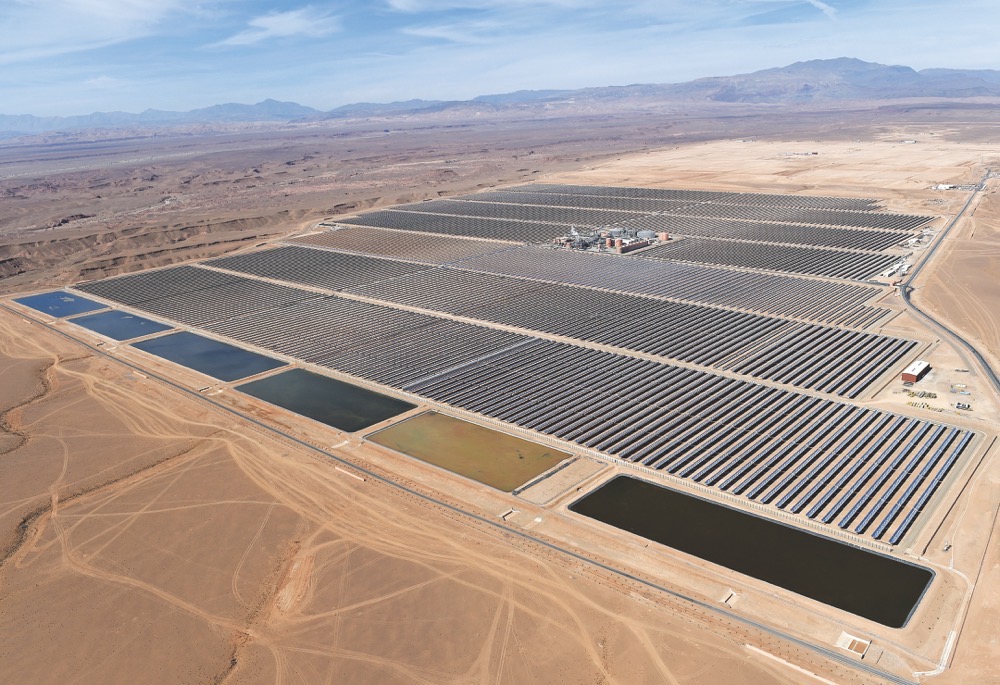
Solar is seen as a viable solution in the wider North Africa region as well as a new industrial paradigm for electricity production. (AFP/File)
That being said, in the face of extreme weather events and rising temperatures, adaptation is equally critical. Experts in natural resources stress the importance of carbon capture and storage technology to mitigate emissions from existing oil and gas production facilities.
In addition, as Morocco seeks to shift from traditional energy sources to eco-friendly alternatives, its pursuit of cutting-edge solutions has sparked a surge in exploration for wave energy, which marks a pioneering effort in Africa.
As the first of its kind on the continent, this ambitious venture is turning heads and attracting global interest.
Mohamed Taha El-Ouaryachi, a co-founder of WAVE BEAT, an innovative energy company, has developed technologies capable of harnessing the power of ocean tides to generate electricity.
“The company is driven by a strong sense of responsibility toward society and the environment,” El-Ouaryachi told Arab News. “We strive to contribute significantly to Morocco’s ongoing energy transition.”
With more than 3,100 km of coastline along the Atlantic and Africa, Morocco possesses a vast expanse of untapped wave energy potential, attracting investments from various sources, including the World Bank and private investors from the Middle East, the US, and Europe.
For Mastrojeni, of the Union for the Mediterranean, the Northern Hemisphere’s scorching heatwaves and volatile weather patterns are proof, if any further is required, that the transition to sustainable energy sources cannot wait.
That is why “our shared commitment to adapt, innovate, and build resilience against climate challenges has the power to reshape the realities of climate change,” he said.


