



NIAMEY, Niger/WASHINGTON: A week after Niger's military seized power from democratically elected President Mohamed Bazoum, the World Bank on Wednesday said it had halted disbursements for all operations in the fragile West African nation until further notice.
Private sector partnerships “will continue with caution,” said the bank in a statement, adding that it will “closely monitor the situation.”
Niger has one of the largest World Bank portfolios in Africa, amounting to $4.5 billion covering the country’s priority sectors, and it has also received $600 million in direct budget support from the bank between 2022 and 2023.
“The World Bank believes that peace, stability, and rule of law are fundamental for creating a world free of poverty on a livable planet. We are alarmed by efforts to overthrow the democratically elected government in Niger,” it said in a statement.
“As a result, the World Bank has paused disbursements for all operations until further notice other than private sector partnerships which will continue with caution.”
The World Bank said it would continue monitoring the situation.
“We are driven by the ambition to improve the quality of life and opportunities for the people of Niger,” it added.
Niger’s regional and international partners are scrambling to respond to a military coup that political analysts say could have grave consequences for democratic progress and the fight against an insurgency by jihadist militants in West Africa.
The Bank’s private sector arm, IFC, has mobilized close to $50 million of investments in Niger in the last three years with projects worth $75 million under consideration for this year.
The Multilateral Investment Guarantee Agency, the World Bank’s political risk arm, has supported one project in Niger’s financial technology sector valued at $2.25 million, and has been developing a pipeline of projects in the renewable energy and telecom sectors.
Evacuation continues
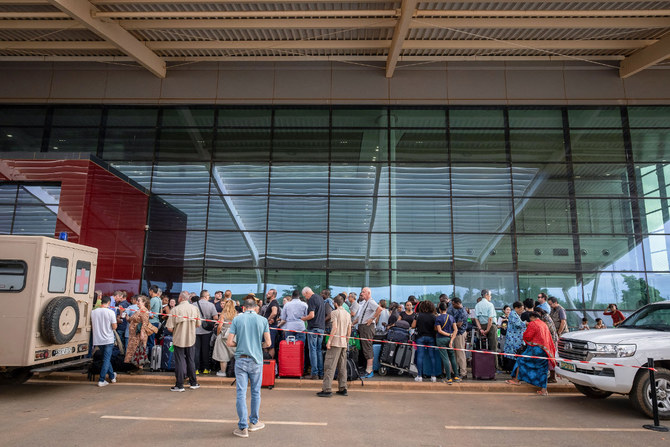
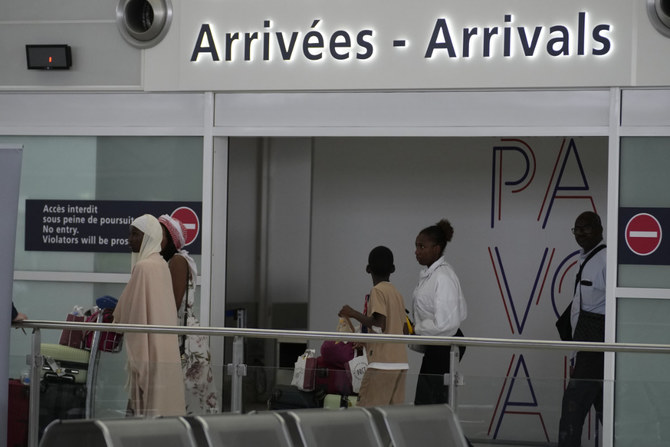
Amid uncertainties, foreign nationals continued to depart Niger’s capital Niamey. on the last of four French military evacuation flights late Wednesday after waiting at the airport for hours, while defense officials of a regional bloc gathered to discuss how to respond to the military coup.
France, Italy and Spain all have announced evacuations of their citizens and other Europeans in the capital, Niamey, following concerns they could become trapped after soldiers detained Bazoum and seized power.
The West African regional bloc ECOWAS has threatened to use force to restore Bazoum to power, but at least three of the group’s 15 member countries have sided with the coup leaders and two of them have warned that they would consider any intervention in Niger an act of war against them.
A two-day meeting of defense chiefs of the bloc opened Wednesday in Nigeria’s capital to confer on next steps. Abdel-Fatau Musah, the ECOWAS commissioner for political affairs, peace and stability, said the meeting in Abuja would deal with how to “negotiate with the officers in the hostage situation that we find ourselves in the Republic of Niger.”
ECOWAS on Sunday also had announced sanctions against the coup leaders that included halting energy transactions with Niger, which gets up to 90 percent of its power from neighboring Nigeria, according to the International Renewable Energy Agency.
Power transmission from Nigeria to Niger was cut off as of Tuesday, an official at one of Nigeria’s main electricity companies said, speaking on condition of anonymity because they were not authorized to comment on the issue. The official did not clarify how much of Niger’s power the cut represented, but any cut would further squeeze citizens in the impoverished country of more than 25 million people.
The US government has yet to announce any decision on evacuation for American forces, diplomats, aid workers and other US citizens in Niger, an important counter-terror base for the United States in the Sahel region. Some Americans, however, have left with the help of the Europeans.
France evacuated 736 people on three flights starting on Tuesday, including 498 French citizens as well as people from Niger and at least 10 other countries, the French Foreign Ministry said. The fourth and final planned flight took off late Wednesday, according to a passenger aboard the plane who spoke to The Associated Press on condition of anonymity because of the sensitivity of the situation
An Italian military aircraft landed in Rome on Wednesday with 99 passengers, including 21 Americans and civilians from other countries, the Italian defense ministry said. Italian Foreign Minister Antonio Tajani said the flights took place with the permission of the new government.
Germany, which has encouraged its civilians in Niger to evacuate on French flights, said that it does not currently see any need to evacuate the approximately 100 troops it has in the country, largely connected to the UN mission in neighboring Mali.
Defense Minister Boris Pistorius said he spoke Tuesday with the German commander at the air base in Niamey who told him the German forces are in close contact with the Nigerien military. “He told me clearly they are not at all worried about their safety at the moment,” Pistorius said.
US officials have stayed engaged in trying to roll back the armed takeover, with Secretary of State Antony Blinken calling Niger’s president late Tuesday to express “continued unwavering support.”
A US pullout from Niger would risk Washington’s longstanding counter-terror investments in the West African country, including a major air base in Agadez that is key to efforts against armed extremists across the Sahara and Sahel. The United States has roughly 1,000 forces in Niger, and helps train some Nigerien forces.
Leaving Niger would also risk yielding the country to the influence of Russia and its Wagner mercenary group, which already has a significant presence in Mali, the Central African Republic, and Sudan.
Before sunrise Wednesday, hundreds of people lined up outside the terminal at Niamey’s airport hoping to leave, after one of the French flights was canceled the night before. Some slept on the floor, while others watched television or talked on the phone.
A passenger who did not want to be named because of fears for personal safety, said they tried to shield their children from what was happening, telling them “just that they’re going home.” The passenger said they feared reprisal attacks against civilians if Niger’s regional neighbors follow through on threats to intervene militarily.
Niamey has calmed after protests supporting the junta turned violent Sunday, but some say the mood is still tense.
During Tuesday’s evacuation flights at the airport, a passenger who also did not want to be named over fears for personal safety said that Nigerien soldiers raised middle fingers at waiting evacuees as the soldiers sped off after escorting an Italian military convoy to the airport.
On Sunday, ECOWAS said it would use force against the junta if it didn’t release and reinstate the president within a week. The announcement was immediately rejected by neighboring Mali, Burkina Faso and Guinea, all of which are run by mutinous soldiers who toppled their governments.
Mali and Burkina Faso’s leaders said a military intervention in Niger “would be tantamount to a declaration of war” against them.
At a virtual United Nations meeting on Tuesday night, the UN special envoy for West Africa and the Sahel said that non-military efforts are underway to restore democracy in Niger.
“One week can be more than enough if everybody talks in good faith, if everybody wants to avoid bloodshed,” said Leonardo Santos Simao. But, he added, “different member states are preparing themselves to use force if necessary.”
Others in the diplomatic community said the use of force is a real option.
ECOWAS is resolved to use military force after economic and travel sanctions have failed to roll back other coups, said a Western diplomat in Niamey, who did not want to be identified for security reasons.
The M62 Movement, an activist group that has organized pro-Russia and anti-French protests, called for residents in Niamey to mobilize and block the airport until foreign military forces leave the country.
“Any evacuation of Europeans (should be) conditional on the immediate departure of foreign military forces,” Mahaman Sanoussi, the national coordinator for the group, said in a statement.


