

Saudi Arabia advances 24 ranks on Energy Transition Index: WEF

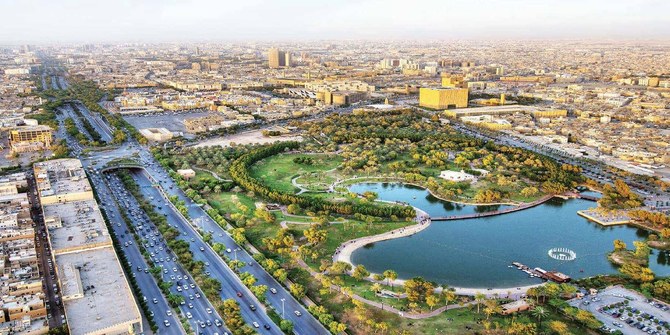
Saudi Green Initiative is restoring natural greenery with a target of planting 10 billion trees. In 2022 alone, the project planted around 18 million trees and rehabilitated 60,000 hectares of degraded land. (Photo: SGI)
Short Url
Updated 31 July 2023
Follow

Saudi Arabia advances 24 ranks on Energy Transition Index: WEF

RIYADH: Global recognition of Saudi Arabia’s renewable plans and green initiative has led the Kingdom to advance 24 ranks in the Energy Transition Index since 2021, according to a sustainability report. 

The World Economic Forum’s annual Energy Index Report revealed that the Kingdom is leading the Middle East region, moving from ranking 81 in 2021 to 57 in 2023.

The 2021 study was based on 115 countries, and the current one on 120.

The results align with Saudi Arabia’s Vision 2030, which aims to diversify the country’s economy and help it become more sustainable. 

“The country has long been a dominant player in the oil market, and in recent years has undergone a significant energy transition, recognizing the need to shift toward renewable energy and reduce its carbon footprint,” the report highlighted.

According to the report, the jump in ranking could be attributed to several green initiatives the Kingdom took, such as establishing the Regional Voluntary Carbon Market Co., the first of its kind initiative in the region.


Infographic from World Economic Forum's "Fostering Effective Energy Transition" 2023 Edition

Despite the progress in terms of substantiality, Saudi Arabia still has room to reduce energy and carbon intensity, the report stressed.

The report also noted that the Kingdom could expand renewable resources and implement carbon capture technologies.

Moreover, the report also pointed out that by 2030 the Kingdom has promised that 50 percent of its energy will come from renewable sources. The Saudi Green Initiative is also leading several ambitious efforts to lower emissions and change the domestic power mix.

Some of the initiatives undertaken by SGI include creating a program for carbon capture and storage, boosting energy efficiency and investing in new energy sources.

SGI is taking a strategic approach to restoring natural greenery with a target of planting 10 billion trees. In 2022 alone, the project planted around 18 million trees and rehabilitated 60,000 hectares of degraded land, restoring vital ecological parameters, improving air quality and reducing sandstorms.

“The country’s shift toward renewables, with 11.4 GW capacity under development, represents a significant departure from the traditional economic model and may have geopolitical implications,” the report said.

The report further indicated that the Kingdom could become a robust leader in the energy transition by developing joint investments, research programs, training and education.


Saudi public investment fund assets rise 36% to$58bn in Q3 

Updated 25 sec ago
Follow

Saudi public investment fund assets rise 36% to$58bn in Q3 

RIYADH: Assets held by public investment funds in Saudi Arabia rose 36 percent from a year earlier to about SR217.9 billion ($58.1 billion) by the end of the third quarter of 2025, driven by strong growth in domestic investments, official data showed. 

Asset values also rose 5.7 percent from the previous quarter, according to data from the Capital Market Authority cited by the Saudi Press Agency. 

Saudi Arabia’s stock exchange has seen strong growth in recent years, attracting increased investor interest in fixed-income instruments amid a global environment of elevated interest rates. 

According to SPA, the number of subscribers to public investment funds reached 1.59 million by the end of the third quarter, representing an annual increase of 1.5 percent. 

The growth in public investment fund assets was driven by a 39 percent year-on-year rise in assets of local funds, which reached SR186.9 billion in the third quarter of 2025 and accounted for 86 percent of total assets. 

Meanwhile, assets of foreign funds rose to SR31.1 billion, reflecting annual growth of 21 percent. 

The number of public investment funds in the Kingdom increased 11.6 percent year on year to 346, up from 310 in the third quarter of 2024. 

Public investment fund assets were distributed across a range of investment types, including equities, bonds, cash instruments, real estate investments, and other assets. 

Local money market funds held the largest share of assets at SR75.6 billion, followed by local equities at SR46.6 billion, real estate investment funds at SR28.9 billion, and funds invested in other local assets at SR19.6 billion. 

To further strengthen the capital market ecosystem, the Kingdom announced earlier this month that it would open its financial markets to all foreign investors. 

The measures introduced by the Capital Market Authority include the removal of restrictions such as the Qualified Foreign Investor framework, which required a minimum of $500 million in assets under management, as well as the abolition of swap agreements.