

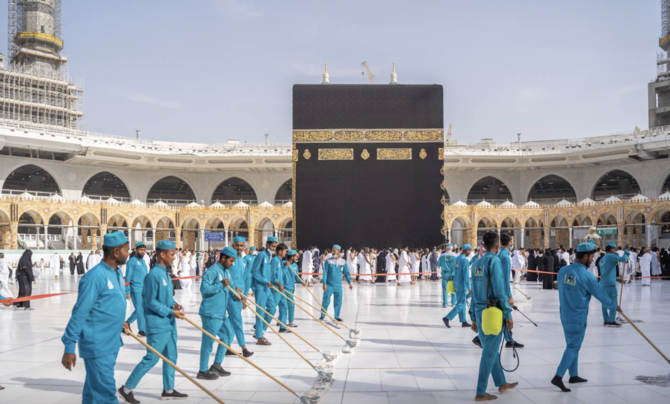
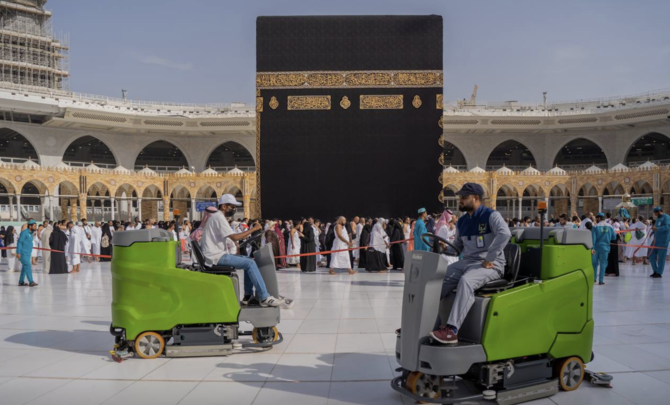
Makkah’s Grand Mosque ready to receive worshipers on Ashoura: presidency

1 / 3
The Grand Mosque in Makkah is ready to receive pilgrims, worshipers, and those fasting on Ashoura. (@ReasahAlharmain)
2 / 3
The Grand Mosque in Makkah is ready to receive pilgrims, worshipers, and those fasting on Ashoura. (@ReasahAlharmain)
3 / 3
The Grand Mosque in Makkah is ready to receive pilgrims, worshipers, and those fasting on Ashoura. (@ReasahAlharmain)
Short Url
Updated 27 July 2023
Follow

Makkah’s Grand Mosque ready to receive worshipers on Ashoura: presidency

  • Ashoura is observed on the tenth of Muharram, the first month of the Islamic calendar
  • Dates, Zamzam water, and dry snacks will be distributed before sunset for visitors to the mosque to break their fast with

RIYADH: The Grand Mosque in Makkah is ready to receive pilgrims, worshipers, and those fasting on Ashoura, the General Presidency of the Two Holy Mosques said on Thursday.

Ashoura is observed on the tenth of Muharram, the first month of the Islamic calendar, and this year the historically significant day will fall on Friday July 28.

For Sunni Muslims, it is a sacred day and they believe that fasting on Ashoura is a virtuous act.

Dates, Zamzam water, and dry snacks will be distributed before sunset for visitors to the mosque to break their fast with, the presidency’s spokesman Maher bin Mansi Al-Zahrani said.

Al-Zahrani added that modern technology and artificial intelligence methods are used to support sterilization and disinfection processes at the mosque.

These include the use of 11 smart sterilization robots, 20 devices to sterilize the air and surfaces at the same time, 20 devices that sterilize hard-to-reach areas such as ceilings and pillars, and 600 automatic hand sanitization devices. Several teams also work to sterilize all areas of the mosque, its courtyards, and toilets with more than 70,000 liters of disinfectant.

In addition to this, 200 Saudi supervisors monitor the work of 4,000 male and female employees who clean the mosque 10 times a day, prepare 7,000 bottles of Zamzam for distribution, and equip all areas of the mosque with 4,500 Zamzam containers that hold 500,000 litres of the holy water.


Sha’abanah festival brings Hijazi heritage to life ahead of Ramadan 

Updated 6 sec ago
Follow

Sha’abanah festival brings Hijazi heritage to life ahead of Ramadan 

Jeddah: The Sha’abanah festival celebrating Hijazi heritage drew more than 18,000 visitors to the Abadi Al-Johar Arena in Jeddah as part of the city’s pre-Ramadan festivities. 

Organized by Vertex 33, the three-day event from Jan. 22-24 offered an immersive celebration of local culture, crafts, and cuisine. 

The festival featured local boutiques offering oud incense and perfumes, artisanal shoes and a variety of handcrafted products from local entrepreneurs. 

Visitors also enjoyed a range of artistic workshops, such as pottery and mosaic, while children engaged in scented candle-making, art activities by Global Art, and thread kneading to create keychains and home wall hangings with Ramadan themes. 

A dining area served traditional Saudi cuisine, coffee, and festive Ramadan treats. 

Guests were entertained with live traditional Yanbu’awi performances, Al-Ajal dance displays, and a contemporary Saudi-style DJ, bringing together the energy of modern entertainment with the rich cultural heritage of Hijaz. 

The project was led by four young cultural enthusiasts, Abdulaziz Al-Jehani, Abdulmajeed Abualkheer, Ghoroub Al-Barakati and Shahad Abualkheer. 

Al-Jehani, CEO of Vertex 33, said Sha’abanah was inspired by a desire to revive the social traditions that once brought Hijazi communities together ahead of Ramadan. 

“At Vertex 33, we believe events should feel meaningful, not just entertaining, and Sha’abanah was our way of creating a space where people could reconnect with heritage in a lively, modern setting,” he told Arab News. 

“Bringing the festival together took just three months of planning, from concept development and cultural research to vendor selection, design, and on-ground coordination. 

“The positive response from attendees has reinforced Vertex 33’s commitment to supporting local artists and making Hijazi heritage central to future events,” he added. 

Entrepreneurs taking part in Sha’abanah praised the festival for providing exposure and opportunities to engage directly with customers. 

Afraa Damanhouri, founder of RuaqAfraa, said: “We are participating to make scented cake candles for both adults and children. Workshops like these promote business and help people understand the process behind different types of candles.” 

Reem Awad, founder and CEO of Black Mus, said: “Through Sha’abanah, we were able to meet our customers face to face, share the story behind our products, and help them understand the range of services and items we offer.” 

Chef Fayzah Al-Sulami, who took part in the event preparing and selling her homemade spices and traditional white sweet Saudi coffee, said: “I started teaching cooking on YouTube, and when people asked about the ingredients I use, I began selling my products. 

“It was amazing to see so many people take an interest, and sales were strong throughout all three days of the festival.” 

With Ramadan approaching, many local entrepreneurs offered gift packages, prayer baskets, homemade traditional coffee, and spices. 

Duaa Shukri, founder of Printful, said: “Ramadan is a time for giving. We created unique gift packages for children, teenagers and adults, with thoughtful items.”