RHODES, Greece: Greece sweltered in intense heat Wednesday while crews scrambled to douse deadly wildfires that have also struck nations around the Mediterranean and killed dozens.
Thousands of people have evacuated in the region this week as fires also flared in Croatia and Italy, and flames killed 34 in Algeria in extreme heat that has left landscapes tinder dry.
“Back home, there is nothing left and not even a sheep survived,” Taous Timizar, a survivor of the blaze in northeast Algeria, told AFP.
Witnesses described fleeing walls of flames that raged “like a blowtorch,” and TV footage showed charred cars, burnt-out shops and smoldering scrubland.
Scientists from the World Weather Attribution group said this week the heatwaves that have hit parts of Europe and North America this month would have been almost impossible without human-caused climate change.
The European Union’s climate observatory Copernicus on Wednesday said smoke emissions from wildfires in Greece have been the highest for this period of time in the last 21 years.
Greece has battled over 600 fires in the past 12 days, the government said Wednesday.
Temperatures were expected to hit between 43-46 degrees Celsius (109-115 degrees Fahrenheit) in central and southern Greece, according to the national meteorological service.
“Today is the most difficult day in terms of the heat, complicating the fight against existing fires and making new fire outbreaks more likely,” fire department spokesman Ioannis Artopios told Skai radio.
Storms are forecast for Thursday.
Greece is used to summer heatwaves, but is experiencing one of the longest ones in recent years, according to experts.
The civil protection ministry has warned of an extreme danger of fire in six of the country’s 13 regions on Wednesday.
Wildfires, which have been burning in several parts of the country for more than 10 days, were ravaging the tourist islands of Rhodes, Corfu and Evia.
The EU crisis management commissioner’s office on Wednesday said over 490 firefighters and seven planes had been deployed to different areas in Greece under the bloc’s civil protection mechanism.
At least 100 firefighters were working to contain the flames on Evia, where on Tuesday two pilots were killed when their water bomber aircraft crashed.
The body of a third victim was also found on Evia.
Authorities have evacuated tens of thousands of people from fire areas in Greece, including many tourists.
The severe heatwave in Greece has also been reflected across much of southern Europe and northern Africa.
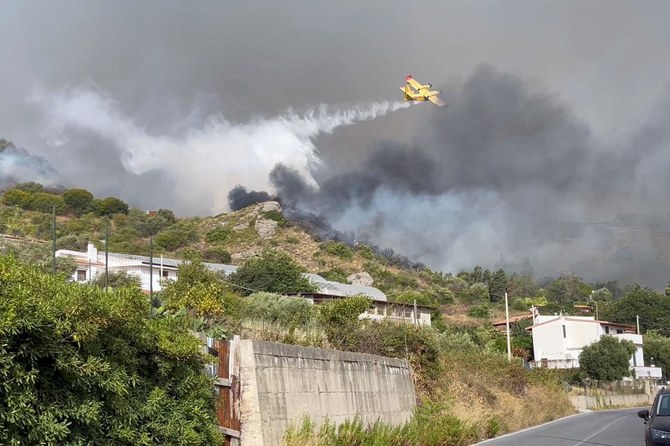
In Italy, firefighters spent the night battling wildfires in Sicily, one of which approached so close to Palermo airport that it shut down for several hours Tuesday morning.
Italy’s civil protection department on Tuesday reported “extensive fires” across the south.
In the north, a 16-year-old girl on a camping trip was among two people killed by falling trees during violent storms.
Dozens of firefighters were battling a wildfire near Croatia’s picturesque southern city of Dubrovnik, authorities said Wednesday, with water-bombing planes dispatched to help contain the blaze.
Around 130 firefighters were working to contain the flames that had been spread by strong winds on Tuesday.
Local media reported the fire also triggered land mines to explode in the area.
During the bloody break-up of Yugoslavia in the 1990s, Dubrovnik was besieged and shelled by Serb forces, leading several areas in the city to be damaged while swaths of its outskirts are still contaminated by land mines.


![]()

Mediterranean nations fight heat and deadly fires
Short Url
https://arab.news/bj587
Mediterranean nations fight heat and deadly fires
- Witnesses described fleeing walls of flames that raged “like a blowtorch“
- TV footage showed charred cars, burnt-out shops and smoldering scrubland


Latest updates


© 2026 SAUDI RESEARCH & PUBLISHING COMPANY, All Rights Reserved And subject to Terms of Use Agreement.