

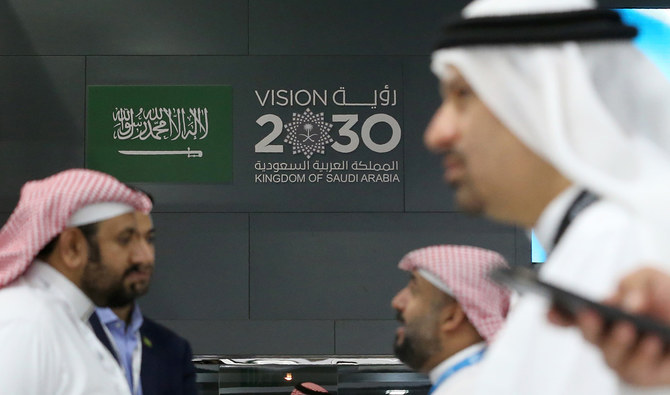

KARACHI: Saudi Arabia’s diversification of its economy under the Vision 2030 offers “tons of opportunities” for information technology-based companies, CEO of a Pakistani tech giant said on Tuesday, stressing on “diversification and specialization” as the key to benefit from these opportunities.
Saudi Arabia is consolidating its economy on modern lines under the Vision 2030, which is a strategic development framework intended to cut the Kingdom’s reliance on oil. It is aimed at developing public service sectors in the Kingdom such as health, education, infrastructure, recreation and tourism.
In an interview with Arab News, Pakistani IT magnate, Asif Peer, was a “big market” for players across all sectors, particularly the IT sector. Peer’s Systems Limited boast of being Pakistan’s first IT company, established in 1977, with a market capitalization of Rs128 billion ($444 million) and revenue generation of Rs20.64 billion ($69 million) in fiscal year 2022.
“I would say the money that is being spend by the Saudi conglomerates, the corporate enterprises and most importantly the public sector, the government that is taking lot of initiatives, all is mostly toward technology,” Peer said.
“If everybody is aware of what’s happening... there will be tons of opportunities for everyone,” he said, adding, “diversification and specialization is the key.”
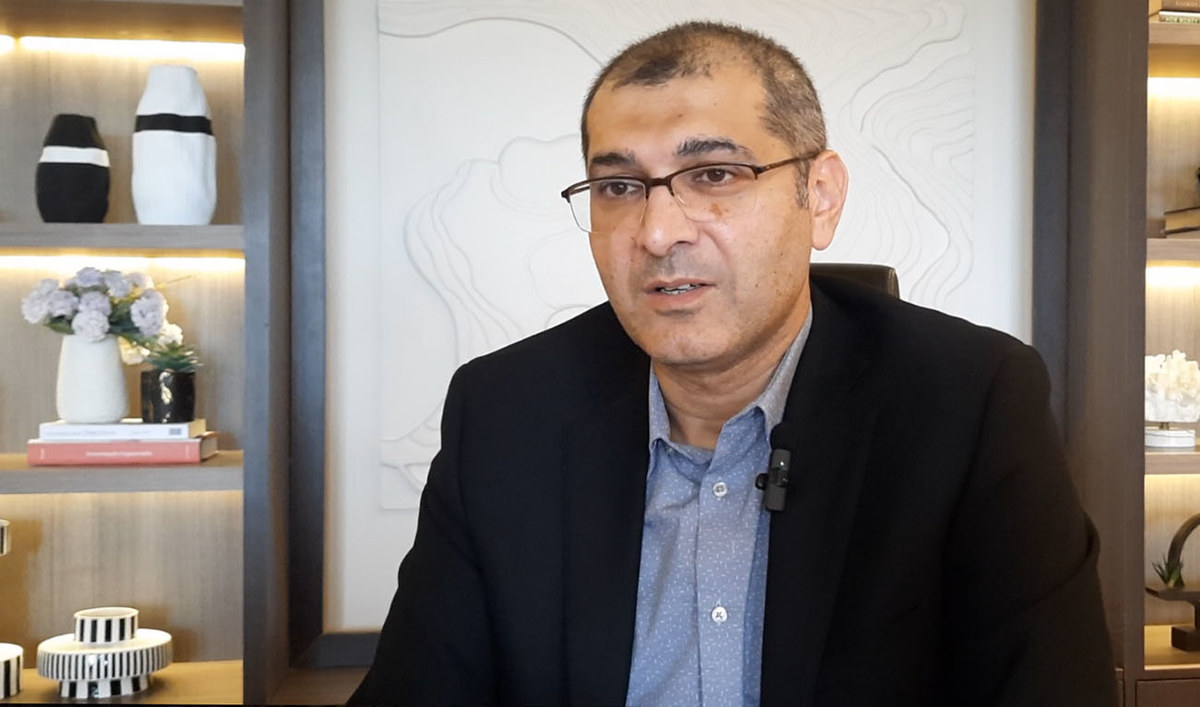
Asif Peer, CEO of Systems Limited speaks to Arab News during an interview on July 25, 2023 in Karachi, Pakistan. (AN Photo)
Peer’s firm generates over 80 percent of its revenue from the export of services to various countries in North America, Europe, the Middle East and Africa, and less than 20 percent from the domestic market. It already has a sizeable presence in the UAE, Saudi Arabia, Qatar, Egypt, Singapore, South Africa, Australia and the Netherlands.
Peer, however, said that Pakistani companies must be aware of the opportunities coming as part of the Vision 2030 to benefit from them. Vision 2030 has many facets, including infrastructure development but technology, business and digital transformation, and gender diversity, he said.
“They all will need technology at the backbone or at the back. We just need to know about these projects and just need to be registered with all these companies, with all these big consulting partners,” he said. “So we know that which projects are coming and we try to position ourselves.”
Last year, Systems Limited incorporated a company, Systems Arabia, in the Kingdom, which has secured sizeable contracts in Saudi Arabia and Bahrain, according to the CEO.
The healthy pipeline will help with the momentum in the Kingdom as the company is currently targeting customer acquisition in both public and private sectors.
“They are all in expansion, they all are focused on technology and digitization, AI. So we have ample opportunities to double down, triple down our investment in these markets,” Peer said.
“Our Egypt center is not only a market for us, but it is also a supply center for us,” he said, adding the company employed hundreds of people at the center that supported GCC clients, mostly because of the language and much-needed cultural mix.
Using Egypt as a spring board, Peer’s firm is also focused on other regional markets for acquisitions.
“We are really focused right now on those markets, acquiring more companies, either in those markets or those domains which are relevant and pertinent, because I believe in organic and inorganic growth both will yield better results,” he told Arab News.
To a question about the challenges faced by his firm in the Gulf region, Peer said there were no major challenges in the Middle East.
About his growth plans at home and abroad, the Systems Limited CEO said his company was in hypergrowth mode to beat its own expectations.
“When you are scaling and growing there are two sides of it, one is demand and one is supply, so in supply side we are scaling robustly not just by hiring people, but we have lots of training programs that we run in every competency in every area,” he said.
Peer informed his firm recently won ‘Microsoft Partner of the Year’ award in recognition of development and delivery of outstanding Microsoft-based applications, services and devices during the past year.


