Saudi Arabia opens doors to Bangladeshi professionals, investors

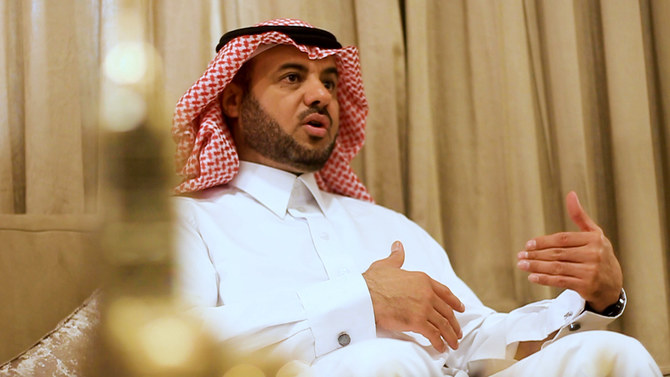
Saudi Arabia’s ambassador to Bangladesh, Essa Al-Duhailan, speaks to Arab News in Dhaka on July 23, 2023. (AN photo)
Short Url
Updated 26 July 2023
Follow

Saudi Arabia opens doors to Bangladeshi professionals, investors

  • Delegation of Bangladeshi business leaders expected to visit Kingdom in coming weeks
  • Cooperation opportunities on rise since Saudi commerce minister’s trip to Dhaka

DHAKA: Saudi Arabia is looking forward to having more Bangladeshis both in its skilled workforce and investment ecosystem, Riyadh’s envoy to Dhaka told Arab News ahead of an upcoming visit of Bangladesh business leaders to the Kingdom.

Bangladeshis are the biggest expat worker community in Saudi Arabia.

Ambassador Essa Al-Duhailan estimated that 2.8 million of them were currently employed in the Kingdom and were recognized for being efficient and hard-working.

“Everywhere you go in Saudi Arabia, you will see a Bangladeshi ... On many occasions, they thank Saudi Arabia and the (Saudi) people for helping them to secure their future, their businesses. Many of them are loyal to Saudi Arabia,” he said.

“Their efforts are acknowledged by the government and people of Saudi Arabia. They are participating in the development of Saudi Arabia.”

As megaprojects such as NEOM or the developments of the Red Sea coast were underway in the Kingdom, they opened even more opportunities, especially for professionals.

“We have digital platforms, we have new infrastructure, we have megaprojects. These megaprojects and new ways of dealing with investments need skilled workers ... We welcome all kinds of professionals to go to work in Saudi Arabia in different sectors,” the ambassador added.

“I urge the relevant authorities, and the Bangladeshis themselves, to train themselves and this will benefit the two countries. We will get the skilled workers and Bangladesh will also invest in the Bangladeshi citizens.”

While Saudi Arabia is already one of Bangladesh’s main sources of remittance inflows, the salaries of professionals in the Kingdom are significantly higher than of semi-skilled workers.

When Saudi Arabia and Bangladesh signed the Workers’ Recruitment and Skill Verification Program deal earlier this year, Al-Duhailan forecast that those employed under the scheme would earn at least twice more.

The same sectors that require workers are now also open to Bangladeshi businesses, which will be facilitated by Saudi authorities in entering the market and forming partnerships.

Opportunities for business cooperation have been on the rise since March, when a delegation led by Saudi Commerce Minister Majid bin Abdullah Al-Qasabi attended the Bangladesh Business Summit 2023 on the invitation of the Bangladeshi government and the Federation of Bangladesh Chambers of Commerce and Industry — the country’s apex commerce body.

Besides signing several investment agreements, under which Saudi Arabia entered Bangladesh’s energy, seaport, and agriculture industries, during the visit the Saudi and Bangladeshi chambers of commerce established a joint council to navigate bilateral business ties.

A delegation comprising top Bangladeshi business leaders is soon expected in the Kingdom.

“Inshallah, within this month or August, a delegation with more than 60 businessmen will visit Saudi Arabia to meet their counterparts ... to meet the chamber of commerce leaders in Saudi Arabia and to explore the opportunities in the market there,” Al-Duhailan said.

“There are huge scopes of opportunities in Saudi Arabia. Just name any field, and you can invest there. They can invest there in Saudi Arabia in the field of infrastructure, building construction, agriculture, textile, fishing, and farms.

“Also, in factories like plastic, carpentry, and many others. You just name any field, and they can go. I just want them to go and explore the market.”


Venezuela’s furious street forces ready to ‘fight’ after US raid

Updated 59 min 30 sec ago
Follow

Venezuela’s furious street forces ready to ‘fight’ after US raid

  • As proud defenders of the Venezuelan leadership’s socialist “Bolivarian revolution,” the ousting of Maduro has left them furious and bewildered, convinced that he was betrayed by close allies

CARACAS: When explosions boomed in the night and US warplanes roared in the sky over Caracas, Jorge Suarez and his companions rushed fearfully for their guns.
For these members of the “colectivos” — armed loyalists of the leftist leadership — the US raid that ousted Nicolas Maduro as their president was the most dramatic challenge yet.
“We’re not used to it — it was like a best-seller, like something out of a movie,” said Suarez, in black sunglasses and a cap bearing the slogan: “Doubt is treason.”
“We took to the streets, waiting for instructions from our leaders.”
As proud defenders of the Venezuelan leadership’s socialist “Bolivarian revolution,” the ousting of Maduro has left them furious and bewildered, convinced that he was betrayed by close allies.
“There is frustration, anger and a will to fight,” said a 43-year-old member of one collective the Boina Roja — which translates to Red Beret — who identified himself only as Willians, in a black cap and hooded jacket.
“It’s still not really clear what happened...What is clear is that there were many betrayals,” he added — pointing to implausible failures in Maduro’s defenses.
“We don’t understand how the anti-aircraft system failed. We don’t know what happened with the rocket-launch system.”

- Policing the transition -

Established in their current form under Maduro’s predecessor Hugo Chavez, the colectivos are tasked with keeping social order on the streets — but accused by opponents of beating and intimidating rivals.
They have closed ranks behind Delcy Rodriguez, Maduro’s former deputy who took over as interim president.
She has pledged to cooperate with US President Donald Trump over his demand for access to Venezuela’s huge oil reserves — but has insisted the country is not “subordinate” to Washington.
Willians said the colectivos were resisting certain post-Maduro narratives, which he dismissed as mind games — such as “that Trump might bomb again, or that Delcy Rodriguez is with the United States.”
They respect her ideological pedigree — Rodriguez is the daughter of a far-left militant who died in the custody of the intelligence services in 1976.
“I don’t think anyone would betray her father,” said Alfredo Canchica, leader of another collective, the Fundacion 3 Raíces.
“You can betray the people, but not your father.”
Colectivo members declined to be drawn out on how the post-Maduro phase might play out under Trump and Rodriguez, however.
“We don’t believe the threats that the Americans are going to come, dig in and take us out,” said Canchica.
“They’ll have to kill us first.”

- Maduro ‘betrayed’ -

Feared by opponents as a rifle-wielding, motorbike-mounted shock force, the colectivos are welcomed in some neighborhoods where they are credited with preventing crime — and where authorities hand out subsidized food parcels.
Speaking at the Chato Candela baseball stadium in the working-class 23 de Enero district, Canchica rejected the negative image they have gained.
When opposition demonstrators and some world powers were accusing Maduro of stealing an election in July 2014, “we stopped the shantytowns from rising up,” he said.
The colectivos also claim to run sports programs, coordinate with hospitals and transport networks, and visit traders to keep price speculation in check.
Fiercely committed to the “Chavista” cause, they felt the sting of betrayal in Maduro’s capture.
“The betrayal must have come from someone very close to our commander” Maduro, said Canchica.
“It was so perfect we didn’t notice, and we still don’t know who betrayed us, how they betrayed us — it happened so fast.”
In his office with images of independence hero Simon Bolivar, Chavez and Maduro on the wall, and books, bullets and a sound-wave bomb on the table, Suarez bitterly recalled watching animated reconstructions of Maduro’s capture published online.
“It makes you angry,” he said.
“Despite all the support Commander (Vladimir) Putin, China and North Korea have given us militarily, how can we react in real time when (the US) has more advanced technology than we do?“