- Pakistan's planning minister says looks forward to more active engagement with Arab states
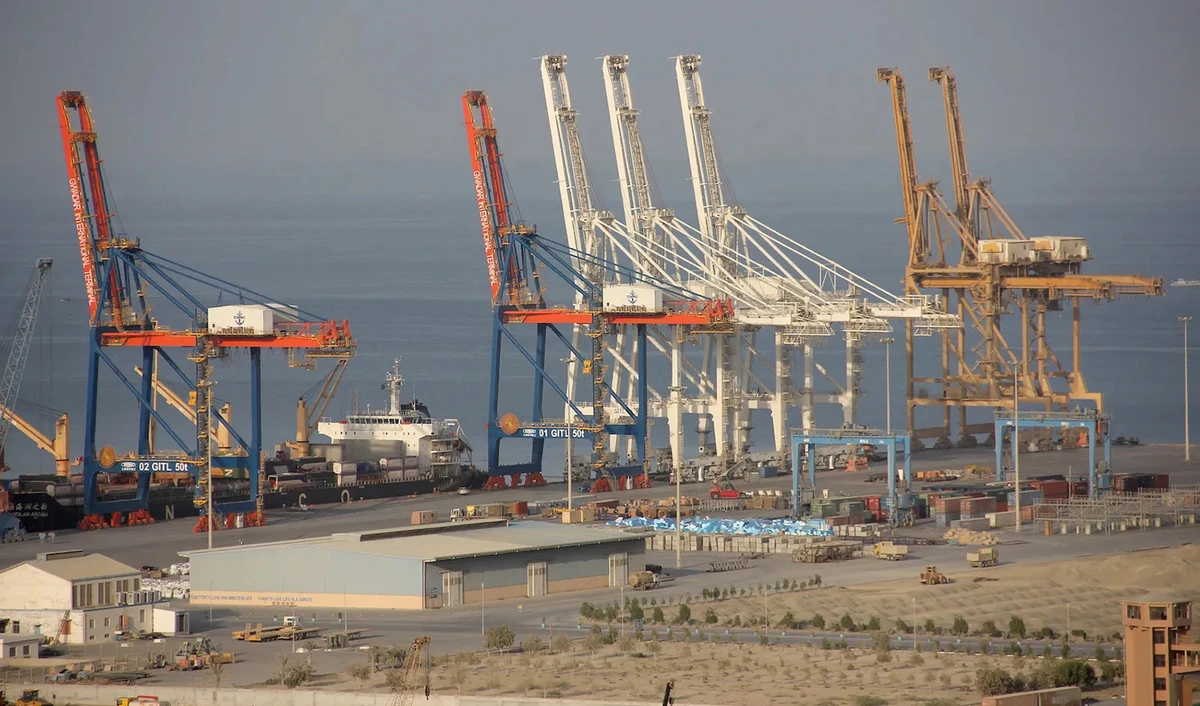
- Ahsan Iqbal Gwadar Port has handled more than 600,000 metric tons of cargo during last year
ISLAMABAD: Pakistan’s newly formed Special Investment Facilitation Council (SIFC) would complement the China-Pakistan Economic Corridor (CPEC) by attracting investment from the Gulf countries, Planning Minister Ahsan Iqbal said on Tuesday, as the South Asian country looks for foreign direct investment to overcome an economic crisis.
The minister expressed these views during the concluding session of a two days international conference on CPEC and the Belt and Road Initiative (BRI) that was organized by his ministry to celebrate 10 years of the project, which was signed between Pakistan and China in 2013.
It followed the establishment of the SIFC by the Pakistani government in June this year to address the country’s economic woes by drawing international attention to business opportunities in the fields of agriculture, mining, information technology and defence production in Pakistan.
“We have also formed SIFC for GCC countries' investment into Pakistan where SIFC and CPEC are two twins, who will complement each other and bring opportunities to Pakistan from the Gulf countries,” Iqbal said.
CPEC, a major segment of Beijing’s Belt and Road infrastructure initiative, is a $65 billion network of roads, railways, pipelines and ports in Pakistan that will connect China to the Arabian Sea and help Islamabad expand and modernize its economy, with the Gwadar port city in Balochistan as the epicenter of it.
Saudi Arabia expressed its intention to invest in CPEC projects as early as 2019, when the Middle Eastern country announced plans to set up a $10 billion oil refinery near Pakistan's deep-water port of Gwadar.
Iqbal said CPEC was seen as a project that would help integrate South Asia, Central Asia, the Middle East, China and even beyond to Africa.
“So, we are very much looking forward to more active engagement with GCC countries, with whom we have very strong brotherly relations,” the minister said.
Through CPEC and BRI, Pakistan could promote cultural exchanges, educational collaboration and tourism between nations, deepening mutual understanding and appreciation, according to Iqbal.
The South Asian nation attract a lot of investment due to its cheap labour as most of the labor-intensive companies or industries were relocating to other countries from China due to expensive labour.
“Pakistan can benefit from it because it had a corridor, and it had an infrastructure, that is the reason we have fast tracked work on Special Economic Zones,” he explained.
Iqbal said the Prime Minister Shehbaz Sharif-led government completed many of the unfinished CPEC projects last year in order to revive the multi-billion-dollar corridor.
“After 2018, first major Chinese investment has come to Pakistan, $3.5 billion investment in Chashma Nuclear Power Plant 5, which will produce 1,200 megawatts of energy for Pakistan,” he said.
Due to the government’s facilitation, Iqbal said, the Gwadar Port had handled more than 600,000 metric tons of cargo in 2022 compared to 100,000 metric tons of cargo in the preceding four years.