NABLUS: The Israeli military said it shot and killed three alleged Palestinian gunmen in the northern occupied West Bank on Tuesday, the latest bloodshed in one of the most violent stretches of the Israeli-Palestinian conflict in years.
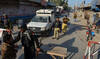
Israeli security forces said they opened fire at Palestinian militants who had shot at them from a car in the West Bank city of Nablus, the territory’s commercial capital and a major focus of the Israeli military’s recently stepped-up raids. In the hilly neighborhood of al-Tur shortly after the shooting, Israeli forces inspected a shattered black Skoda surrounded by spent bullet casings.
Palestinian media described the Israeli killing of the gunmen as an ambush following the militants’ attempted attack on Israeli forces near a Jewish settlement overlooking Nablus. The Israeli military said it confiscated three M-16 rifles and other equipment from their car.
Israeli-Palestinian fighting has surged in the territory, which Israel captured from Jordan in the 1967 Mideast war. Palestinians seek the occupied West Bank, along with east Jerusalem and the Gaza Strip, for a hoped-for future state.
In recent months, the West Bank has witnessed a volatile mix of the rise of local armed Palestinian groups carrying out frequent shooting attacks against Israelis and near-daily Israeli military raids that have increasingly turned deadly. Earlier this month, Israel’s most forceful incursion into the West Bank in nearly two decades killed 12 Palestinians and one Israeli soldier.
Heightening tensions, Israeli Prime Minister Benjamin Netanyahu’s far-right, ultranationalist coalition has rejected talks with the Palestinian leadership, sought to expand Jewish settlements in the West Bank and pushed for a more aggressive response to Palestinian militant attacks.
Late Monday, Palestinian militants said they opened fire at a bus carrying Israeli settlers near the Palestinian town of Hawara, just south of Nablus, without causing casualties. The Israeli military said it was setting up checkpoints to search for the suspects. A little-known armed group from the area calling itself the “Dawn Brigade” claimed responsibility for the shooting.
So far this year, over 150 Palestinians have been killed in the West Bank – the highest death toll in over a decade. Nearly half of them were affiliated with militant groups and killed in fighting during Israeli military raids, but stone-throwing youths protesting the incursions as well as innocent bystanders have also been killed.
Palestinian attacks targeting Israelis have killed at least 25 people this year.


![]()

Israeli military kills 3 alleged Palestinian gunmen in volatile West Bank

Short Url
https://arab.news/mbf4h
Israeli military kills 3 alleged Palestinian gunmen in volatile West Bank
- Violence in the West Bank has surged for over a year, with increased Israeli raids
- Israeli security forces said they opened fire at Palestinian militants who had shot at them from a car in the West Bank


Latest updates


© 2026 SAUDI RESEARCH & PUBLISHING COMPANY, All Rights Reserved And subject to Terms of Use Agreement.