



RIYADH: Saudi Arabia’s economic diversification path has turned the Kingdom into a hub for employment opportunities thanks to its bold giga-projects, including NEOM, which are attracting fresh talent into the construction sector.
The massive developments are in line with the Kingdom’s Vision 2030 which aims to reduce Saudi Arabia’s dependence on oil and to enhance the strength of the private sector.
Amid this spur in job creation in the past few years, some skeptics have expressed concern that this trend will come to an end once the giga-projects are complete.
However, there is also a growing view that this employment trajectory will continue once the Vision 2030 project has been completed.
Grace Najjar, regional director for the Middle East and North Africa region for US-based Project Management Institute, sees the economic developments as bedded in, and said: “In the coming years as the country completes its giga-projects, the Saudi government will continue its massive investments in infrastructure, tourism and transportation megaprojects thus continuing to create new jobs.”
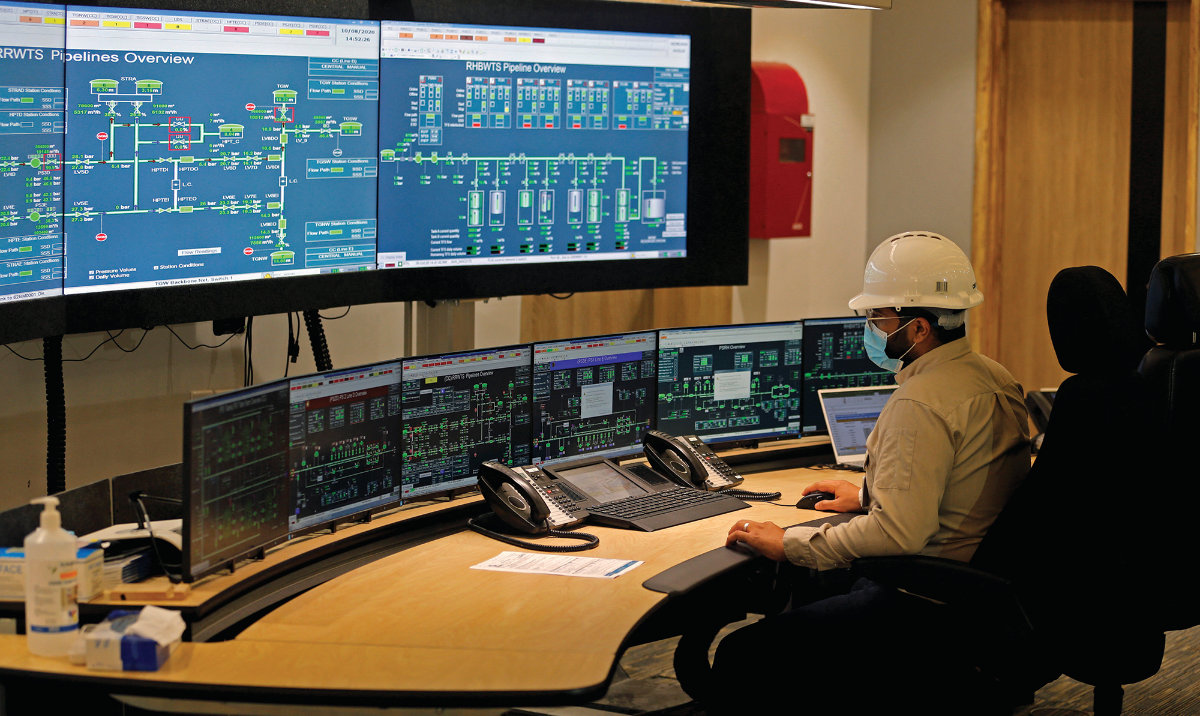
She added: “The Kingdom will continue to focus not only on the above-mentioned projects but also look into expanding 5G, upgrading IT services and elevating artificial intelligence.”
The future of job market in Saudi Arabia
According to Najjar, Saudi Arabia is expected to witness a rise in project management-oriented employment roles.
She noted that some of the sectors which will witness a massive demand for these positions are manufacturing and construction, finance and insurance, information and publishing, and management and professional services.
“Growth in all these sectors is leading to greater demand for project management skills, creating even more job openings in PMOE over the next ten years. The growth rate of PMOE within projectized industries is expected to be higher than for overall employment in these industries. This indicates a higher demand for positions — and qualified people to fill them,” said Najjar.
She added that while some industries are set for a substantial increase in project-focused jobs, the growth rate in the oil and gas sectors is likely to be slightly lower.

In the coming years as the country completes its giga-projects, the Saudi government will continue its massive investments in infrastructure, tourism and transportation megaprojects thus continuing to create new jobs.
Grace Najjar, Project Management Institute MENA regional director
“The reason behind this could be that the region’s leading oil and gas exporters will continue to reinvest energy revenues into massive infrastructure projects while simultaneously working to branch out into new areas,” Najjar added.
She also pointed out that the growth rate of the labor force in Saudi Arabia is very healthy, and it will continue even as the Kingdom slowly moves away from oil.
“As the Kingdom of Saudi Arabia and the region move away from oil dependence, across the various sectors, there’s a promise for jobs. The Kingdom, for example, leads all G20 countries in labor force growth rate, and job opportunities continue to increase, almost doubling over the past five years to reach 33 percent in 2022,” noted Najjar.
Highlighting the growth of job creation in Saudi Arabia, a report released by the Ministry of Economy and Planning earlier this month noted that the unemployment rate for Saudis reached 8.5 percent in the first quarter of 2023, down from 10.1 percent in the first quarter of 2022.
In the first quarter of 2023, the unemployment rate among Saudi males decreased to 4.6 percent from 5.1 percent reported in the same quarter of 2022.
Moreover, Saudi Arabia’s unemployment rate fell to an all-time low of 8 percent in the fourth quarter of 2022.
All this comes against the backdrop of the Kingdom aiming to get unemployment down to 7 percent by 2030.
“The continuous decrease in the unemployment rate among Saudis comes in light of the intensification of the government’s efforts to provide job opportunities for citizens, through a series of programs and initiatives, as well as the role of the private sector in employment processes,” said the ministry, when the figures were published in July.
Artificial intelligence will not impact job creation
Amid the widespread embracement of artificial intelligence across all sectors, Najjar believes that the advanced technology will not negatively impact job creation as AI cannot replicate emotional intelligence.
“Work that relies on human consciousness is what Project Management Institute has dubbed as Power Skills. Among most power skills, emotional intelligence stands out, as it cannot be replicated by AI. Emotional intelligence encompasses the ability to understand, utilize, and manage emotions effectively. It comprises four key aspects: self-management, self-awareness, social awareness, and relationship management,” added Najjar.

AI is a tool. It’s going to change the way we carry out our work, and depending on how we leverage its benefits we can ensure that AI can help us undertake work activities more efficiently. After all, AI systems are intended to augment human performance and assist people, not replace them.
Ali Matar, head of Europe, the Middle East and Africa Growth Markets at LinkedIn
Ali Matar, head of Europe, the Middle East and Africa Growth Markets at LinkedIn also echoed similar views and noted that the advent of AI will assist humans in their activities, but will not replace them.
“AI is a tool. It’s going to change the way we carry out our work, and depending on how we leverage its benefits we can ensure that AI can help us undertake work activities more efficiently. After all, AI systems are intended to augment human performance and assist people, not replace them,” said Matar.
The LinkedIn official added that employers should identify and invest in the jobs of the future, and should also equip people with skills and support to ensure a smooth AI transition.
“What’s important to note about AI skills and hiring is that many of these roles are newly developed — many have never existed before — so the typical approach to hiring, looking for specific degrees or past job titles, doesn’t really serve employers here,” noted Matar.
In May, Karan Bhatia, Google’s vice president for global public affairs and public policy, said Saudi Arabia, with the right policies, can provide the right environment for businesses and economies to maximize the potential of AI.
“The Kingdom is well-positioned to leverage AI with its young, educated population and its strong commitment to innovation. It is important to establish the right environment, policies and skills for AI so that people, businesses and communities in Saudi Arabia can benefit from AI,” she added.


