

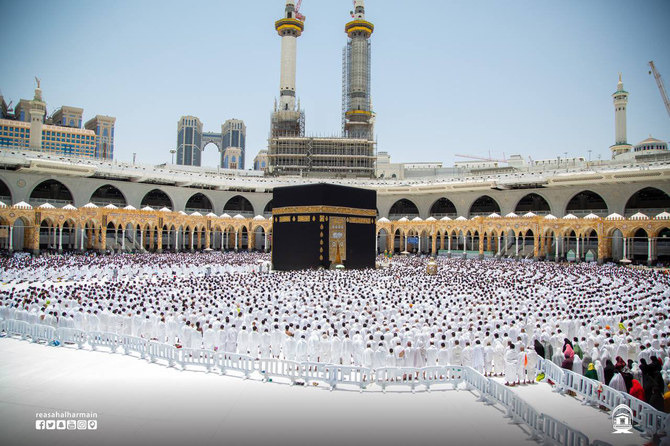
Saudi citizens can now invite Muslim friends abroad to perform Umrah on personal visit visa

1 / 2
Muslims can now perform Umrah in Saudi Arabia on personal visit visas. (Twitter: @MoHU_En)
2 / 2
Muslims worship at the Prophet's Mosque in madinah on July 21, 2023. (SPA)
Short Url
Updated 22 July 2023
Follow

Saudi citizens can now invite Muslim friends abroad to perform Umrah on personal visit visa

  • Visitors can also make trips to various tourism destinations in the Kingdom, aside from performing Umrah rituals at the Two Holy Mosques
  • Applications for a personal visit visa can be made through the visa platform of the Ministry of Foreign Affairs

RIYADH: Citizens of Saudi Arabia can invite their Muslim friends abroad to the Kingdom to perform Umrah on "personal visit visa," the Ministry of Hajj and Umrah has said.

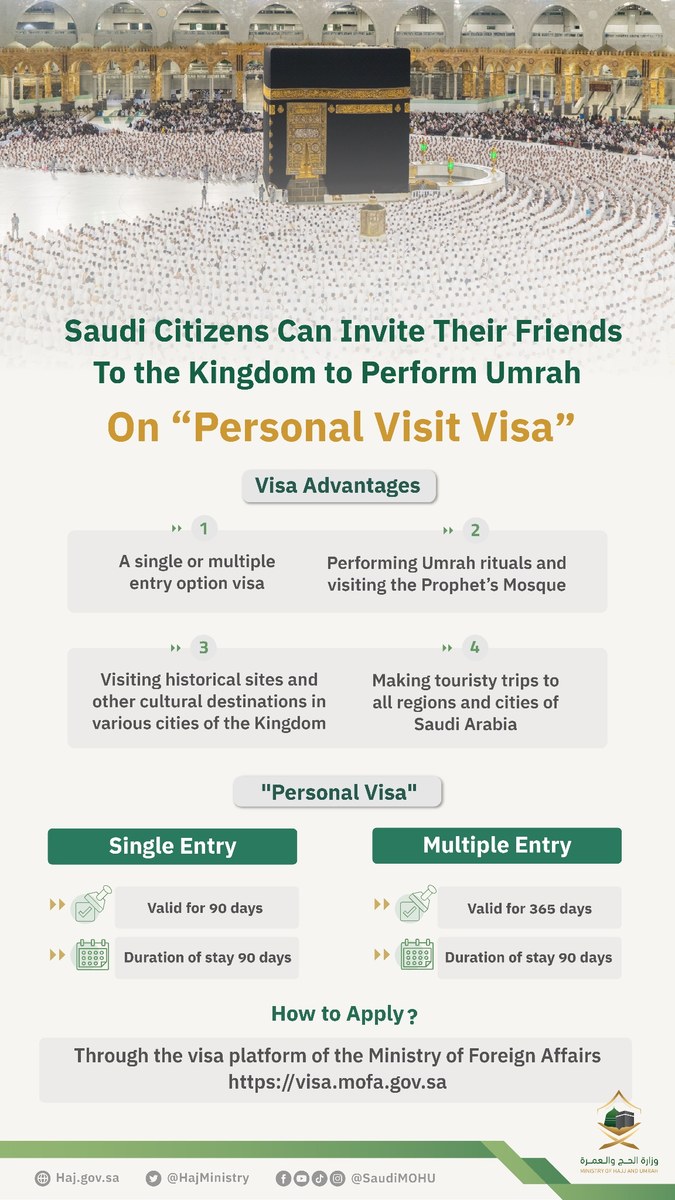
Personal visas, which can be obtained online, can either be single entry or multiple entry, the ministry said in a tweet on Thursday.

Aside from performing Umrah rituals at the Grand Mosque in Makkah and visiting the Prophet's Mosque in Madinah, visitors can also make trips to various tourism destinations in the Kingdom.

Applications for a personal visit visa can be made through the visa platform of the Saudi Ministry of Foreign Affairs.

A single entry visa is valid for 90 days, while a multiple entry visa is valid for one year. A visitor with a multiple entry visa may stay in the Kingdom for up to 90 days with each visit.
On Friday, the Presidency of the Two Holy Mosques announced it was ready to receive the first worshippers of this year’s Umrah season. The start of the Umrah pilgrimage is set at least a few weeks after Hajj to allow Hajj pilgrims to return home and avoid congestion in the holy places and airports.

Saudi Arabia has opened its historical sites and other cultural destinations as it develops its tourism industry as part of the Saudi Vision 2030 strategic plan launched in 2016.

The program's goal is to reduce the Kingdom’s reliance on oil exports and diversify its economy by developing and expanding into new industries and sectors.  

Tourism is a key part of the strategy, with the Kingdom aiming to get 100 million visitors by 2030.

Under the plan, the tourism industry is expected to create more than 1 million jobs for the country's growing work force, and at the same time generate revenues for the economy.

A massive boost in spiritual tourism in the holy cities of Makkah and Madinah is also planned, with the number of pilgrims expected to rise to 30 million by 2030.


The founding economy: A blueprint for stability in the First Saudi State

Updated 23 February 2026
Follow

The founding economy: A blueprint for stability in the First Saudi State

  • The establishment of the First Saudi State created a secure environment that facilitated the arrival of caravans, secured vast trade routes, and revived commerce across the Arabian Peninsula

RIYADH: The economy during the founding stage of the First Saudi State served as a fundamental pillar in building the nation, consolidating its influence, and ensuring its stability. This early economic growth was inextricably linked to achieving security, unifying regions, and organizing society—factors that directly stimulated trade, stabilized markets, and enhanced the foundations of daily life in Diriyah and its surrounding areas.
According to Dr. Abdullah Al-Saleh Al-Othaimeen's "Diriyah: Origins and Development during the First Saudi State," published by the King Abdulaziz Foundation for Research and Archives (Darah), the founding economy stands as a historical model reflecting the reciprocal relationship between political stability and early economic prosperity.

Beyond its political and intellectual prominence, Diriyah emerged as a vibrant economic hub. (SPA)

The establishment of the First Saudi State created a secure environment that facilitated the arrival of caravans, secured vast trade routes, and revived commerce across the Arabian Peninsula.
Beyond its political and intellectual prominence, Diriyah emerged as a vibrant economic hub. Its active markets attracted merchants and students from across the region, all of whom benefited from the state-provided stability. The local society relied on diverse activities for its livelihood, including trade, agriculture, and livestock breeding, with horses and camels playing crucial roles in transportation, commerce, and securing roads.
The social and administrative organization upon which the state was founded ensured the continuous availability of goods and sustained market stability. Ultimately, the close relationship between public security and economic growth during this founding phase solidified Diriyah's position as a premier political and commercial center in the Arabian Peninsula.