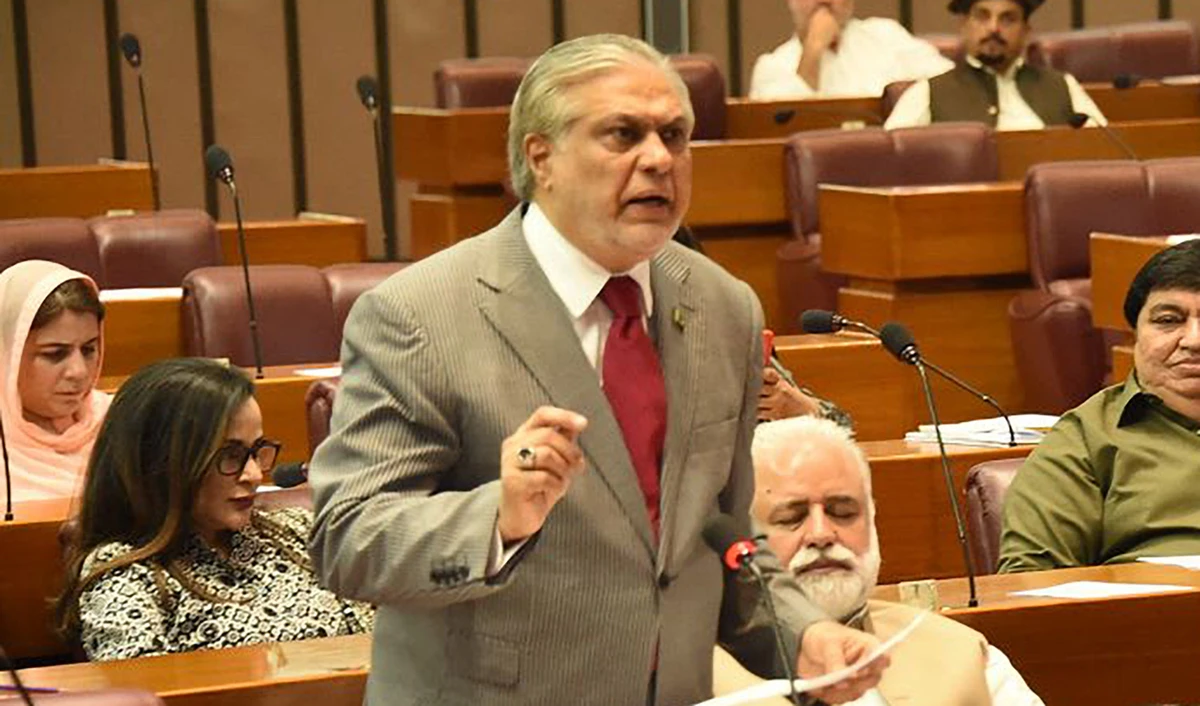
- Finance Minister Ishaq Dar says Pakistan has already endured enough hardships while unlocking the IMF program
- He maintains the country has met the IMF conditions and will no longer burden its people with more taxes
ISLAMABAD: Pakistan’s finance minister Ishaq Dar said on Friday the government would not impose new taxes on the agricultural and real estate sectors, adding the people would no longer be burdened with additional taxes after the country successfully revived an International Monetary Fund (IMF) bailout program.
Last month, cash-strapped Pakistan signed a $3 billion stand-by arrangement (SBA) with the IMF after completing several prior conditions laid down by the lender, including imposition of additional taxes, removal of subsidies, and securing financial assurances from friendly nations.
The release of the IMF loan provided much-needed economic relief to the country, which had been struggling with a severe balance of payment crisis, high inflation, critically low forex reserves, and a depreciating currency.
Addressing the lower house of parliament, Dar dismissed “rumors” by media outlets about a potential increase in taxes on the agriculture and real estate sectors as a result of the IMF deal, saying that the government had no such plans.
“I am issuing a categorical statement before the [parliament] today that not a single new tax will be imposed, neither on the agriculture sector nor on the real estate industry,” he continued.
“We have already endured all the hardships we had to while unlocking the IMF program, delivered all the prior actions [required by the lender], and we have all the documents stating our future commitments.”
Dar assured the masses that all the documents related to the IMF deal with Pakistan would be uploaded to the finance ministry’s website on Friday to ensure transparency, adding that everybody would be able to access them.
He added the government had also taken measures to bring down the country’s consumer price index (CPI)-based inflation rate, which had soared to a record 38 percent on a year-on-year basis in May 2023 before reducing to 29.4 percent in June.
He said the country would bring it to seven percent in the future.