


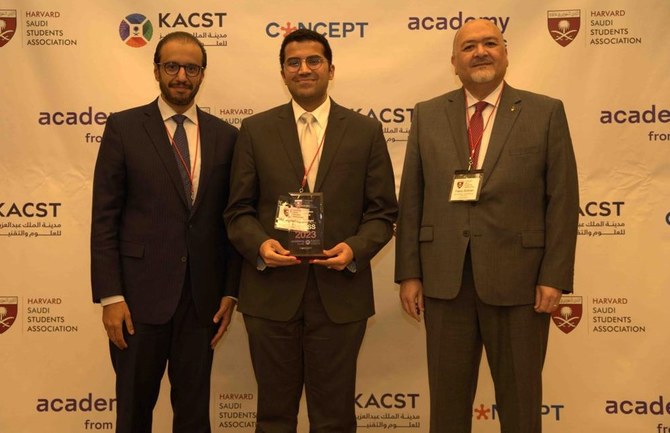
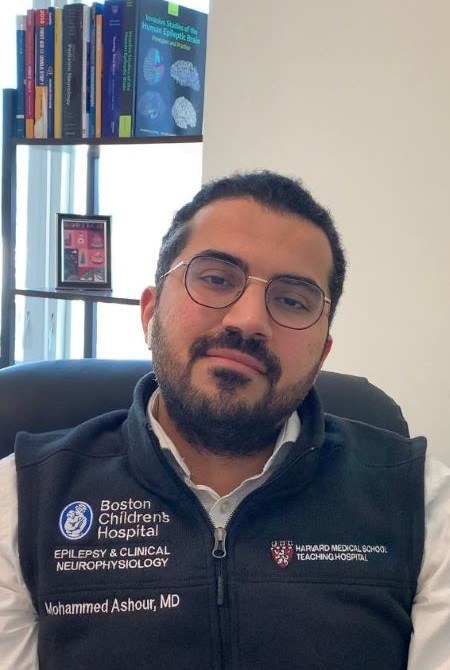

MAKKAH: Dr. Mohammed Ashour, a Saudi pediatric neurologist at Boston Children’s Hospital, recently presented findings from his research on neurological diseases, epilepsy and physiological and electrical signals in the brain, the Saudi Press Agency reported on Tuesday.
This followed research he published in December 2022 in the peer-reviewed journals Pediatric Neurosurgery, Canadian Journal of Clinical Neuroscience, and Heliyon.
His research focused on the relation between electroencephalogram test results in children and certain epileptic diseases. It also explored a rare case of Hirayama disease and its relation with cerebral veins, as well as surgical processes to treat the disease.
Ashour said that 191 patients were tested in the initial phase of research, in addition to 98 healthy children for comparison, and a link was established between common EEG test results and epileptic diseases.
Another focus of his research involved the relation between PIK3CA-related brain abnormalities and strokes in infants.
Epileptic diseases are caused by a number of reasons, Ashour explained. Some cases are treated with medication, while others require surgery. Modern medicine and surgical intervention have “greatly increased” the chances of successfully treating epilepsy, reducing the rate of seizures by 50 percent and, in some patients, eliminating seizures altogether.
Ashour told Arab News: “This research is the result of the Kingdom’s unlimited support for students studying abroad.” He commended Jeddah University’s efforts in supporting his career.
Ashour graduated from high school in 2006 at the top of his class. In 2013, he graduated from King Abdulaziz University and, the following year, continued his studies in Chicago. He later entered a fellowship program in New Orleans in 2016 before specializing in pediatric neurology from 2017-2022 in Montreal, Canada.
He specialized in pediatric epilepsy at Harvard’s Boston’s Children Hospital and later subspecialized in surgical interventions for epileptic diseases.
“I advise all students, especially doctors, studying in foreign universities to make the best use of the programs and benefit from the tremendous support Saudi Arabia offers them in top hospitals around the world, as well as to transfer these successful experiences to the Kingdom,” said Ashour.


