
ISLAMABAD: A Chinese firm, which processes and exports donkey meat and hides, on Sunday said it had reversed its decision to shut operations in the southwestern Pakistani port city of Gwadar for not getting necessary approvals, following intervention by top Pakistani officials.
Hangeng Trade Company (SMC-Private) Limited, a key investor in the Gwadar Free Zone, issued a stark notice on May 1, on the eve of International Labor Day, stating it was terminating operations and laying off its workforce both in Pakistan and China.
The company said its Gwadar facility met inspection and quarantine standards of China Customs and complied with international food safety requirements, but its exports remained blocked as the project did not receive necessary approvals from Pakistani authorities.
The crisis prompted immediate action from the highest levels of the Pakistani government to prevent the closure of the multimillion-dollar facility, designed to process donkey meat and hides for export to China, a sector Pakistan is leveraging to address its foreign exchange shortages.
“The problem has been resolved with the support of the prime minister and the minister of planning,” a Hangeng spokesperson told Arab News on Sunday, when asked about recent developments.
Arab News reached out to Pakistani Planning Minister Ahsan Iqbal but didn’t receive a response to its request for comment.
Pakistan holds one of the world’s largest donkey populations, recorded at 5.9 million in 2024. While donkey meat consumption is prohibited locally under Islamic dietary laws, it is highly valued in China for food and traditional medicine, particularly for ‘Ejiao,’ a gelatin derived from donkey hides used for blood health and immunity.
Under the agreed protocols, the Hangeng facility operates within a strictly controlled “only exit by air or sea” policy in the Gwadar Free Zone to ensure no by-products enter the local Pakistani market.
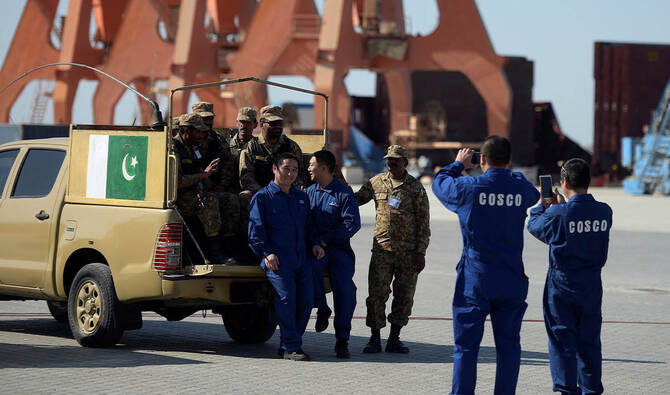
Located in Pakistan’s southwestern Balochistan province, the Gwadar port is the crown jewel of Beijing’s over $60 billion investment in China-Pakistan Economic Corridor (CPEC) projects in Pakistan and presents significant opportunities for maritime trade in the region, including giving access to landlocked Central Asia.
Despite the Hangeng project’s strategic importance, the Chinese firm earlier said that “execution-level uncertainties” had made its business “impossible,” reporting three months of financial losses, including container demurrage and contractual penalties, before the Pakistani government intervened.
Before the resolution of the issue, which comes ahead of Sharif’s scheduled visit to China this month, Hangeng also urged other Chinese firms on May 1 to “carefully assess the potential policy execution gaps and institutional uncertainties” before investing in Pakistan.
However, the company later said on X that it was in active communication with relevant Pakistani federal departments and they were “working positively to address the challenges.”
"In pursuance of the approval of Federal Government dated 27.04.2025 you are allowed to export donkey meat from Gwadar Free Zone strictly in accordance with the import policy of the destination country," the animal quarantine department of the Pakistani government said in a letter to Hangeng on May 2.
"In this regard, you are requested to indicate your export destination at earliest possible convenience to allow this office to issue permission in accordance with the decision of the Federal Government."
While the immediate threat of the facility’s closure has been averted, the episode highlights persistent challenges of red tape in Pakistan.
Hangeng on Saturday reaffirmed its commitment to Gwadar’s development, lauding Sharif and Iqbal as “true friends of China.”
“Their leadership reaffirms that the PM and Minister for Planning are true friends of China and are committed to cutting red tape and facilitating foreign investment,” it said on X.