

Riyadh Airport tops passenger service in Kingdom for 3rd month: GACA

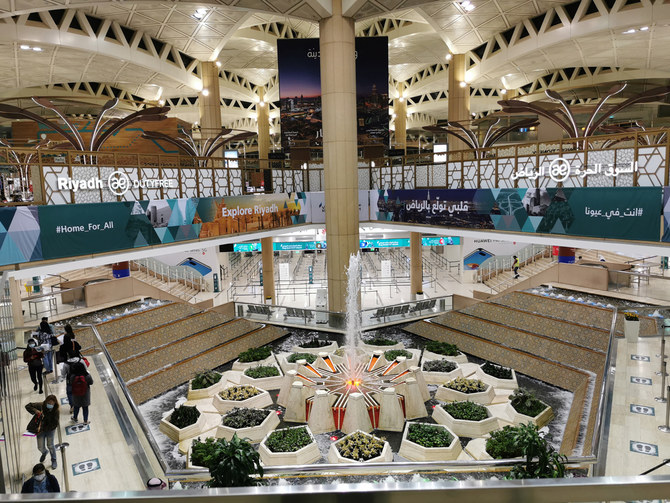
King Khalid International Airport has been the top scorer for the past three months in a row among airports handling more than 15 million passengers annually. (Shutterstock)
Short Url
Updated 17 July 2023
Follow

Riyadh Airport tops passenger service in Kingdom for 3rd month: GACA

RIYADH: Riyadh Airport continues to be the top performer in Saudi Arabia for offering improved services to passengers amid the Kingdom’s ongoing efforts to attract 100 million visitors by 2030.    

The Riyadh-based King Khalid International Airport has been the top scorer for the past three months in a row, with a compliance of 82 percent in June, in the category of airports handling more than 15 million passengers annually, according to the latest report released by the General Authority of Civil Aviation.  

The aviation authority assessed airport performance based on 14 essential performance indicators, including passenger wait times during check-in and security procedures and time spent at baggage claim.  

It also assessed passport and customs areas for people with disabilities and other criteria based on global best practices.

The monthly report revealed that Jeddah’s King Abdulaziz International Airport also achieved a compliance rate of 82 percent, up from 18 percent in May.

In the category of international airports, with passenger numbers ranging from 5 million to 15 million annually, Prince Mohammed bin Abdulaziz International Airport in Madinah emerged on top with a compliance rate of 82 percent.  

It was followed by Dammam’s King Fahad International Airport, which achieved a compliance rate of 73 percent in June. 

Abha International Airports in Asir province led the list of airports annually catering to passenger volumes between 2 million and 5 million, with a compliance rate of 100 percent.

King Abdullah bin Abdulaziz Airport in Jizan achieved a compliance rate of 73 percent. 

In the category of annual passenger volume of less than 2 million, Hail Airport achieved first place, with a compliance rate of 100 percent, outperforming rival airports in terms of average waiting times for departures and arrivals. 

Qurayyat Airport, based in Al Jawf province, claimed first place in the fifth category, outperforming all other airports in the average waiting time for departure and flight arrival, according to the GACA report. 

The aviation sector is an integral part of Saudi Arabia’s Vision 2030 which aims to place the Kingdom on the world map for attracting international travelers. 

By 2030, the Kingdom’s National Tourism Strategy aims to boost the industry’s share of the country’s gross domestic product to more than 10 percent.


Saudi Arabia’s foreign reserves rise to a 6-year high of $475bn

Updated 22 February 2026
Follow

Saudi Arabia’s foreign reserves rise to a 6-year high of $475bn

RIYADH: Saudi Arabia’s foreign reserves climbed 3 percent month on month in January to SR1.78 trillion, up SR58.7 billion ($15.6 billion) from December and marking a six-year high.

On an annual basis, the Saudi Central Bank’s net foreign assets rose by 10 percent, equivalent to SR155.8 billion, according to data from the Saudi Central Bank, Argaam reported.

The reserve assets, a crucial indicator of economic stability and external financial strength, comprise several key components.

According to the central bank, also known as SAMA, the Kingdom’s reserves include foreign securities, foreign currency, and bank deposits, as well as its reserve position at the International Monetary Fund, Special Drawing Rights, and monetary gold.

The rise in reserves underscores the strength and liquidity of the Kingdom’s financial position and aligns with Saudi Arabia’s goal of strengthening its financial safety net as it advances economic diversification under Vision 2030.

The value of foreign currency reserves, which represent approximately 95 percent of the total holdings, increased by about 10 percent during January 2026 compared to the same month in 2025, reaching SR1.68 trillion.

The value of the reserve at the IMF increased by 9 percent to reach SR13.1 billion.

Meanwhile, SDRs rose by 5 percent during the period to reach SR80.5 billion.

The Kingdom’s gold reserves remained stable at SR1.62 billion, the same level it has maintained since January 2008.

Saudi Arabia’s foreign reserve assets saw a monthly rise of 5 percent in November, climbing to SR1.74 trillion, according to the Kingdom’s central bank.

Overall, the continued advancement in reserve assets highlights the strength of Saudi Arabia’s fiscal and monetary buffers. These resources support the national currency, help maintain financial system stability, and enhance the country’s ability to navigate global economic volatility.

The sustained accumulation of foreign reserves is a critical pillar of the Kingdom’s economic stability. It directly reinforces investor confidence in the riyal’s peg to the US dollar, a foundational monetary policy, by providing SAMA with ample resources to defend the currency if needed.

Furthermore, this financial buffer enhances the nation’s sovereign credit profile, lowers national borrowing costs, and provides essential fiscal space to navigate global economic volatility while continuing to fund its ambitious Vision 2030 transformation agenda.